
Exclusive: Inside Realme’s big bet on 15 series to reclaim lost ground
 Follow Us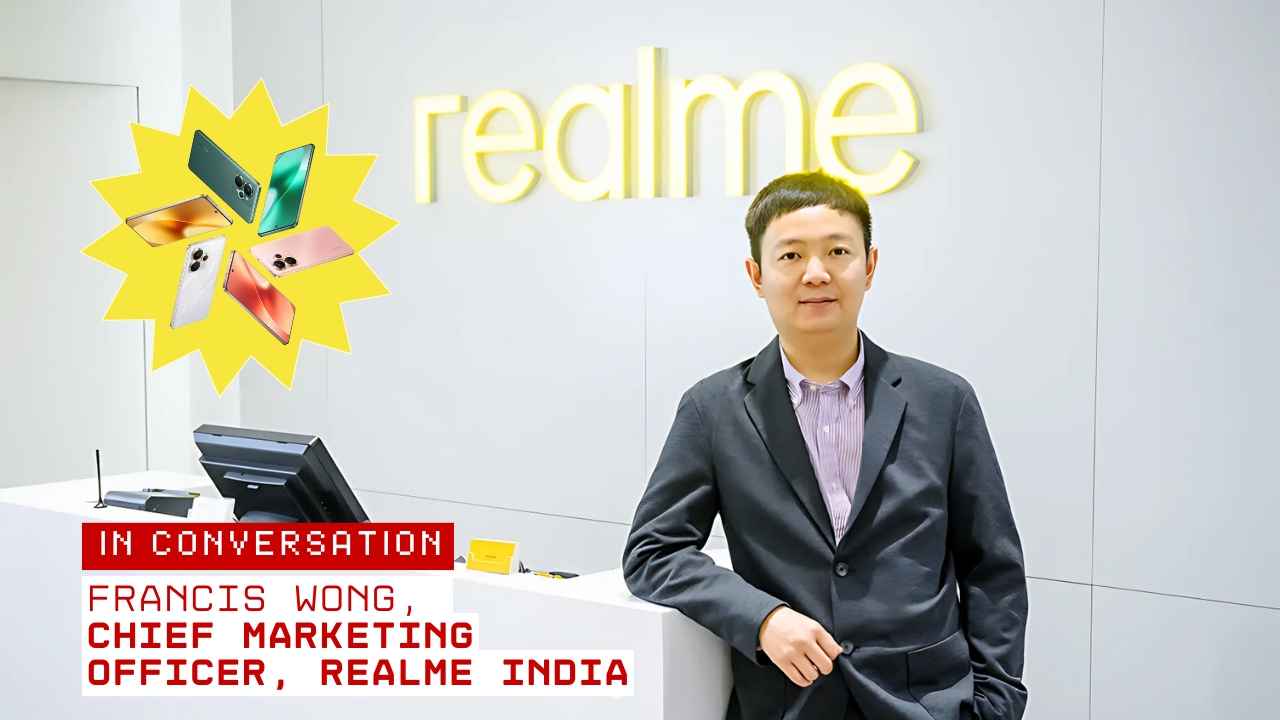

For years, Realme played the volume game, launching fast, aggressively priced phones and flooding the online space. The brand carved its name as the go-to disruptor in India’s budget and midrange smartphone market. But the numbers tell a different story now. In Q2 2025, Realme’s market share in India slipped from 12% to 9% year-on-year, according to Canalys, a stark reminder that in the brutal smartphone wars, yesterday’s disruptor can quickly become a has-been. But sitting across from Francis Wong, Chief Marketing Officer of Realme India, there’s no sense of panic. Instead, there’s the measured confidence of someone who believes they’ve found the way back.
 Survey
Wong’s response to the market share decline is refreshingly candid. “Market share has never been the sole pursuit,” he told me, though the slight pause suggests the sting of those numbers isn’t entirely absent. “This phase served as a valuable reminder of the importance of our connection with our users.”
It’s corporate speak, certainly, but Realme is doing something unfamiliar: acknowledging that it had perhaps lost sight of what made it special in the first place. So, it’s slowing down, listening more, and building with intent.
The Identity Crisis
When Realme burst onto the Indian scene, it did so with the brashness of youth and the clarity of purpose. They were the upstarts bringing flagship features to the masses, the brand that did things “first”. The first 64MP camera, the first quad-camera setup in the budget segment, to name a few. But success, Wong admits, bred complexity. “An overly broad product portfolio may have caused some confusion among consumers,” he reflects.
In a market dominated by the holy trinity of Vivo, Samsung, and Xiaomi, Realme had to rediscover its core identity. Wong reveals both the challenge and the opportunity: “Our goal is not to add a global sheen to the brand but to root it even more strongly in the lives, needs, and aspirations of young Indians.”
The AI Gambit
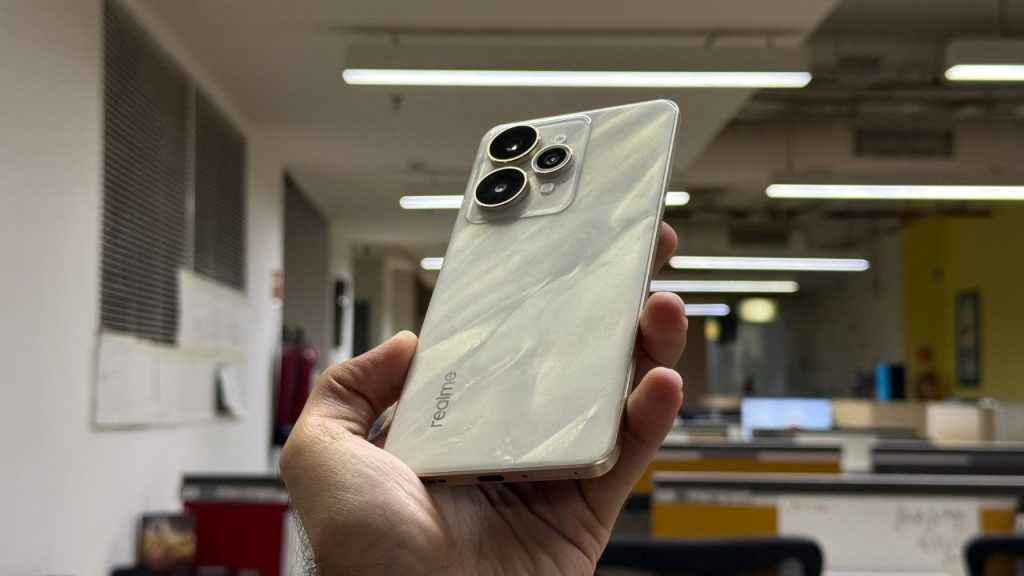
The Realme 15 Series, launched earlier today, starting at Rs 25,999, isn’t just a refresh, it’s a pivot for the brand. At a time when most brands are scrambling to shout “AI” the loudest, Wong’s bet is on artificial intelligence as the differentiator that will set the brand apart. But this isn’t AI as buzzword bingo; Wong is keenly aware of the trap.
“For us, AI is more than just a marketing term,” he insists. “Every AI feature we introduce is designed with a clear purpose to add direct value to the user’s experience.”
The proof, he argues, is in the pudding. Take AI Edit Genie, which Wong describes as “India’s first voice-enabled photo editor.” The feature allows users to perform complex photo edits through simple voice commands. Then there’s AI Party Mode, which is “perfect for festive and social moments,” Wong explains. The feature enhances low-light portraits with lighting effects and vibrant watermark frames. It’s AI, but it’s also deeply contextual, understanding that for young Indians, it’s the primary tool for capturing and sharing life’s moments.
Backed by Feedback, Not Just Trends
But nowhere is Wong’s strategic thinking more evident than in discussing the engineering trade-offs behind the Realme 15 Pro. Packing a massive 7,000mAh battery and an IP69 rating into a sleek 7.6mm frame required hard choices. The most telling, he says, is the decision to forgo a periscope camera.
“According to our surveys, 43.7% of all pictures are captured using the selfie camera, followed by 40.4% with the ultrawide camera and 35.6% with the main camera,” Wong rattles off the statistics with precision. Their research showed that most users weren’t actually using the 3x and 5x zoom capabilities that a periscope lens would enable. So instead of chasing spec sheet supremacy, Realme did away with the periscope lens. In its place is a triple 50MP camera setup, anchored by the Sony IMX896 sensor, which is not pushing boundaries, but it’s cleanly built for the most common use cases like portraits, group shots, night-outs, and reels.
It’s a philosophy that extends beyond hardware. Wong describes a shift “from feature-led communication to consumer-first storytelling.” The company is evolving from throwing impressive numbers at consumers to crafting narratives around how those features translate into daily value. “Our focus is on raising expectations across price points, not just by adding features, but by crafting a complete experience that resonates with the modern Indian consumer,” he adds.
The Tier-2 Revolution
Wong refers to a fundamental shift happening in India’s tier-2 and tier-3 cities, which make up for the backbone of smartphone growth in the country. “We’re seeing a growing shift from being price-focused to value-conscious,” he observes. These consumers, he argues, are no longer just looking for the cheapest device that works; they want holistic experiences.
Battery life remains non-negotiable, hence the 7,000mAh focus, but camera quality and display performance are increasingly important as phones become primary entertainment devices. More surprisingly, features like storage capacity, fast charging, and durability ratings are becoming conversation starters. “There’s also rising interest in on-device AI features,” Wong adds, suggesting that the adoption isn’t limited to metro markets.
The Qualcomm Partnership
Central to Realme’s AI ambitions is its deepened partnership with Qualcomm around the Snapdragon 7 Gen 4 chipset. “Both teams collaborated closely to co-develop and fine-tune features that cater specifically to the needs of young Indian users,” Wong explains.
The result is a chip that delivers “a 200% increase” in AI performance over the previous generation, enabling features like real-time HDR video processing and the AI editing capabilities that Wong believes will differentiate Realme in an increasingly commoditised market.
Rethinking Identity in a Crowded Market
Wong’s vision for success extends beyond Realme’s market share recovery. “Our deeper focus is on user trust and long-term brand affinity,” he says. The goal now is to “deliver flagship features at scale,” but more importantly, to “deepen emotional connection” with its core audience. That involves not just hardware differentiation but clearer product segmentation.
The Realme 15 Series, then, represents more than just another product launch. But in a market where differentiation is increasingly difficult, Realme’s focus on user-centric innovation feels like the right kind of contrarian bet.


