
Why Nvidia RTX Spark is the next big thing for Windows PC industry
 Follow Us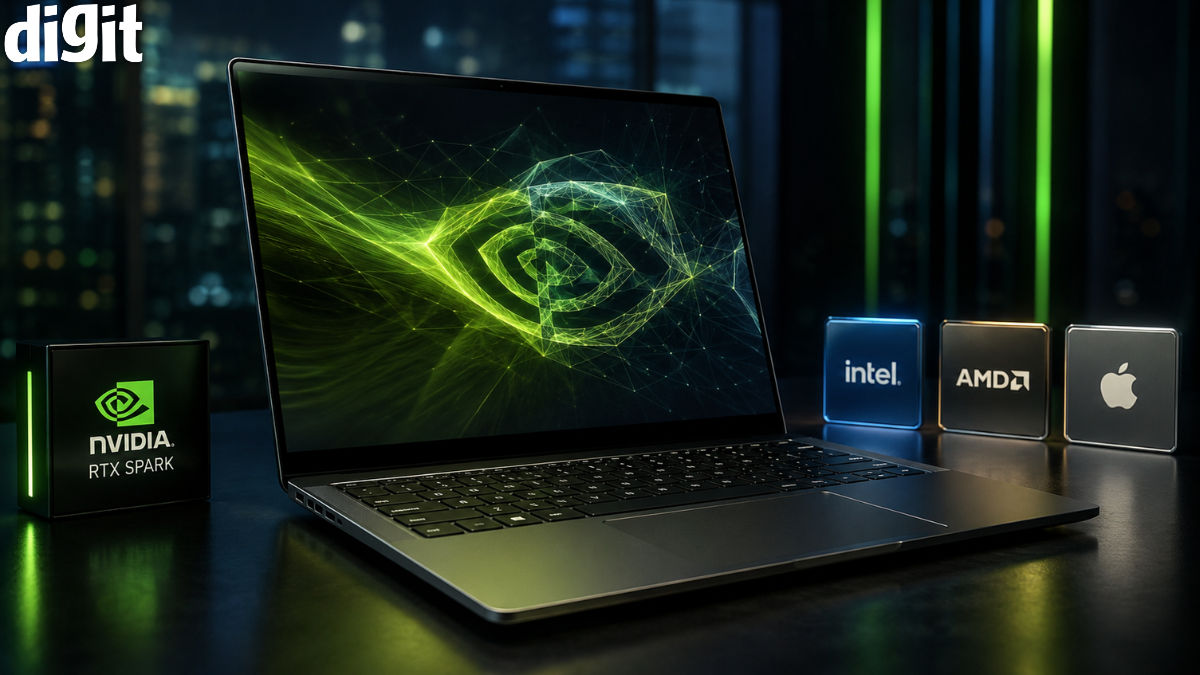

We have had Windows PCs, Intel and AMD have long been known to make the CPU, Nvidia has been the main driving force for GPUs, and that’s fairly the pattern we have been seeing for years. Of course, brands have played around with a bunch of different form factors: ultrabooks, convertibles, gaming machines and so on, but the core hardware that these Windows PCs boast, i.e. the CPU and GPU, comes from the aforementioned entities. Meanwhile, Apple in 2020 took a different direction altogether and changed expectations entirely with its in-house Apple Silicon, proving that a laptop could be powerful, quiet, and efficient at the same time. And that is why Nvidia’s RTX Spark platform has created so much interest across the PC industry.
 Survey
With the RTX Spark, instead of building a legacy around graphics hardware, Nvidia wants to now move towards a more complete computing platform that combines CPU, GPU, and AI capabilities into a single Arm-based design.
Also read: Lenovo IdeaPad Slim 3i Gen 11 review: Debuting with Intel Pather Lake
Granted, there are still many unanswered questions, including the RTX Spark’s representation of something the Windows ecosystem has struggled to deliver for years: MacBook-like efficiency with proper gaming and creator-focused graphics performance.
What exactly is Nvidia RTX Spark?
At its core, RTX Spark is Nvidia’s attempt to show the world how a Windows laptop from the future is going to be built. Instead of relying on traditional x86 processors from Intel or AMD, the platform is expected to use an Arm-based architecture, similar to what Apple uses in MacBooks and what Qualcomm recently introduced with Snapdragon X Elite chips.
The idea behind this approach is fairly straightforward. Arm-based chips are generally more power efficient, which means laptops can run cooler, last longer on battery, and potentially become thinner without sacrificing too much performance.
But what makes Nvidia’s approach particularly interesting is the graphics side of things. Unlike Qualcomm, Nvidia already dominates GPU technology for gaming, AI workloads, and creator software. If the company successfully combines strong CPU performance with its RTX graphics expertise, it could create a new category of Windows laptops that balance efficiency and high-end graphical performance more effectively than what we currently get in the market.
Why is the industry excited for RTX Spark?
A big reason behind the excitement is that the Windows PC market has long been waiting for a major shift. Apple Silicon proved that users care about efficiency just as much as raw performance. So, not just Macs, but many people now expect ‘laptops’ to wake instantly, stay cool under pressure, and deliver all-day battery life.
I will admit, Windows laptops have improved quite a bit over the years, but they still often involve compromises. For instance, if it’s an ultrabook, it may struggle with sustained performance. Gaming laptops, on the other hand, are quite bulky. And creator-focused machines often generate heat and fan noise under heavy load.
Which brings us to Nvidia’s offering and its potential to offer something different here. If RTX Spark works as intended, users may get stronger AI performance, better battery efficiency, and RTX-class graphics in slimmer devices. For creators, that could mean smoother video editing, faster rendering, and improved AI-assisted workflows. For gamers, it could eventually mean portable systems capable of proper gaming without the battery drain typically associated with dedicated GPUs. All of this again, if everything goes as Nvidia is claiming.
In fact, if I also mention the AI situation here, Nvidia currently dominates AI hardware, and companies across industries are rapidly integrating AI-powered tools into software. This means it is more important than ever that on-device AI processing becomes a serious thing, especially for tasks like image generation, video enhancement, coding assistance, and language models. Nvidia’s expertise gives it a pretty strong advantage in this space.
How it compares with Apple, Intel and AMD
For what it’s worth, Apple still holds a major advantage when it comes to system optimisation. Because Apple controls both hardware and software, MacBooks deliver a level of efficiency and stability that Windows manufacturers often can’t match. Apple Silicon also benefits from stable and mature software support, especially in creative applications.
However, even with all of the advancements, gaming remains one of Apple’s weaker areas. Sure, gaming on a Mac has improved compared to what it used to be a decade ago, but Windows still dominates the PC gaming ecosystem. This is where Nvidia could have an advantage if it successfully combines efficient Arm architecture with RTX graphics technologies.
Intel and AMD, meanwhile, continue to rely heavily on x86 architecture. Both companies have made huge progress with efficiency and AI-focused hardware, especially with newer mobile chips, but x86 systems still generally consume more power compared to Arm-based alternatives under similar workloads.
That does not mean Intel and AMD are suddenly in trouble. Compatibility remains one of their biggest strengths. Most Windows software is still designed primarily for x86 systems, and businesses rely heavily on legacy applications that may not always behave properly on Arm-based platforms.
The biggest concern: Windows on Arm compatibility
Windows and Arm compatibility is likely the biggest challenge Nvidia faces. Now, Windows on Arm has improved considerably over the past few years, but compatibility issues still exist. Some older applications do not run properly through emulation, while certain professional tools and games may experience performance issues or bugs.
See, for average users who mainly browse, stream content, attend meetings, and use mainstream apps, this may not be a major problem anymore. But professionals relying on niche software or older enterprise tools may still hesitate before moving away from x86 systems.
Of course, developers will also need time to optimise applications properly for Arm hardware. Fortunately for Apple, the company managed this transition relatively smoothly because it controls its ecosystem tightly. The Windows ecosystem is far more fragmented. Interesting times ahead.
Should users be excited?
I would say: cautiously, yes.
RTX Spark is not guaranteed to instantly change the laptop market, and many details still remain unclear. Real-world performance, pricing, thermals, and software compatibility will ultimately decide whether this platform succeeds or not.
Also read: HP Omnibook 5 review: Light as a feather, lasts like a brick
But the broader idea behind it makes sense. Users increasingly want laptops that are lighter, quieter, and more efficient without sacrificing gaming, creative performance, or AI capabilities. Nvidia appears to be targeting exactly that gap.
Even if RTX Spark does not immediately dominate the market, it signals where the PC industry is heading. The future of laptops may no longer revolve purely around raw CPU power. Instead, efficiency, AI acceleration, and integrated graphics performance could become just as important.


