
Asus Vivobook S16 with Snapdragon processor is here: 5 things we liked and 2 things we didn’t
 Follow Us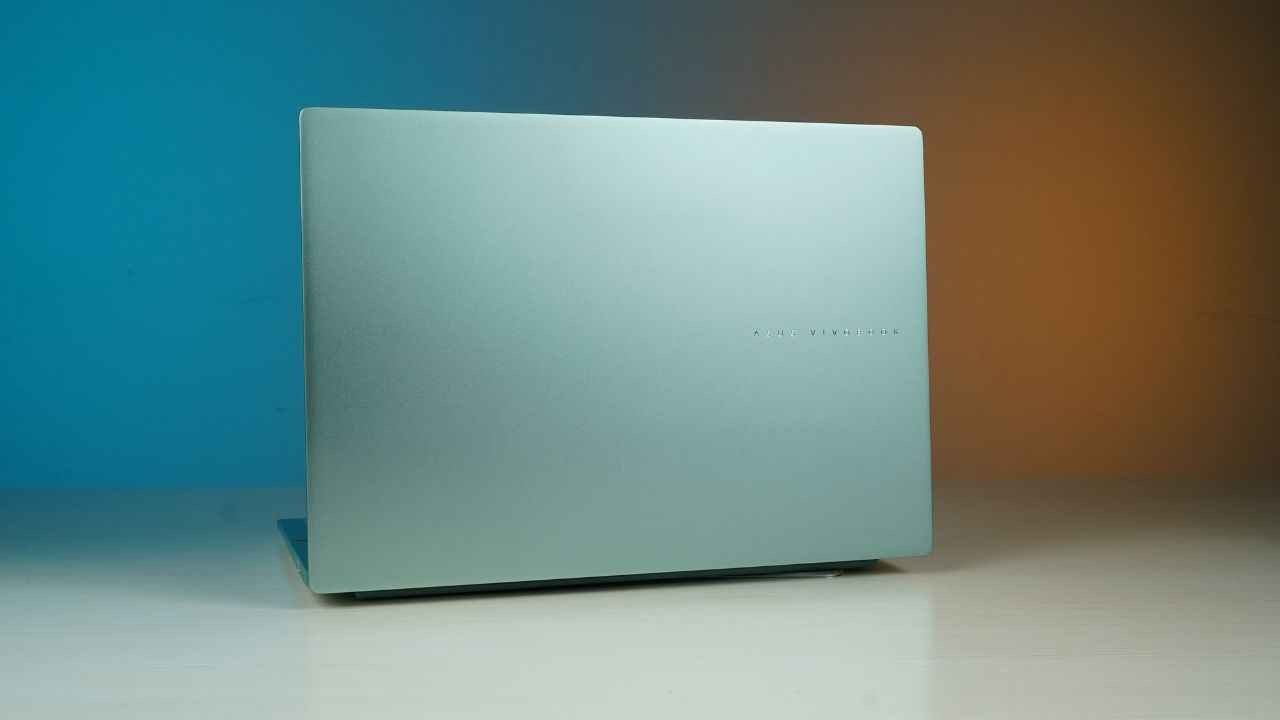

Asus launched the Vivobook S16 with snapdragon processor in India yesterday and said that it was designed to “make a style statement”. The laptop, available in BFF Peachy and Salvia Green colour options, is designed for students and professionals who need a dependable daily driver. With a Snapdragon X processor, OLED display, and long battery life, there is plenty to love about the newly-launched toy in town. However, no product can check all boxes.
 Survey
Also read: Asus Vivobook S16 review: Good things come in slim packages
Without further ado, let’s take a closer look at 5 things that we liked about the laptop and 2 things that we didn’t.
Asus Vivobook S16 launched in India: What’s good
There is plenty to love in the newly-launched Vivobook S16 by Asus. The Snapdragon processor offers reliable performance and the laptop remains slim and lightweight that makes it easy to carry around. Let’s take a look at the top 5 highlights of the device.
1. Bold and refreshing design choices
As mentioned already, the VivoBook S16’s design is worth mentioning when we talk about the laptop’s highlights. Asus has clearly moved away from the usual silver and grey tones that dominate the laptop market, offering colour options like Salvia Green and BFF Peachy. These shades give the device a youthful, contemporary feel that resonates strongly with students and young professionals who want a laptop that makes a statement.
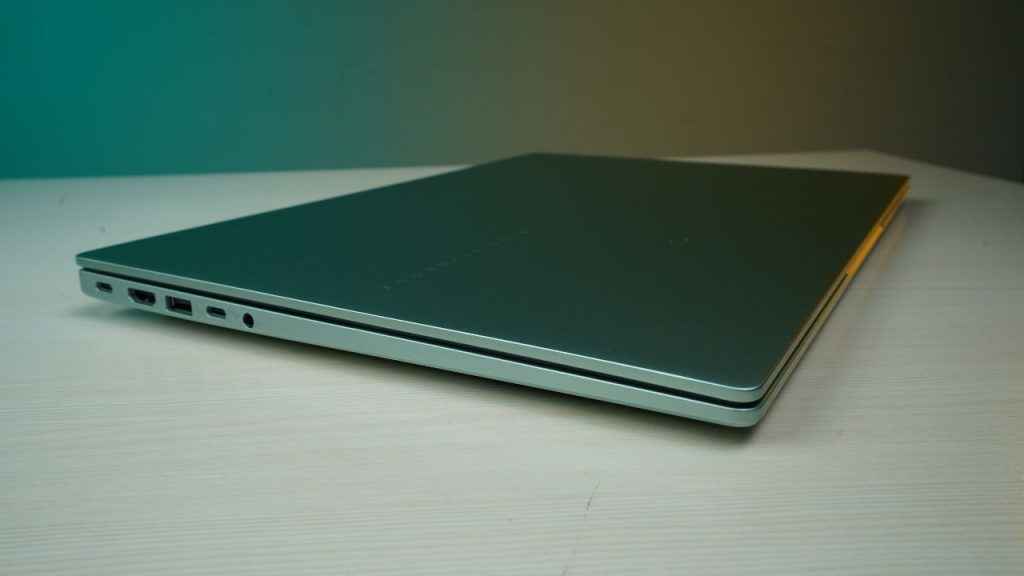
Beyond the colours, the build itself feels well thought out. At around 1.7 kg, it remains light enough to carry around all day, yet sturdy enough to withstand the rigours of everyday use. The slim profile ensures it fits easily into backpacks, while the polished chassis and clean lines help it strike the balance between playful and professional.
In short, the Vivobook S16 looks and feels like a breath of fresh air compared to the cookie-cutter designs seen elsewhere in this category.
2. Excellent battery life
Battery life can be a deal-breaker for many who are looking for a new laptop for work purposes, and this is where the Vivobook S16 delivers impressively. The 75 Wh battery is built to handle long sessions without the constant need for a charger. For users who spend time in lectures, co-working spaces, or on the go, this is a significant advantage. During our testing of the device, the laptop gave around 15 hours and 20 mins of battery life when we ran PC Mark Applications battery test. The benchmark test assesses a laptop’s battery by running MS Office on loop.
Thus, during daily tasks like browsing, streaming, writing, and working on documents, the laptop is able to push comfortably beyond a standard workday. Efficient thermals and optimised power usage further ensure the device doesn’t drain quickly, even when handling moderately heavy workloads. This makes it a dependable companion for people who don’t always have access to a charging point.
3. Vibrant OLED display
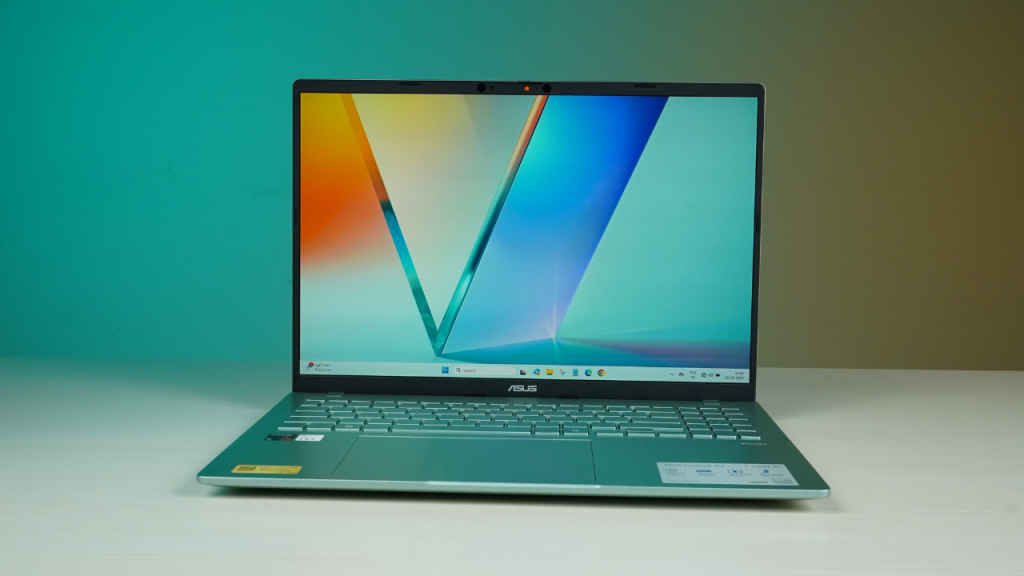
The 16-inch OLED display is another standout element of the VivoBook S16. Asus has equipped the panel with 1920×1200 resolution, ensuring visuals appear sharp and detailed whether you’re streaming videos, browsing photos, or working with multiple windows open side by side.
Colour reproduction is also vibrant and accurate. With 95% DCI-P3 colour gamut, the blacks are deep, and accuracy levels remain strong, making this display suitable for entertainment as well as work. For casual creatives dabbling in photo editing or light design tasks, the panel offers more than enough accuracy (average DeltaE of 1.4) to handle projects with confidence.
Another plus is the reduced strain during long hours of use. OLED panels generally provide better comfort for the eyes compared to standard LCDs, and the VivoBook S16 benefits from this advantage. Whether it’s late-night movie sessions or extended study marathons, the screen holds up well.
4. Quiet and efficient thermals
Despite its slim build, the VivoBook S16 manages to stay cool under pressure. Asus has tuned the thermals efficiently, allowing the laptop to remain quiet and free of excessive heat even during prolonged use.
This aspect is particularly valuable for users who need a machine for everyday productivity. Tasks like writing, browsing, attending video calls, or streaming media rarely push the system into uncomfortable territory. Even when heavier applications are opened, the laptop doesn’t become distractingly loud. During our testing at Digit, the laptop’s surface temperature of the WASD zone reached a peak of 38° and the touchpad hovered around 25.7 even during a 30-minute stress test. This is cooler than many other laptops belonging to similar price segments like the AcerSwift 14 Go AI, Honor Magicbook X14, Acer Aspire 5 and the Asus Vivobook 16.
Thus, when many slim laptops struggle with fan noise or thermal throttling, the VivoBook S16 stands out for managing to remain composed. It reinforces the laptop’s identity as a reliable, well-rounded machine.
5. Handy Copilot integration
Another interesting addition is the dedicated Copilot key, which integrates Microsoft’s AI assistant directly into the workflow. A single press brings up Copilot, ready to help with queries, quick tasks, or information searches.
For students drafting essays, professionals preparing documents, or users juggling multiple tabs, having an AI tool available at the press of a button can genuinely speed up work. It also reflects Asus’s attempt to keep the VivoBook S16 future-ready, aligning with the broader push toward AI-powered productivity.
For those who enjoy experimenting with new features, this small inclusion makes the laptop feel more modern and adaptable to evolving user needs.
Asus Vivobook S16: What could have been better
Of course, no product is perfect. And while the Vivobook S16 brings plenty to the table, there are a couple of areas where it falls short.
1. 60 Hz refresh rate limits the display
While the OLED panel impresses with colour and clarity, the refresh rate tops out at 60 Hz. For casual users, this might not be a major issue, but in 2025, when even mid-range laptops are adopting higher refresh rates, this feels like a missed opportunity.
A 120 Hz or 144 Hz panel would have made scrolling smoother, animations more fluid, and even light gaming more enjoyable. The current display still performs well for most users, but anyone accustomed to faster refresh rates on their phones or other laptops may notice the difference.
2. Limited performance for gaming and creative workloads
The Vivobook S16 relies on integrated graphics, which means it isn’t built for heavy gaming or intensive creative tasks. While it handles everyday productivity effortlessly, titles like AAA games or professional-grade video editing software quickly reveal its limits.
This makes the laptop less suitable for those who want an all-in-one device that covers both work and play. Instead, it remains firmly in the category of a lifestyle machine, best suited for studying, working, and casual entertainment. For serious gaming or creative professionals, other options in Asus’s own ROG or ProArt lineups would be a better fit.
The Asus VivoBook S16 is a slim, stylish, and reliable laptop that ticks many of the right boxes. Its bold design choices, excellent battery life, vibrant OLED display, efficient thermals, and thoughtful Copilot integration make it a strong option for students and professionals who prioritise portability and everyday performance.
However, its 60 Hz refresh rate and reliance on integrated graphics limit its appeal for users seeking a more versatile, high-performance machine. Those compromises aside, the Vivobook S16 remains a well-rounded package that delivers solid value to anyone who wants a dependable daily driver with a splash of colour and personality.
Also read: Asus Vivobook S16 with Snapdragon processor launched in India at special price of Rs 67,990


