

Air purifier myths: Don’t wait for bad AQI to switch it on in India
 Follow Us
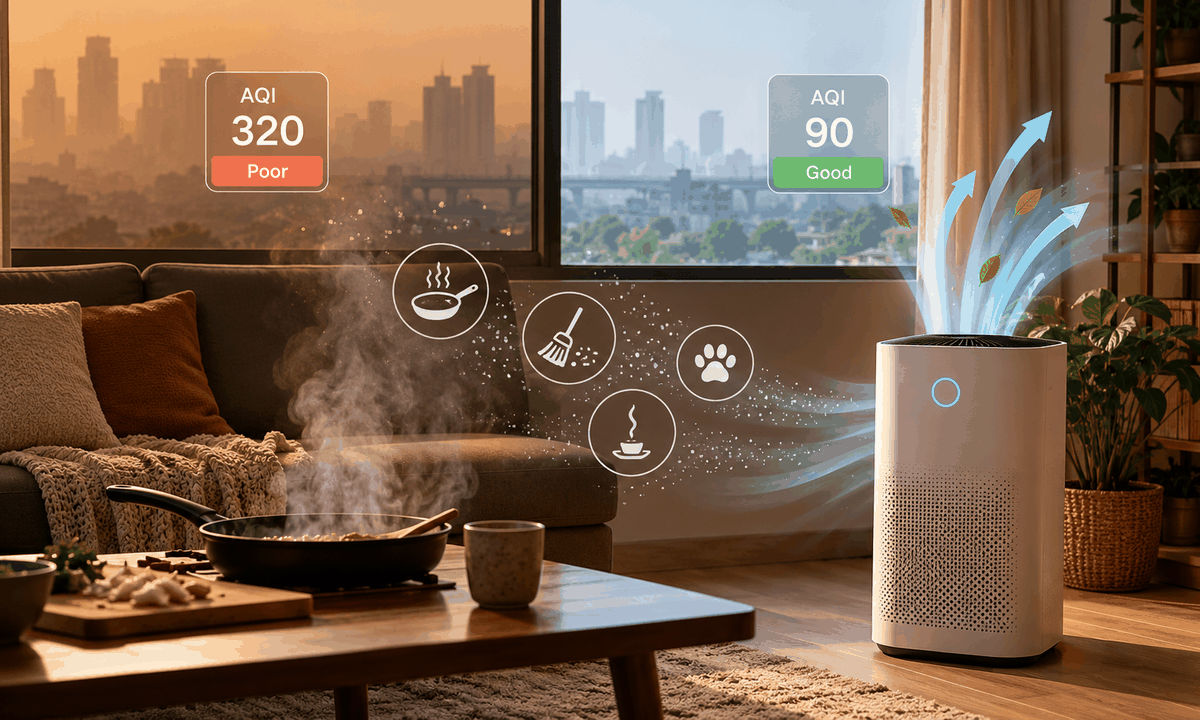

Winter in India brings more than just chilly mornings. As temperatures drop, air pollution becomes a growing concern across several cities, particularly in Delhi-NCR. According to IQAir’s 2025 World Air Quality Report, 17 of the world’s 20 most polluted cities were in India. Delhi recorded an annual average PM2.5 concentration of 99.6 µg/m³, highlighting the scale of the pollution problem in the capital.
 Survey
With pollution levels fluctuating through winter, many people switch on their air purifiers when the AQI starts climbing and turn them off once the numbers come down. But a drop in outdoor AQI doesn’t necessarily mean the air inside your home is clean. Cooking, sweeping, dust and smoke from incense sticks can all add to indoor particle pollution, even when outdoor air quality improves.
This is why running an air purifier only when outdoor AQI is poor may not be the best approach. You don’t necessarily need to keep it running at full speed all day, but it’s worth understanding how indoor pollution builds up and when your purifier can help
Your indoor air isn’t always as clean as you think
Closing the windows helps limit the entry of outdoor pollution, but it doesn’t stop indoor pollution from building up. Everyday activities such as cooking, cleaning and even walking around a dusty room can release particles into the air. Open a window for ventilation, and outdoor pollutants can enter as well, depending on the conditions outside.
Read more: Don’t buy an air purifier without checking its filter replacement cost: Here’s why
This is particularly relevant during winter, when people in Delhi-NCR tend to keep their windows shut for long periods. While that can reduce the amount of polluted outdoor air entering the house, it also means that indoor pollution sources need attention.
An air purifier with a properly sized HEPA filtration system can help remove airborne particles as the room air passes through it. However, it won’t remove every type of pollutant, and it doesn’t replace ventilation when fresh air is needed.
So, should you leave your air purifier on all day?
If you spend most of your day in one room, keeping the purifier running at a suitable fan speed is generally a practical option. It continues filtering the air as new particles enter the room or are released by everyday activities. If you switch it off, it stops removing airborne particles, although the time taken for pollution levels to rise again will depend on the room and its surroundings.
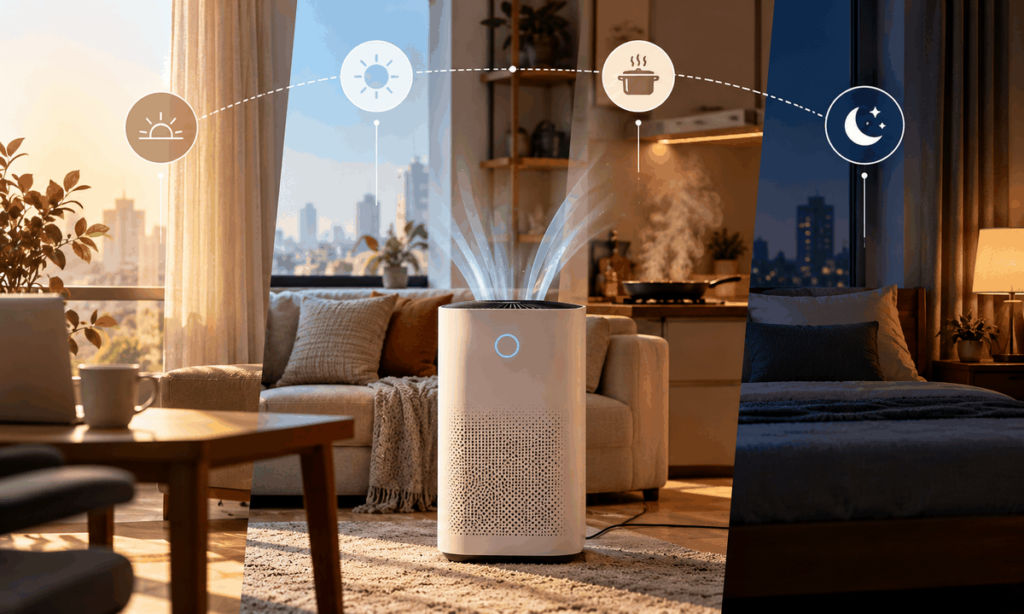
You don’t necessarily need to run it at maximum speed throughout the day. A lower setting may be enough when particle levels are low, while a higher speed can help when pollution increases, such as during or after cooking. Just keep in mind that a purifier needs time to bring particle levels down, so switching it on only after a spike means some exposure may already have occurred.
If your purifier has an auto mode, you can use it to adjust fan speed according to the readings from its sensors. However, these sensors generally focus on particulate matter. A low PM2.5 reading doesn’t tell you whether other pollutants, such as volatile organic compounds, are present.
What if you want to save electricity?
There is no reason to ignore electricity consumption, especially if your purifier runs for several hours every day. The better approach is to look at its power consumption at different fan speeds rather than deciding when to use it solely on the basis of outdoor AQI.
You can run it at a lower speed when the room is relatively clean and increase the speed when particle levels rise. If you’re leaving home for several hours, switching it off may also make sense. The right approach depends on your room, the purifier’s capacity and how much pollution is being generated indoors.
Also, make sure the purifier is suitable for the room you’re using it in. A model with a low CADR may struggle to clean a large room quickly, even if you leave it running for long periods.
When should you run your air purifier?
An air purifier isn’t something you need to switch on only when AQI makes headlines. Indoor pollution can come from cooking, dust and other everyday activities, even when outdoor air quality improves.
For most people, running a suitably sized purifier regularly makes more sense than waiting for outdoor AQI to cross a particular number. You can adjust the fan speed according to indoor conditions and your electricity budget, but don’t assume that better outdoor air automatically means the air inside your home is clean.
Read more: Where to place air purifier in any room for best results?


