
Yann LeCun: Education will define AI success in India
 Follow Us
Education and youth key to AI leadership, believes Yann LeCun
AI will amplify human intelligence, not replace it
India and Global South will increasingly drive AI innovation
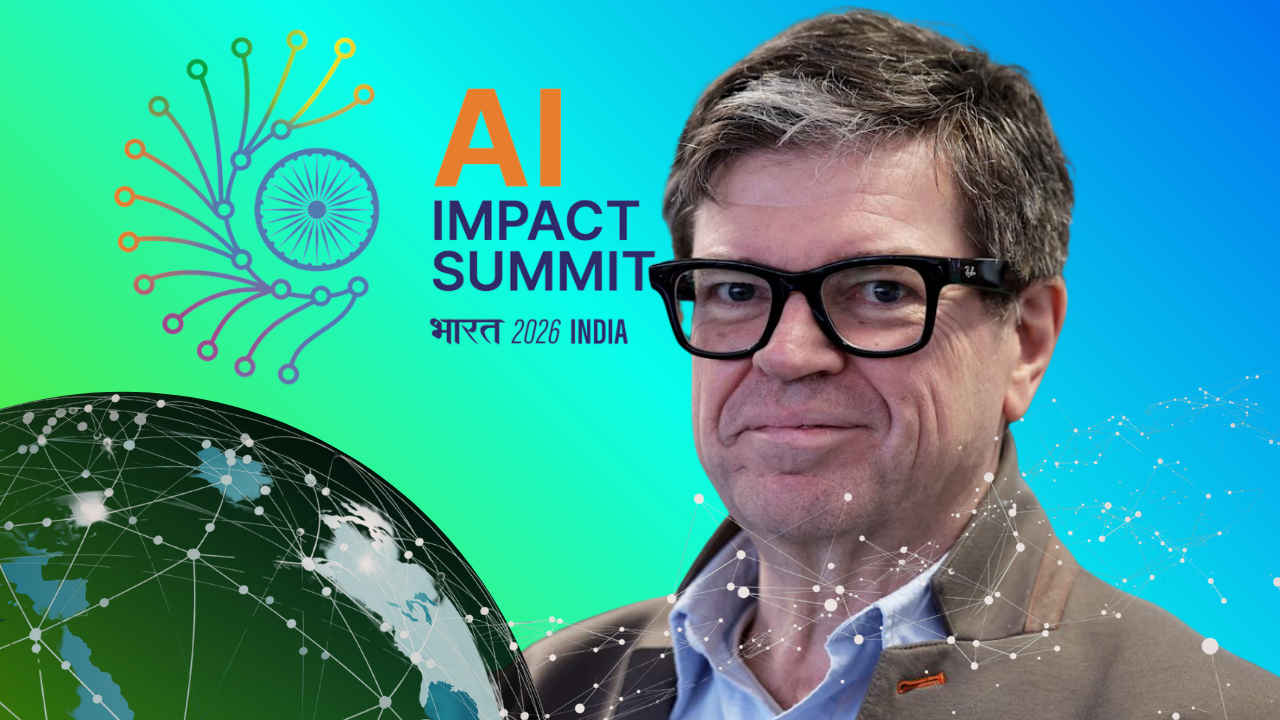

At a moment when the AI hype cycle is hitting peak decibel levels, Yann LeCun – considered one of the Godfathers of AI – is choosing sobriety over spectacle. Speaking on stage at the India AI Impact Summit 2026 in New Delhi, the ex-Meta chief AI scientist offered a sweeping, sometimes contrarian view of what artificial intelligence will actually become – and where countries like India fit into that future.
 Survey
For LeCun, the defining promise of AI isn’t some mythical superintelligence or AGI arriving overnight. It’s far more pragmatic – and arguably more powerful. It’s anybody’s guess, as to when that moment will actually arrive, according to LeCun.
“Maybe in the lifetime of some people here, possibly not in mine, we’ll see. It will take a while. But I think the more interesting thing that we’re going to build is an amplifier for human intelligence,” LeCun said.
“So maybe not an entity that surpasses human intelligence in all domains, but at least something that will amplify human intelligence in ways that will accelerate progress,” emphasized Yann LeCun, in his opening remarks at the India AI Impact Summit 2026.
That idea, that AI is augmentation rather than replacement, runs throughout Yann LeCun’s worldview. Current large language models, he argues, are useful but misunderstood.
Also read: Meta chief AI scientist Yann LeCun thinks LLMs are a waste of time
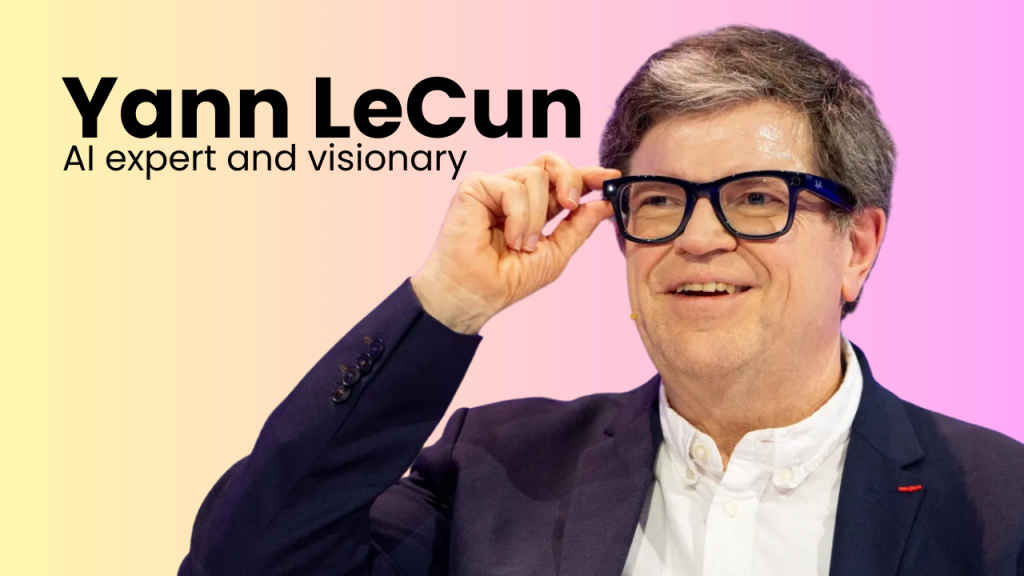
“LLMs are incredibly useful and they do amplify human intelligence. But LLMs, to some extent… are mostly information retrieval systems. They can compress a lot of factual knowledge that has been previously produced by humans and can give easy access to it, like a natural evolution of the printing press, the libraries, the internet, and search engines,” he explained.
The real breakthrough, Yann LeCun insisted, will come when AI develops what researchers call “world models.” Humans learn through observation, interaction and building mental models of reality – something machines still struggle with, as LeCun pointed out.
“So the big buzzword in AI today is world models, mental models of the world that allow us to think ahead and reason, and predict the consequences of our actions. And LLMs don’t do this, really,” he said. That gap explains why AI can ace exams but can’t match a teenager’s driving instincts.
“Why do we have systems that can pass the bar exam and win mathematics olympiads, but we don’t have domestic robots? We don’t even have self-driving cars. So we’re still missing something big,” according to Yann LeCun.
When asked about AI’s impact on India and the Global South, however, LeCun sees enormous long-term opportunity rooted in demographics and education.
“Long term it’s going to come from countries that have favourable demographics and that means India, Africa. Youth is the most creative part of humanity. The scientists, the top scientists of the future, many of them presently are from India and in the future will be from mostly Africa.”
But that future depends on sustained investment in learning. “The idea that somehow we don’t need to study anymore because AI is going to do it for us, that’s completely false,” LeCun said emphatically. “On the contrary, we’re going to have to study more. There’s more demand for education, not less. For countries in the global south, that means investing in education and youth.”
AI’s benefits will also depend on accessibility. Today, inference costs remain too high for mass adoption in countries like India. Once that barrier falls, LeCun expects AI to reshape everything from education to agriculture.
If AI is often compared to electricity, LeCun offers a different metaphor. “I think it’s more like the new printing press,” he said – less a sudden explosion, more a steady expansion of knowledge. The real revolution, in his view, will be gradual, human-led, and deeply shaped by India and the Global South.
Also read: Anthropic CEO Dario Amodei: India may benefit most from AI revolution


