
Top 10 most powerful supercomputers in the world: What’s their configuration?
 Follow Us

Every couple of years, the fastest computer in the world is taken down from its throne. This happened once again in June 2026 – and in spectacular fashion. LineShine, developed by China and utilizing entirely domestically-made chips with no Nvidia, AMD, or Intel parts involved, came in and kicked the United States’ El Capitan off its top position after less than two years of being there. With five exascale computers in the new TOP500, announced at the ISC High Performance 2026 conference in Hamburg, Germany. Five. Which was nothing but zero four years ago.
 Survey
Also read: US-China AI race: How America’s own restrictions are helping China close the gap
But how much do all of these numbers mean? “1.8 exaflops”? These numbers are literally so high that they make absolutely no sense anymore. Here’s an alternative way to think about it: for each of the ten most powerful supercomputers in the world right now, let’s look at what kind of hardware configuration they have compared to the best available consumer computers.
Spoiler: your gaming PC is not even close.
LineShine
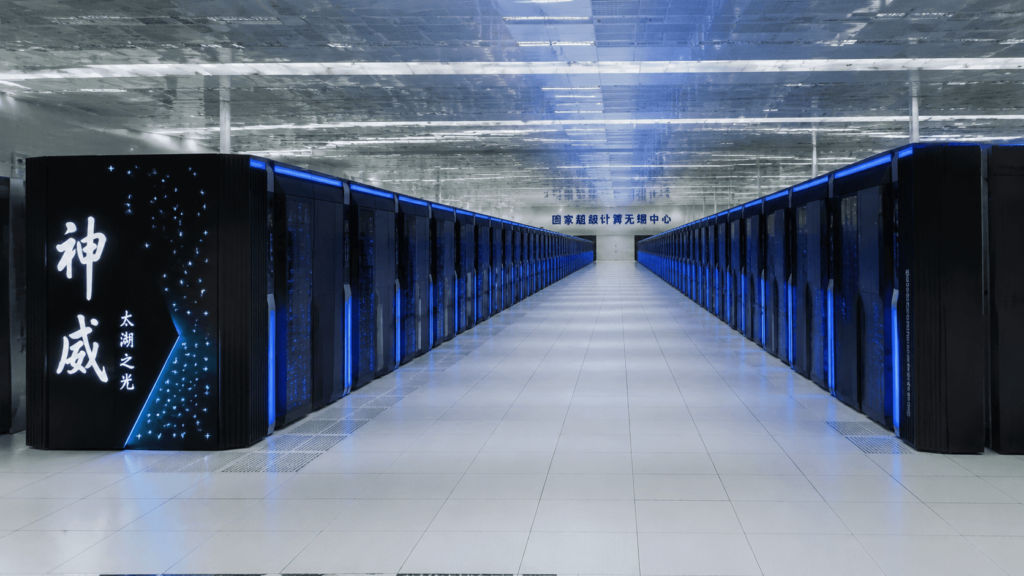
Location: National Supercomputing Centre in Shenzhen (NSCS), China
The config:
- CPU: 40,960 LingKun LX2 processors – each with 304 ARMv9 cores at 1.55 GHz (13,789,440 cores total)
- GPU: None, this is a CPU-only machine
- RAM: ~32 GB HBM + ~256 GB DDR5 per processor socket; total system memory estimated in the tens of petabytes
- Storage: 428 dedicated storage nodes across 67 cabinets, with 10 Tbps aggregate bandwidth
- Interconnect: Proprietary LingQi at 1.6 Tbps per node
- Power: 42.2 MW
The fastest consumer processor, AMD Ryzen 9 9950X, contains 16 processors. LineShine, on the other hand, has nearly 14 million. This is equivalent to around 862,000 AMD Ryzen 9 9950X operating concurrently. Storage throughput of LineShine, 10 Tbps, is greater than the total network infrastructure of an entire nation. Moreover, it does not contain any GPUs, making LineShine more of a political statement than a technological one: it is made up only of processors designed by Chinese engineers, as retaliation to the ban by US on selling Nvidia and AMD accelerators in China.
El Capitan
Location: Lawrence Livermore National Laboratory, California, USA
The config:
- CPU/GPU (fused): 43,808 AMD Instinct MI300A APUs, each combining a 24-core EPYC Genoa CPU and a CDNA3 GPU on a single package
- Cores: 11,340,000 total (1,051,392 CPU cores + ~10 million GPU compute units)
- RAM: 128 GB HBM3 per MI300A, 512 GB per node, 5.4375 petabytes total
- Storage: NVMe “Rabbit” fast storage arrays integrated across compute racks, backed by a global Lustre filesystem
- Interconnect: HPE Slingshot-11 at 200 Gbps per port
- Power: 29.7 MW
El Capitan boasts 5.4 petabytes of RAM. The most powerful gaming PC currently available, with an insane amount of 192 GB DDR5 RAM, only has 0.0000035% of it. Memory bandwidth in El Capitan is 5.3 TB/s per APU. Maximum memory bandwidth of the fastest consumer GPU is around 1.8 TB/s, which is RTX 5090 by Nvidia. MI300A is unique because it brings together CPU and GPU in the same silicon chip, sharing the same HBM3 memory pool. There is no transferring of information from the CPU’s RAM to GPU’s VRAM; it is all in one place. This architecture itself makes El Capitan very energy-efficient compared to its capabilities. El Capitan costs $600 million and was built to simulate nuclear weapons without exploding them.
Frontier
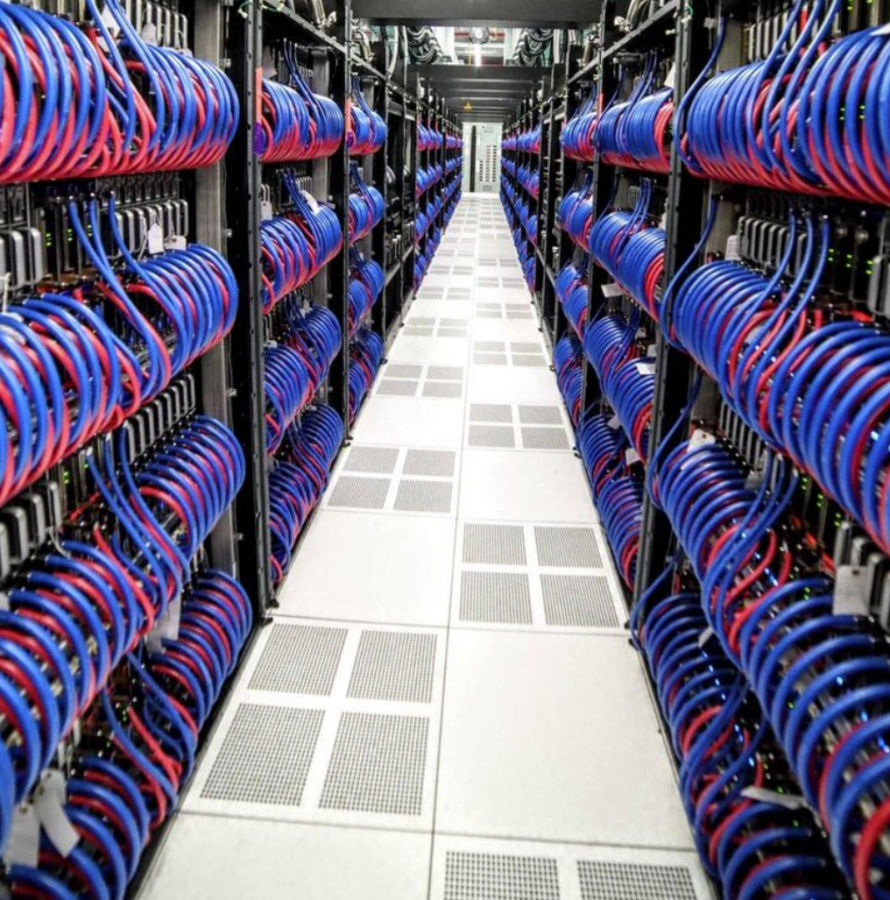
Location: Oak Ridge National Laboratory, Tennessee, USA
The config:
- CPU: AMD 3rd Gen EPYC 64C processors at 2 GHz (Trento, custom variant)
- GPU: AMD Instinct MI250X (four per node, one per CPU)
- Cores: 9,066,176 total
- RAM: ~512 GB HBM2e per node across GPU accelerators; 37.5 petabytes of storage
- Storage: 37.5 PB Lustre parallel filesystem at 75 TB/s peak I/O bandwidth
- Interconnect: HPE Slingshot-11
- Power: 24.6 MW
Frontier was released in 2022 and became the world’s first exascale computer, marking an incredibly important milestone for which decades of work went into place. At the time of release, it had 1.1 exaflops, and since then it has grown to 1.353. To put it into context compared to the best workstations out there with 96 core AMD EPYC 9654 processors along with 4 RTX 4090 GPUs, you would have 384 CPU cores and approximately 0.12 petaflops of GPU computing power. This system uses 74 times more CPU cores and has 11,000 times more GPU computing power than your computer at home.
Aurora
Location: Argonne National Laboratory, Illinois, USA
The config:
- CPU: Intel Xeon CPU Max 9470 (52 cores, 2.4 GHz), two per node
- GPU: Intel Data Center GPU Max Series (6 per node, also called Ponte Vecchio)
- Cores: 9,264,128 total
- RAM: Intel Xeon CPU Max comes with 64 GB HBM2e on-package; Intel GPU Max adds 128 GB HBM2e per GPU, nodes configured at ~1 TB total
- Storage: 10.9 PB flash storage at 31 TB/s
- Interconnect: HPE Slingshot-11
- Power: 38.7 MW
But Aurora is the leading exascale HPC system from Intel, and it is an interesting one too. Indeed, the Xeon Max chips come with HBM integrated in the chip – in a way that resembles El Capitan. However, Aurora uses more power compared to El Capitan for its lower performance level, making it the least efficient exascale system. Nevertheless, Aurora was conceived in the time when MI300A-class designs were yet to be developed. It could be compared to a flagship device with Snapdragon 8 Gen 2 SoC versus one with Snapdragon 8 Elite. Aurora is an exascale petaflop beast that would remain the world’s top supercomputer throughout the past decade.
JUPITER Booster
Location: Jülich Supercomputing Centre (FZJ), Germany
Also read: Anthropic, OpenAI model restriction: AI juggernaut slowing down?
The config:
- CPU+GPU (fused): NVIDIA Grace Hopper GH200 Superchips, each combining a 72-core Grace ARM CPU with an H100 GPU
- Cores: 4,801,344 total
- RAM: 96 GB HBM3 (GPU) + 480 GB LPDDR5X (CPU) per GH200, shared via NVLink-C2C, totalling over 330 TB system-wide
- Storage: Coupled to JUPITER’s ClusterStorage, a high-speed GPFS-based system
- Interconnect: Quad-Rail NVIDIA InfiniBand NDR200 (quad-rail = 4× 200 Gbps per node)
- Power: 15.8 MW, most efficient exascale system by far
JUPITER is the first European exascale system and the most energy-efficient of the five exascale supercomputers in this ranking. With an efficiency of 15.8 MW per exaflop, JUPITER delivers almost double the computing performance per watt compared to LineShine. The Grace Hopper Superchip, the very same processor that powers the Nvidia DGX GH200 servers, made its way into commercial, high-end AI servers costing around $150,000 each. JUPITER features thousands of these chips. Main tasks for JUPITER: modeling the human brain on a cellular level, weather simulation, and 6G networking. Practical applications. On a massive scale.
HPC7
Location: Eni S.p.A., Ferrera Erbognone, Italy
The config:
- CPU/GPU: Same AMD MI300A APU as El Capitan, 4th Gen EPYC 24C at 1.8 GHz, AMD Instinct MI300A accelerators
- Cores: 3,461,472
- RAM: HBM3, same node architecture as El Capitan (512 GB per node / 128 GB per APU)
- Interconnect: HPE Slingshot-11
- Power: 8.7 MW
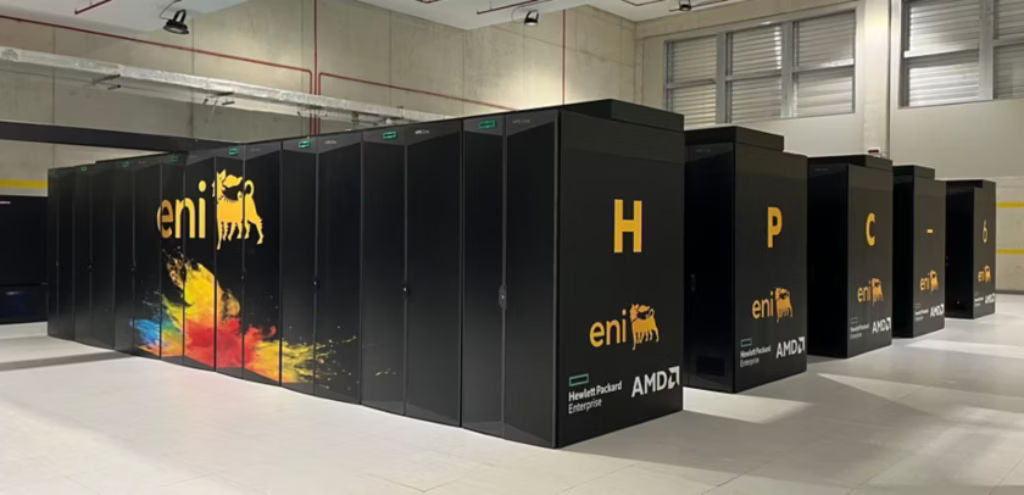
HPC7 is essentially just a small El Capitan, operating on the same HPE Cray EX255a platform. Yet “small” is a relative term, because it has 571.5 petaflops performance – greater than any other supercomputer that ever existed prior to 2022. It belongs to Eni – an Italian energy company, performing calculations for oil and gas explorations, energy transition simulation, and AI-related studies. It is rather strange that an energy company now owns the sixth most powerful computer in the world.
Eagle
Location: Microsoft Azure, United States (distributed cloud)
The config:
- CPU: Intel Xeon Platinum 8480C (48 cores, 2 GHz), the Sapphire Rapids generation
- GPU: NVIDIA H100 SXM
- Cores: 2,073,600
- RAM: H100 SXM carries 80 GB HBM2e at 3.35 TB/s; nodes provisioned in ND H100 v5 configurations
- Storage: Azure distributed blob and managed storage
- Interconnect: NVIDIA InfiniBand NDR (400 Gbps)
Eagle is the only cloud-based platform amongst the Top 10, and it represents Microsoft Azure hardware benchmarked as one supercomputer. This is significant since it shows that hyperscale cloud platforms can now be competitive with HPC platforms in terms of performance. The H100 used by Eagle is the same GPU used for most of the AI model training currently being done across the globe – GPT models and Gemini included. Your RTX 4070 Super also uses the same generation of Hopper GPU architecture, just downsized by 5× in memory bandwidth and 8× in pure compute performance.
HPC6
Location: Eni S.p.A., Ferrera Erbognone, Italy
The config:
- CPU: AMD 3rd Gen EPYC 64C at 2 GHz
- GPU: AMD Instinct MI250X (same as Frontier)
- Cores: 3,143,520
- Interconnect: HPE Slingshot-11
- Power: 8.5 MW
HPC6 is the older cousin of HPC7, same location but different hardware generation. While HPC7 relies on the combined MI300A APU, HPC6 features the separate CPU + GPU system architecture from the Frontier era. The move to HPC7 has effectively doubled the computing power within the same footprint of the site, which illustrates how big of an architectural advance MI300A was over MI250X. The key thing about both systems is that they are used for energy research, something worth mentioning knowing that oil companies today have more computing power than most governments.
Supercomputer Fugaku
Location: RIKEN Center for Computational Science, Kobe, Japan
The config:
- CPU: Fujitsu A64FX, 48 cores at 2.2 GHz, ARMv8.2-A with SVE (Scalable Vector Extension), HBM2 on-package
- No GPU accelerators
- Cores: 7,630,848 total across 158,976 nodes
- RAM: 32 GB HBM2 per processor (~5 PB total system), plus 4 GB HBM/core of bandwidth
- Storage: 150 PB, by far the largest storage tier in the top 10
- Interconnect: Tofu Interconnect D (6D mesh/torus, Fujitsu-proprietary)
- Power: 29.9 MW
Fugaku is an important computer system for various reasons. First, it held the title of being the fastest computer in the world between 2020 and 2022. Additionally, it is the only one in the list of the top 10 supercomputers to be using a CPU that was specially designed for supercomputing by Fujitsu; the A64FX with HBM integrated on-chip before the implementation by AMD in the MI300A. With 150 PB of storage capacity, Fugaku’s storage capacity is 15 times more than Frontier’s due to the nature of the data generated by its tasks such as drug discovery, earthquakes’ simulation, and COVID-19 protein folding.
Alps
Location: Swiss National Supercomputing Centre (CSCS), Lugano, Switzerland
The config:
- CPU+GPU (fused): NVIDIA Grace Hopper GH200 Superchip, same as JUPITER (72-core Grace ARM + H100)
- Cores: 2,121,600
- RAM: 96 GB HBM3 + 480 GB LPDDR5X per node via NVLink-C2C
- Interconnect: HPE Slingshot-11
- Power: 7.1 MW
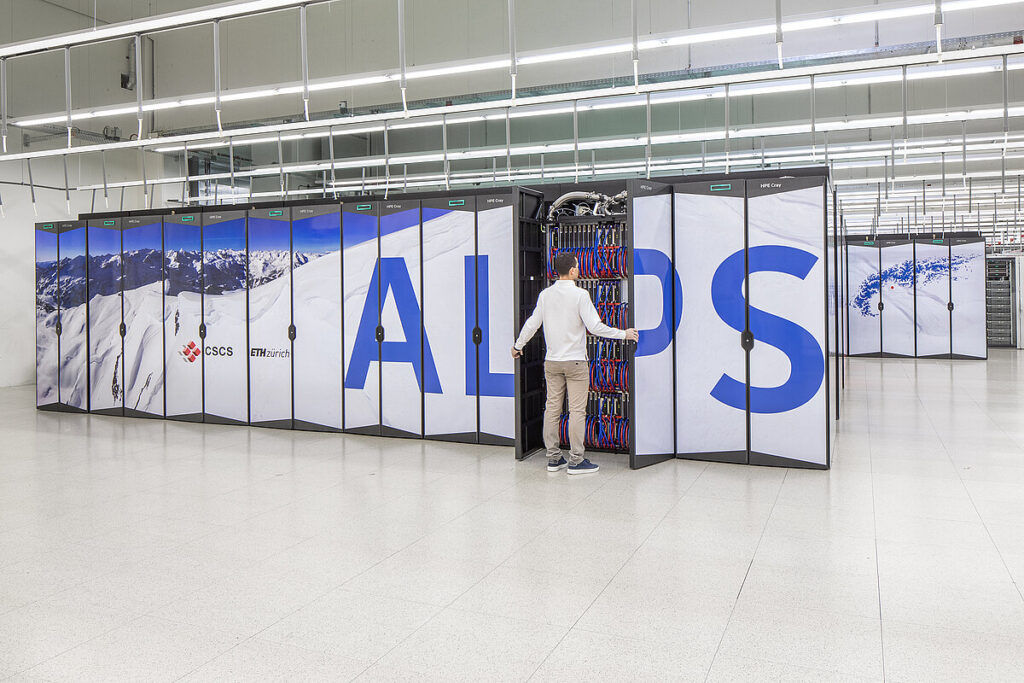
ALPS is the brother of JUPITER in architecture and the most efficient computer in terms of energy consumption amongst the Top 10 list. With 7.1 MW of power for 434.9 PetaFlops, it is getting more than 61 Gigaflops per watt which is truly impressive for this kind of computer. The main applications of this supercomputer include weather and climate modeling, genomics, and material sciences. ALPS uses 7.1 MW of power – just as much as 1,500 Indian homes would use for the most powerful computer in the world.
Putting things in context
A few things become obvious when you put these ten systems side by side.
First, the architecture wars are indeed happening. Pure CPU (LineShine, Fugaku), discrete hybrid CPU+GPU (Frontier, HPC6, Aurora, Eagle), fused APU (El Capitan, HPC7), and integrated Grace Hopper (JUPITER, Alps) – no silver bullet here. Each of these is a representation of a particular way of thinking about compute and memory bottlenecks.
Second, energy efficiency is already a Tier 1 criterion. No wonder the Green500 ranking stands side by side with the TOP500 ranking. The machines capable of delivering efficient flops per watt will be the only scalable systems in the age of converging AI and HPC workloads. JUPITER is an exaflop machine running on 15.8 MW. LineShine requires 42.2 MW of electricity to achieve 2.2 exaflops. It is a critical difference if you pay grid-level prices for electricity.
Third, geopolitics is embedded into the system. LineShine could never come to existence without US imposing restrictions on China’s ability to purchase top-end Nvidia and AMD processors. The result was the world’s most powerful supercomputer which uses nothing but homegrown silicon. This is not what they aimed for.
Lastly, the difference between consumer hardware and such computers is not only quantitative but qualitative as well. The RTX 5090 that you have at home is an amazing chip, while El Capitan has the computing power of 1.4 million such chips. This is not a faster version of your own computer but another class of computer altogether.
Also read: Zepto co-founder Kaivalya Vohra on how AI is changing quick commerce


