Google Willow chip achieves Quantum Echoes, beating supercomputers 13,000×
Quantum Echoes algorithm on Willow chip delivers verifiable quantum advantage
105-qubit Willow chip outperforms classical supercomputers in scientific simulations
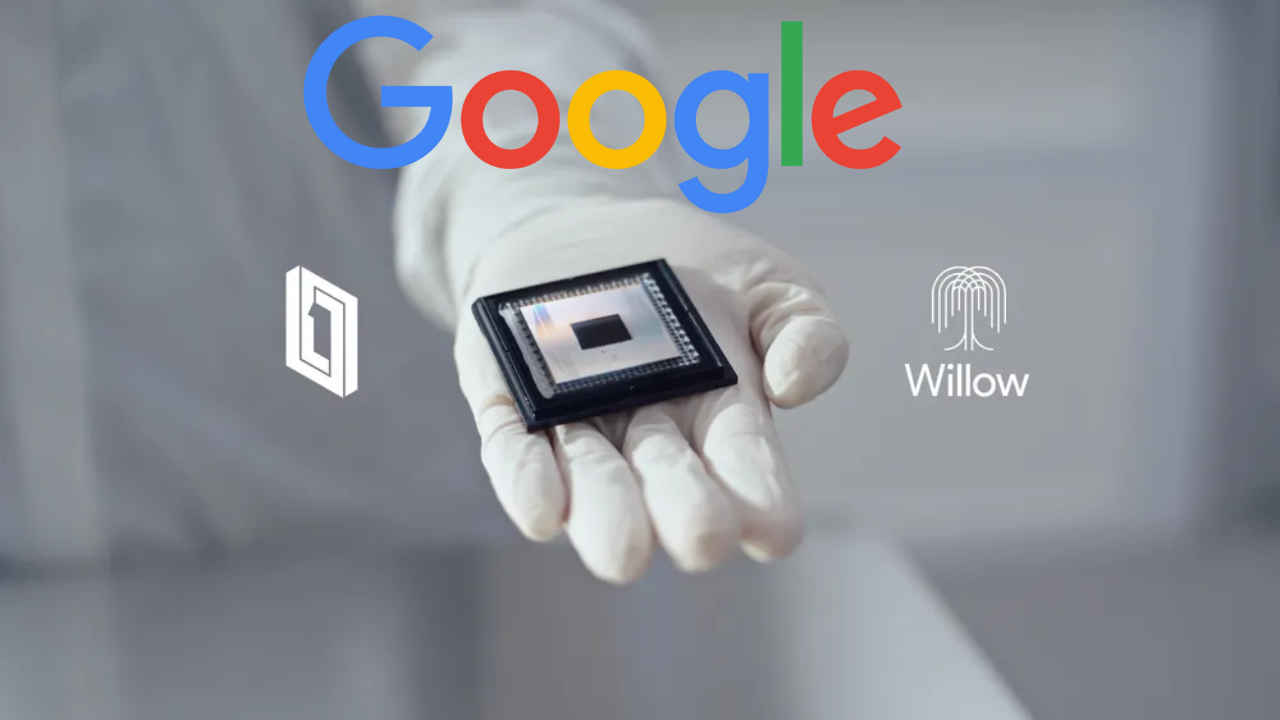
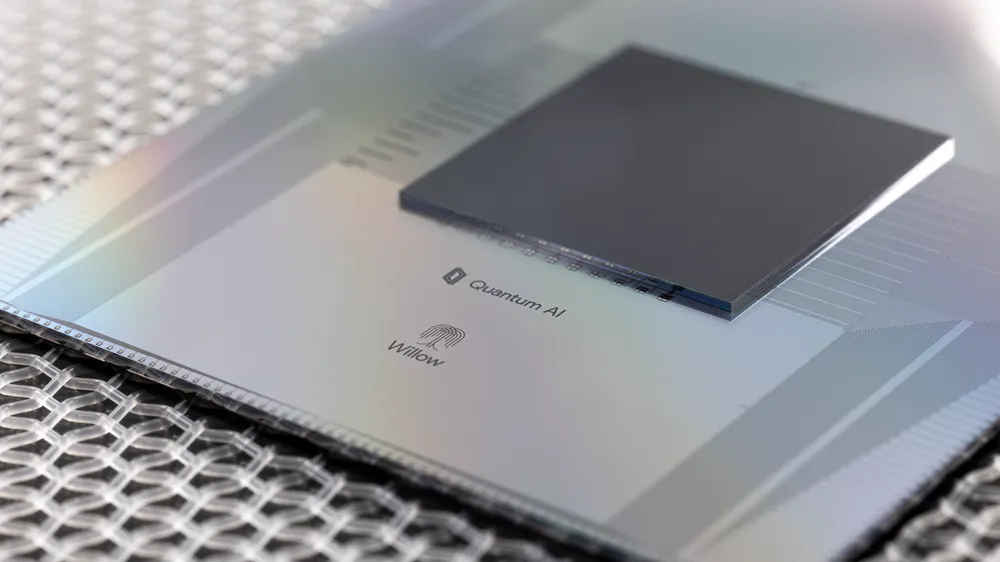
In a significant breakthrough for quantum computing, Google has announced that its Willow quantum chip has achieved a verifiable quantum advantage. Using a newly developed algorithm named Quantum Echoes, the 105-qubit processor completed a complex simulation task 13,000 times faster than the most powerful classical supercomputers available today. This achievement is being hailed as one of the clearest demonstrations yet that quantum computing can outperform classical machines in a scientifically meaningful and verifiable way.
 Survey
Also read: Google Willow quantum chip explained: Faster than a supercomputer


The Quantum Echoes experiment
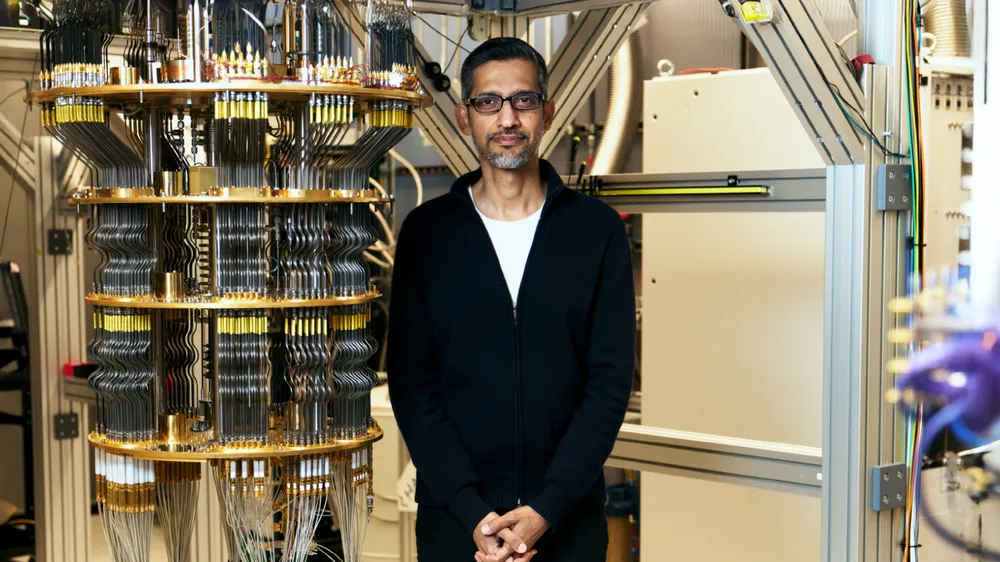
The Quantum Echoes algorithm is based on a principle known as the out-of-time correlator (OTOC), which measures how disturbances propagate in a quantum system. In practical terms, the experiment works by sending a quantum signal forward, perturbing one of the qubits, and then reversing the evolution of the system. The final measurement captures the resulting “echo” of the perturbation, revealing how information spreads through the system.
This process is more than a technical curiosity. By measuring these echoes, researchers can verify the behavior of the quantum system and ensure that the calculations are accurate. The experiment on the Willow chip represents a controlled environment where quantum dynamics can be studied at a scale that classical systems cannot match. Unlike earlier demonstrations of quantum supremacy, which often focused on synthetic problems with little connection to real-world applications, Quantum Echoes is directly tied to scientific simulation and measurable results.
Verifiable quantum advantage
The term verifiable quantum advantage is central to the significance of this announcement. Unlike earlier claims of quantum supremacy, which were sometimes difficult to verify and often relied on highly specialized or contrived tasks, Quantum Echoes produces results that can be reproduced and independently confirmed using similar quantum systems. This makes the quantum advantage tangible and trustworthy.
The reported 13,000× speedup refers specifically to this algorithm and problem set. It compares the Willow chip’s performance against the best-known classical algorithms for the same task. While this does not mean that quantum computers are universally faster than classical ones in every domain, it does highlight how carefully designed algorithms matched with advanced hardware can achieve extraordinary speedups in precise areas. It also demonstrates significant progress in reducing error rates, improving qubit connectivity, and scaling quantum hardware to levels previously thought impractical.
Simulating molecules with 105 Qubits
Also read: Einstein was wrong: MIT physicists solve quantum mystery with definitive proof
To highlight practical relevance, Google collaborated with researchers at the University of California, Berkeley, applying Quantum Echoes to molecules of 15 and 28 atoms. The simulations accurately matched results obtained through nuclear magnetic resonance (NMR) experiments, and in certain cases revealed additional insights that classical methods struggled to provide. These molecules, while modest compared to industrial or biological systems, demonstrate the chip’s ability to handle nontrivial scientific calculations that combine complexity, precision, and reproducibility.
The experiment underscores the critical interplay between quantum algorithms and hardware design. The Willow chip is able to maintain coherence and control over 105 qubits long enough to perform these calculations, highlighting the maturation of quantum processors. At the same time, Quantum Echoes illustrates how targeted algorithmic innovation can unlock capabilities that purely hardware-focused approaches cannot. Together, they provide a model for how quantum computing can transition from experimental demonstrations to real, verifiable scientific simulations.
This announcement marks a key milestone in the field, providing a concrete example of quantum computing’s potential to tackle problems that classical machines struggle to solve efficiently. By combining sophisticated algorithms, powerful hardware, and measurable results, Google’s Willow chip and the Quantum Echoes algorithm signal a new level of achievement for quantum computing research. The experiment reinforces the idea that quantum computers are not just theoretical devices or research curiosities but are beginning to demonstrate practical, verifiable advantages over classical systems.
Also read: Top 5 fastest quantum computers in the world 2025
 Follow Us
Vyom Ramani
A journalist with a soft spot for tech, games, and things that go beep. While waiting for a delayed metro or rebooting his brain, you’ll find him solving Rubik’s Cubes, bingeing F1, or hunting for the next great snack. View Full Profile


