

Pichai and Hassabis: India uniquely positioned for AI leadership
 Follow Us
Google leaders say India poised to become full-stack global AI powerhouse
Agriculture, science and creativity are India’s big AI bets, says Hassabis
AI leapfrog could transform every sector and workflow, says Pichai
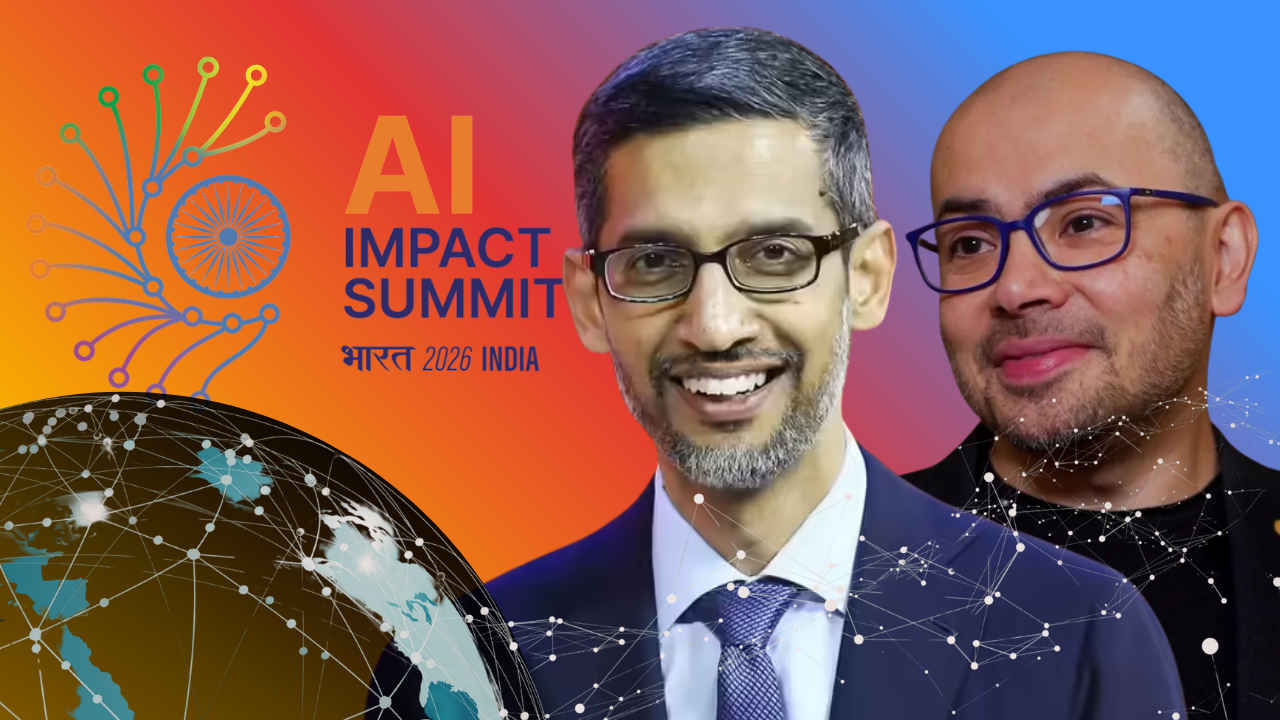

If India needed a validation moment for its AI ambitions, it arrived in stereo. On one side sat Sundar Pichai, the CEO who helped scale Google into a global nervous system. On the other, Demis Hassabis, the scientist building the mind of tomorrow.
 Survey
Between them at the India AI Impact Summit 2026 was a simple consensus, that India isn’t just riding the AI wave – it could help shape the tide.
For Sundar Pichai, the mood was unmistakably deja-vu. “It’s a transformational moment. I’m a bit nostalgic reflecting on maybe a decade ago, coming to India and seeing the digital India transition, and the similar excitement there.” A decade ago, India digitised payments and governance at population scale. Today, Pichai suggested, the country stands at the “beginning of a decade-long shift with AI.”
Hassabis had just arrived from Bengaluru, where he faced a lecture hall packed with 700 students at IISc. Speaking at the India AI Impact Summit, what struck Hassabis wasn’t just the turnout, but the energy in the room.
“The amount of enthusiasm and energy for AI, and excitement about the opportunities that will bring was really interesting to see,” Hassabis said, indicating how India’s AI future isn’t theoretical but already sitting in classrooms across the country.
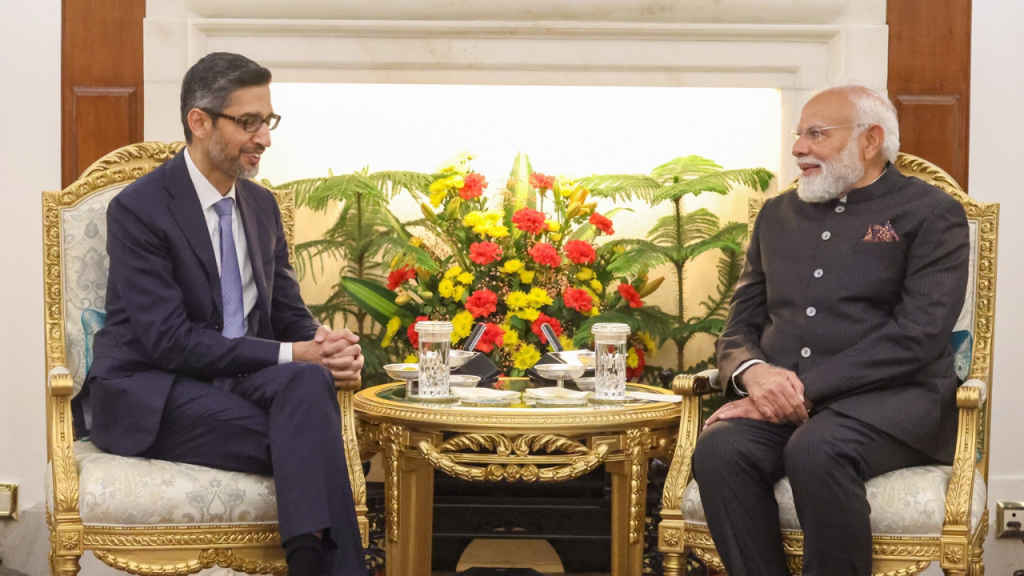
The big question, of course, is what success looks like five years from now. User base? Builder? Rule-maker? Pichai’s answer was characteristically expansive. “India is uniquely positioned at this moment, it has a chance to play a big role in all three.”
He even framed India as a “full-stack player in AI,” mirroring Google’s own strategy that spans across AI infrastructure, models, and applications.
But ambition needs plumbing, highlighted Pichai. “You have to make sure you’re investing in all the foundational things you need – in the research, in knowledge, in the institutions, and making sure it’s reaching people.”
For Pichai, AI success won’t be measured in model benchmarks but in diffusion. Whether India’s farmers, students and doctors feel its impact “on a day-to-day basis.” The infrastructure announcements this week, he hinted, are just the opening move.
Hassabis, meanwhile, urged India to make sharper strategic bets. His advice? Double down on existing strengths. “Perhaps it’s agriculture… and then be the leaders in applying AI to that space that you’re already world-leading in.” Climate-resilient crops, for instance, could benefit from tools like AlphaFold. And then there’s culture.
“Maybe Bollywood and the creative industries making use of the latest AI tools,” was another example highlighted by Hassabis. In other words, India’s AI leadership may emerge as much from farms and film sets as from server farms.
Also read: DeepMind CEO Demis Hassabis on the “Golden Era” of scientific discovery by AI
On AGI – that ever-looming acronym – Hassabis struck a measured tone. True AGI, he said, would be “a system that exhibits all the cognitive capabilities that humans have.” We’re not there yet. “Today’s systems… they’re impressive, but they’re not there yet, in my opinion.” Still, within a decade or two, he sees AI as “the ultimate enhancement tool” for scientists, creators and young entrepreneurs – especially in countries like India where access to cutting-edge tools is rapidly democratising.
And what does an AI leapfrog moment look like? For Pichai, it’s not a single breakthrough but systemic rewiring. “I literally expect every sector… every workflow to be transformed by it.” From AI-assisted diagnostics at AIIMS to new models of learning and governance, the goal is to radically improve how things get done.
Perhaps the most telling moment came at the end, when Pichai was asked a personal question. What would it take for the next Sundar Pichai to build the world’s most magical AI company from India – and stay? His answer was almost casual: “It’s already changed, the entrepreneurship ecosystem here is thriving, I just don’t see any impediments to that.”
For a country long seen as AI’s back office, that might be the biggest signal of all. India isn’t just participating in the AI era anymore, but preparing to architect it at scale.
Also read: India AI Impact Summit 2026: BharatGen Param 2, SarvamAI, and the rise of Indian LLM models so far


