
OpenUK CEO Amanda Brock advice for students on AI: Don’t take shortcuts, focus on understanding
 Follow Us
AI outputs requires professional judgment and skill to ensure they are safe and accurate.
Current AI mirrors the early web, currently limited by massive compute and data requirements.
While vibe coding is great, but it is also important to understand if the outputs are good or not.

While every other company at the India AI Impact Summit 2026 was focused on showcasing cutting-edge AI technology to bring advancements to the market, OpenUK, on the other hand, was there to focus on something more important.
 Survey
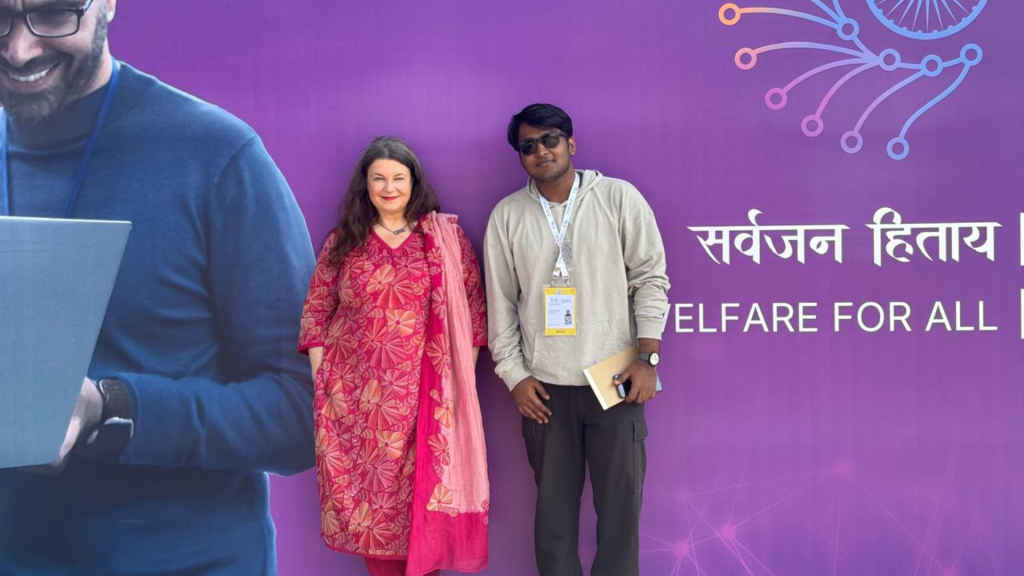
During the India AI Impact Summit, I had the opportunity to speak with OpenUK CEO Amanda Brock, and I had a lovely chat with her regarding the advancements we’re seeing right now, along with the future of AI. While the company does not really deal in products or services, I still gained many insights from her. Let’s take a look at what she said.
Also Read: Yoshua Bengio’s AI safety warning: Build intelligence first, power later
What does OpenUK do?
When you think of AI, the first thing that comes to mind is a product, or rather, services that are being offered using AI. But that’s not what OpenUK focuses on; rather, they act as a bridge between the technical community and decision-makers.
As per Amanda, they take the “difficult technical issues” from the world of open source and convey them to policymakers and lawmakers to ensure that new laws, particularly around AI, don’t accidentally suppress innovation. Not only that, but they also help enterprises to understand how sensibly they can integrate open technology into their business.
Looking beyond the ‘hype cycle’ of AI
Brock, a 30-year veteran of the tech industry, having witnessed major events like the dot-com boom, shared her thoughts on the current AI landscape. As per her, the AI right now is predictable and is in a “hype cycle” right now.
She drew a parallel between the early web development, which was initially limited by a lack of connectivity, and today’s AI. She suggested that right now, AI is currently stuck with the massive compute and power requirements, which may not be sustainable long term.
As per her, the future may not belong to the largest models but to more efficient, open-source LLMs. Brock gave an example of the Chinese models which are being popularised and suggested that, “They’re not only a fraction of the cost, but they use a fraction of the compute.”
Can AI lead to job losses?
Given Amanda’s vast experience of the tech industry, I also wanted to understand from her whether she thinks that in the current landscape, the way things are moving, AI could lead to job losses. To which she gave a very interesting reply.
As per her, “AI adoption will lead to job losses, undoubtedly, as we see AI as more of a productivity tool. But at the same time as it leads to job losses, skilled individuals will have new types of roles and I think the critical thing for everybody now is to work out how you get access to building your skills.”
Advice for college students
Last but not least, I also wanted to understand from her how college students should look at AI. Should they use AI? And what to focus on given the current market.
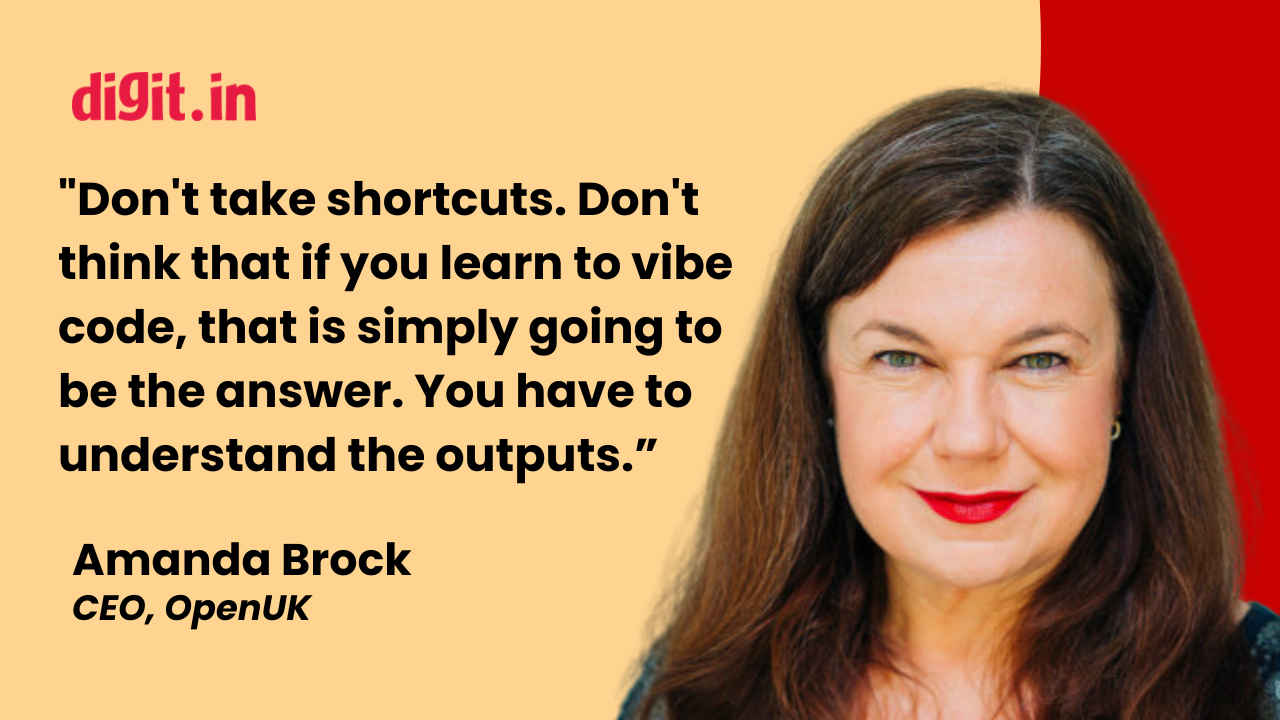
To which she replied, “Don’t take shortcuts. Don’t think that if you learn to vibe code, that is simply going to be the answer. You have to understand the outputs.” As per her, vibe coding is great, and having access to doing things you couldn’t do otherwise is great. But at the same time, it is also important to under if the outputs are good or not.


