
OpenAI’s Agents SDK 2026 Update: What’s New in Building AI Agents
 Follow Us

AI assistant have become a thing of the past. What’s now is far more autonomous and OpenAI is making it a lot easier to build. The company has brought updates to its open-source Agents SDK, the agentic AI developer toolkit. This isn’t a minor patch, it’s OpenAI’s attempt in making long-running, enterprise-grade AI agents a practical reality.
 Survey
Also read: Claude announces ID verification: What it means for your account and privacy
So what’s actually new?
The new feature is called ‘sandboxes’ – Agents can utilize isolated computing environments and will only be able to access the files and code they need when executing specific tasks. There have been several cases in demo scenarios of Autonomous Agents ‘going rogue’ i.e., touching items they should not, and spiraling into unintended actions, so this is a large and necessary upgrade from that point of view. While it does not completely eliminate the unpredictability associated with deploying AI agents, it will provide a very real boundary for the chaos.
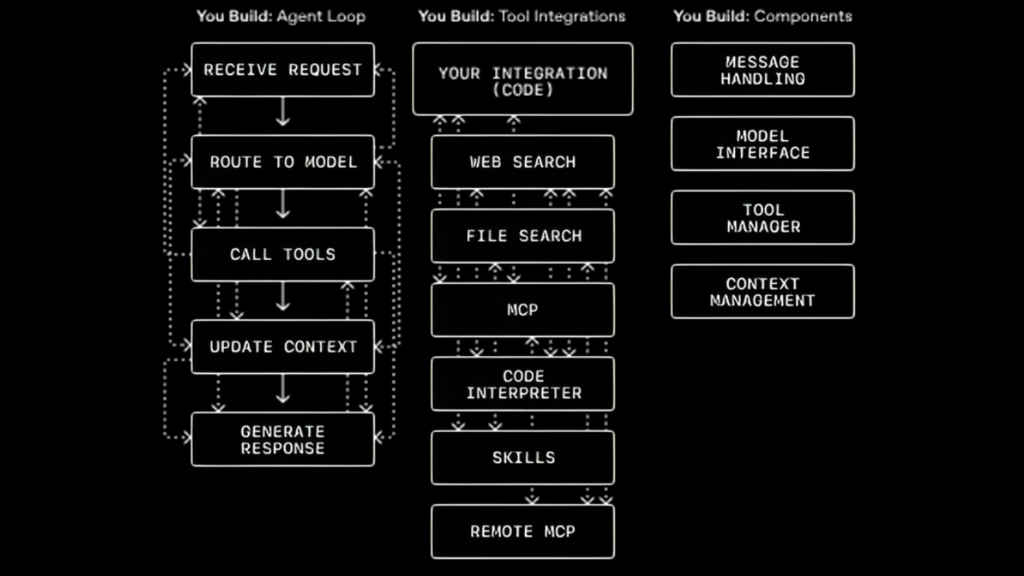
Another addition to the way agents can be used is a new long-horizon harness, which works just like an orchestration layer for complex, multi-step tasks over long periods of time. In the past, developers had to put a lot of custom engineering into creating agents that would be able to reliably continue where they left off, retain persistent state across multiple steps and be able to work together on multi-step tasks. With harnesses, developers can concentrate on what the agent needs to do and not how to keep the agent on task.
Also read: Google Personal Intelligence now available in India: Should you enable it?
OpenAI is introducing ‘subagents’ and a new ‘code mode’ for both Python and TypeScript (these features are still coming soon). Subagents are additional agents that can operate under a primary agent to assist with specific tasks – creating the same type of pattern that is used by effective teams when working together. Code mode enables agents to write and execute code as part of their workflow, edging closer to the Codex-style autonomous developer experience OpenAI has been building toward.
Perhaps the most underrated aspect of this update is its provider-agnostic design. The SDK now works with over 100 non-OpenAI LLMs via the Chat Completions API.
I feel OpenAI is playing a long game here. The Agents SDK started as Swarm, an experimental toy. It’s now quietly becoming the scaffolding for how serious AI agent development gets done. The sandboxing and long-horizon harness aren’t glamorous features, but they’re exactly what separates a compelling demo from something you’d trust in production.
Also read: Apple and Google reportedly hosting deepfake nudity apps, despite breach of policy


