

Navier-Stokes: OpenAI’s fight with a mathematician on who solved the impossible equation
 Follow Us

Generative AI and AI companies have been viewed as the public enemy since ChatGPT first came out back in 2022 and credit where it is due, the companies have managed to maintain that reputation really well through the years. Case in point: back in July 2026, OpenAI announced it was giving academics and researchers free access to its frontier models to accelerate scientific discovery, a well-meaning initiative on paper. Except, like most things OpenAI does, it got picked apart on X within hours. One reply to the announcement on X, laid out a theory – that the real play was to let researchers do the early legwork on a capped compute budget, then finish and publish the work internally once the ideas had been harvested, unlimited compute and all. A month and a half later, that’s more or less what NYU mathematician Tristan Buckmaster is accusing OpenAI of doing.
 Survey
Also read: ARM Mali G2-Ultra NX might be packing DLSS level graphics on mobile chipsets: Here’s how
The math, briefly
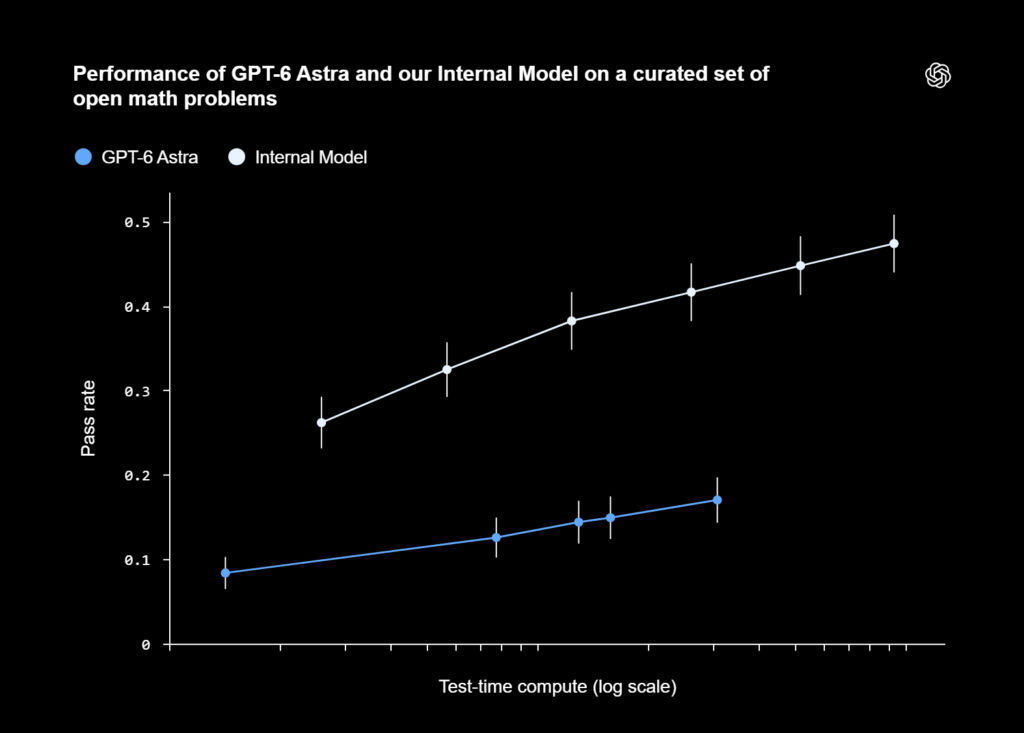
OpenAI has released a statement from September 8, declaring that an internal and not publicly available model, which is more advanced than GPT-6 Astra, generated a proof, which was formally verified in Lean, that the Navier-Stokes equations (describing fluid motion and one of the seven Clay Institute Millennium Prize Problems) can produce a singularity in a finite amount of time under smooth forcing. According to OpenAI, around 10,000 AI agents were coordinated in the process of solving the issue, resulting in 2.7 million messages and 130 billion tokens in just 88 hours due to some rumours about Anthropic, the competitor of OpenAI, solving a problem of the same type.
OpenAI’s post is generous, it congratulates Buckmaster and Anthropic researcher Levent Alpöge (working on this in a personal capacity) for a “remarkable mathematical achievement,” recognises their priority on a related, separate proof of forced 3D Euler blowup, and states plainly that no user data was accessed to solve the problem, while also, in the next line, admitting it “cannot rule out” that de-identified usage data helped improve the model that did solve it. That’s the tension the rest of this story lives inside.
Also read: We saw a gap: Logitech’s Valeriya Kostyukovskaya on the problem MX Keypad solves for developers
Buckmaster’s version
Buckmaster and Alpöge worked almost a year with Claude, Codex, and GPT-5.6/Astra, building on the construction of the forced-blowup solution that mathematicians Diego Córdoba and Luis Martínez-Zoroa first developed.
Once news started spreading that Anthropic had solved a big unsolved problem, Buckmaster reached out to OpenAI’s Sébastien Bubeck to clarify any confusion and said that this was his personal project, not an official one. Bubeck was nice about it. Three days later, in a phone conversation, Bubeck told him that OpenAI’s internal model had generated a 100-page long proof for forced Navier-Stokes solution, using “options c and d in Fefferman,” just like Buckmaster and Alpöge did since “almost nobody else” was doing it. He describes this as a “bright red flag.”
According to Buckmaster, he was told that the model was only provided with the problem statement with “very little human input,” but it proved untrue when it became clear that an entire team had guided the process, solved warm-up tasks first and used Codex to compose the exact prompts he had seen. Moreover, Buckmaster claims that he twice asked if the model had been trained on and/or had access to his Codex sessions, where he and Alpöge had kept all of their drafts, and received no response regarding the training.
Two options were presented to him: either joint and coordinated publication or writing the paper himself while excluding Alpöge from the project since he works for Anthropic. When Buckmaster opted for the former, Bubeck allegedly told him, “Why would you ruin your career?” and later, “If you don’t want me to be nice, then I don’t have to be nice.” Buckmaster nevertheless released his statement.
Bubeck’s rebuttal
Bubeck disagrees with this characterization. In a shared thread since then, he claims that he never requested the removal of Alpöge from the papers that belonged to Alpöge; the issue of authorship, he explains, was about whether an Anthropic employee could legitimately co-author a rewritten version of the Navier-Stokes proof by OpenAI, a possibility because Buckmaster and Alpöge had only completed their Euler theorem, not the Navier-Stokes one. Regarding the infamous quote, Bubeck says that it was his immediate response to being accused of “slander” midway through a phone call and being told, “I simply do not trust you,” that he immediately withdrew it, and that he regretted it immediately.
Where that leaves it
Ignore the tone, and two things are clear: OpenAI’s project on forced Navier-Stokes only started once it knew Buckmaster and Alpöge were close to cracking it, and OpenAI’s own press release cannot discount that OpenAI’s data helped train the model that did crack it. Everything else, whether this counts as sinister or simply competitive research, is up for debate based on whose side of the story you believe.
For what it’s worth, I don’t see this as that much of a coin flip. Buckmaster had every incentive to stay quiet and take the “concurrent discovery” framing OpenAI was offering him; it’s the easier, career-safer story. He chose to publish a statement that names names and quotes a call verbatim instead, knowing it would look messy. Bubeck’s rebuttal explains his intent, but it doesn’t contradict the sequence Buckmaster laid out; it mostly asks us to read the same events more charitably. When a company built on “please use our free compute to advance your research” ends up, weeks later, needing to explain why it can’t rule out benefiting from that research without credit, it makes trusting them quite a bit more difficult.
Also read: Game Development, AI, VFX: Why Indian colleges need gaming PCs


