
Innovating India: 5 key tech missions powering India’s digital future
 Follow Us
India accelerates AI leadership through compute, datasets, and LLMs
Language inclusion drives digital access via Bhashini’s multilingual AI models
Semiconductor and quantum missions fuel homegrown technology and innovation

As India marks its 79th Independence Day on August 15, 2025, the nation stands at the threshold of a new era – one defined not only by freedom but also by formidable strides in homegrown technological leadership.
 Survey
These bold, forward‑looking programs are stitching together an inclusive digital ecosystem. One where artificial intelligence reflects and serves the country’s linguistic and sectoral diversity. Where semiconductors are not outsourced but cultivated. And where education, agriculture, healthcare, cities, and emerging quantum platforms are evolving through home‑grown excellence. As we celebrate India’s technological progress, below is a comprehensive snapshot of the missions powering this journey.
IndiaAI Mission
Also read: Microsoft-Yotta to power IndiaAI Mission, where Shakti Cloud meets Azure AI
The IndiaAI Mission is propelling the nation to the forefront of artificial intelligence with a ₹10,300 crore outlay over five years, targeting a top-five global AI leadership. As of June 2025, India’s common compute capacity surpassed 34,000 GPUs, with 17,374 GPUs already installed and accessible to developers. Over 367 datasets have been uploaded to the IndiaAI Kosh platform. The initiative backs the development of indigenous LLMs, with 43 out of 506 foundational AI proposals focused on LLMs, each requesting more than 2,000 GPUs. The AI market in India is projected to reach $7.8 billion by exit 2025, growing at a rate of 20% annually.
Digital India Bhashini
Digital India Bhashini champions linguistic inclusion across India’s digital landscape, supporting 35+ Indian languages with over 1,600 AI models and 18 language services as of May 2025. The initiative collaborates with more than 50 government ministries, startups, and private organizations to deliver innovative solutions. Bhashini has digitized over 1 billion pages and reached 200 million users through various applications, aiming to deliver digital transformation for over 800 million non-English speakers.
Also read: Top 5 Indian gamers who made the nation proud
Centres of Excellence in AI
India is rapidly expanding its Centres of Excellence in AI with a new Centre for Education announced in the 2025–26 Budget, backed by a ₹500 crore outlay. Three existing CoEs–focused on healthcare (AIIMS, IIT Delhi), agriculture (IIT Ropar), and sustainable cities (IIT Kanpur)–were set up with ₹990 crore, fostering advanced AI research and public-private collaboration from 2023–2028. These centers integrate AI into critical sectors, scale talent by partnering with 70+ institutes, and are projected to help create thousands of jobs and contribute to India’s global AI innovation ambition.
National Semiconductor Mission
The National Semiconductor Mission aims to transform India into a global semiconductor hub. By mid-2025, six chip fabrication units are under development, with the country set to unveil its first domestically produced 28–90nm semiconductor chip by the end of 2025. These fabs target a daily capacity of 7 crore chips, with investments nearing ₹1.5 lakh crore. The latest HCL–Foxconn joint venture will churn out 20,000 wafers per month, serving key sectors like automotive, telecom, and power.
National Quantum Mission
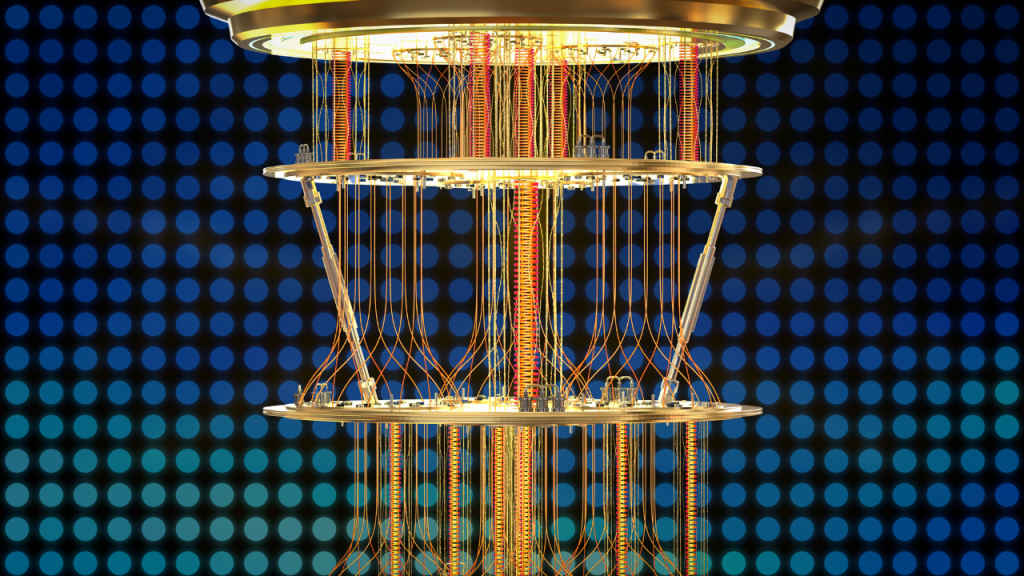
Launched in April 2023 with a budget of ₹6,003.65 crore, the National Quantum Mission aims to make India a global leader in quantum technology by 2031. The initiative connects 152 researchers across 43 institutions, fostering innovation in quantum communications, cryptography, and computing. Focus areas include developing quantum-resilient encryption and launching India’s first quantum satellite within two to three years.
Also read: QpiAI: India’s quantum leap from Bangalore to the world


