India AI Summit: MIT’s Ramesh Raskar says AI’s real impact lies beyond tech
 Follow Us
GenAI will reshape the remaining 95% global economy
India can lead through democratized, citizen-owned AI
Focus on long-term AI transformation, not short-term flaws

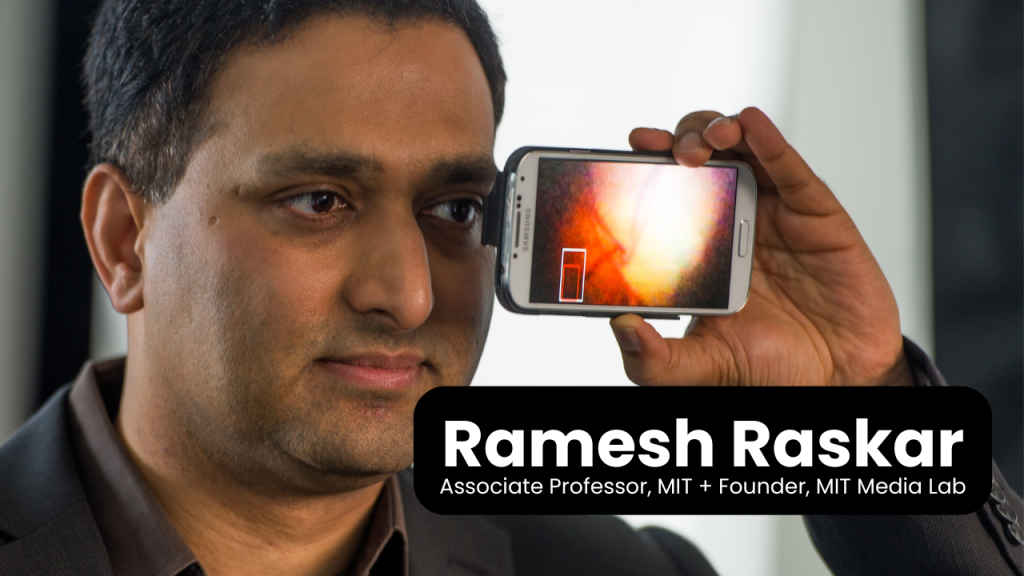
Ramesh Raskar has spent decades thinking about how technology scales across societies. At the India AI Impact Summit 2026, the MIT Media Lab pioneer made it clear that artificial intelligence must be viewed not as a short-term disruption but as a long-term structural shift that will reshape economies, industries, and individual agency.
 Survey
“These are such important questions and we cannot solve them overnight… these questions have persisted through different technological revolution and different diffusions,” Raskar said, while speaking about the impact of AI at the India AI Impact Summit 2026.
“So I think it’s important to take a kind of a slightly longer term view,” Raskar emphasised.
That long-term framing runs counter to the current obsession with GenAI’s daily breakthroughs and missteps. From hallucinations to misinformation, public discourse has been dominated by what AI gets wrong today.
But Raskar’s argument is that focusing too narrowly on present imperfections risks missing the broader transformation already underway.
Also read: MIT study says 95% of GenAI fails to deliver value: So why the layoffs?
“I would encourage you to not get too focused on what’s happening right now,” Raskar said. “It will be almost like talking about the weather. There’s not much you can do, because there are enough forces out there that will go and solve those problems.”
In his view, many of the current shortcomings of large language models are simply technological problems waiting to be solved. “All these things will be solved in the next year or two… if it’s a technological problem, it’ll get solved with technology,” he noted, urging policymakers and industry leaders to shift their attention to deeper structural questions instead.
One of those questions is whether AI is genuinely creating new forms of economic opportunity. Raskar pointed to emerging research suggesting that while adoption is widespread, meaningful livelihood transformation is still nascent.
“Most of that is for caption creation, asking questions, but only 18% said it’s actually helping them… getting a new form of livelihood,” he said. “It’s very easy to start having conversations about what to do now.”
Yet for Raskar, the true economic impact of AI lies beyond today’s use cases. He reframed GenAI not merely as a social-impact tool but as a massive economic engine poised to transform sectors far beyond the technology industry.
Also read: From factories to bazaars, what the India AI Impact Summit’s skilling panel is really arguing for
“Because if you think right now, the world GDP is about 100 trillion dollars, out of which only about 5 trillion or less is in IT,” he said. “So the remaining 95 trillion is what GenAI is going to impact in an amazing way.”
At the heart of Raskar’s vision is a deeply democratic idea of AI ownership. Rather than concentrating power in a handful of large platforms, he believes the next phase must enable individuals and communities to build and control their own AI systems.
“Our mission is to see how we can create highly democratized AI,” he said. “How can every one of us have their own micro AI… you don’t want to become just a slave to some masters for creating AI in some factories. But every one of us should be creating their own AI.”
For India, with its digital public infrastructure and population-scale platforms, that vision may be closer than it seems. And if Raskar is right, the real story of AI will not be written in model benchmarks or chatbot updates, but how deeply it reshapes the other 95% of the global economy.
Also read: Future of work and AI jobs: What key Indian leaders predict and warn


