
How one man powered his home for 8 years using nothing but old laptop batteries
 Follow Us
A French DIY enthusiast assembled over 1,000 discarded laptop batteries into custom 100 Ah packs, safely housed in a ventilated shed.
He matched and balanced cells, then wired them into a robust battery bank that required no replacements over eight years of use.
A 24×440 W solar panel array reliably recharges the system, powering his entire home and appliances day and night.


While most of us toss our old laptops into the recycling bin without a second thought, one ingenious bloke in France saw something completely different. Where others saw electronic waste, he spotted the makings of an entire home power system. What started as a curious experiment in November 2016 has now become one of the most remarkable DIY energy projects ever documented, proving that sometimes the best solutions come from thinking outside the box.
 Survey
Meet Glubux, the mastermind behind a project that’s been quietly powering his entire home for eight years using nothing more than discarded laptop batteries and solar panels.
The birth of an extraordinary idea
The story begins back in November 2016 when Glubux stumbled upon videos of someone powering an electric bicycle using recycled PC batteries. Rather than dismissing it as a novelty, he saw potential on a much grander scale. At the time, he was already dabbling with renewable energy, using a modest 1.4kW solar panel array and an old 24V 460Ah forklift battery to meet some of his electricity needs.
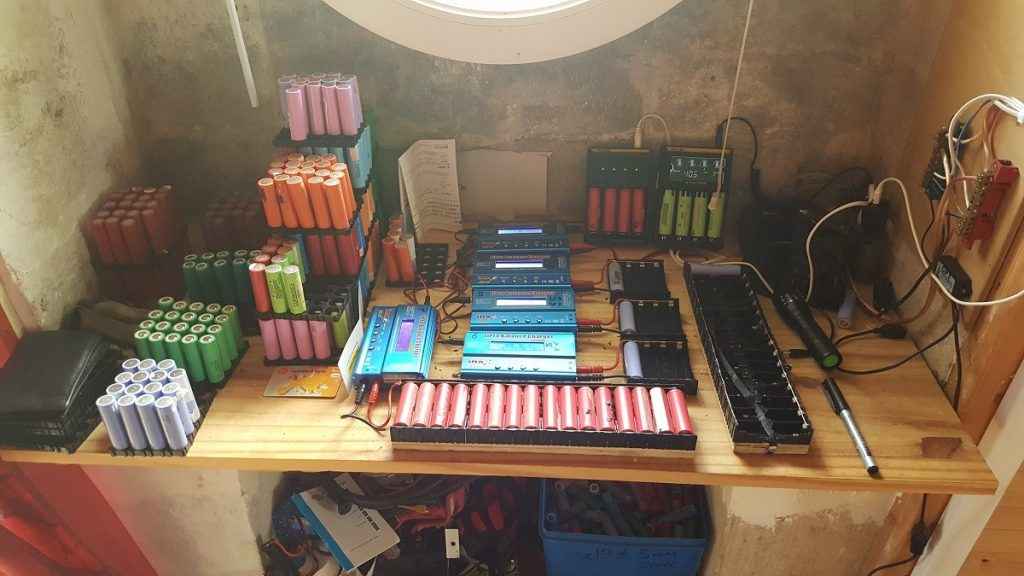
But Glubux had bigger ambitions. He wanted to create a completely self-sufficient power system that could handle his entire household’s energy requirements. The challenge was finding an affordable way to store enough energy to make it work reliably day and night, season after season.
That’s when laptop batteries entered the picture. These ubiquitous power packs, often discarded when laptops reach the end of their useful life, still contained perfectly functional lithium-ion cells. Glubux realised that with careful selection, testing, and organisation, these cells could form the backbone of a serious energy storage system.
Building the battery empire
The scale of Glubux’s undertaking becomes clear when you consider the numbers. He collected over 1,000 laptop batteries, carefully sorting and testing each one. This wasn’t a matter of simply plugging them in and hoping for the best; each battery had to be dismantled, with individual cells extracted and evaluated for capacity and condition.
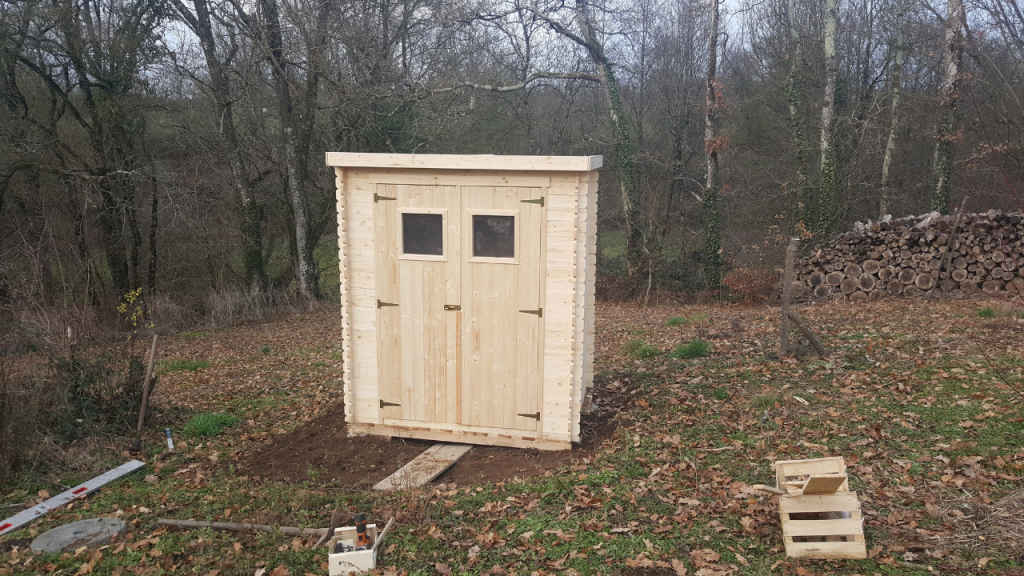
The process required building a dedicated shed located 50 metres from his home to house the entire system. This wasn’t just for convenience; it was a sensible safety precaution. Housing over a thousand lithium-ion cells requires proper ventilation, temperature control, and fire safety considerations.
Glubux then faced the technical challenge of organising these individual cells into functional battery packs. He carefully matched cells by capacity and condition, creating packs that could store approximately 100Ah each. The connections between cells were made using copper wiring to ensure efficient power transfer and minimise losses.
The engineering didn’t stop there. Early in the project, Glubux encountered issues with uneven discharge rates between packs that contained different numbers of cells. Rather than abandoning the approach, he adapted by rebalancing the packs and adding cells where needed, a perfect example of the iterative problem-solving that makes DIY projects so fascinating.
Solar power integration
The laptop batteries were only half the equation. To create a truly self-sufficient system, Glubux needed a reliable way to charge his massive battery bank. Solar power was the obvious choice, but the scale had to match his energy storage capacity.
Initially working with his modest solar array, Glubux gradually expanded his setup. In recent updates, he revealed that he’s now running 24 solar panels, each rated at 440W peak power. This substantial array ensures adequate power generation even during the shorter days of winter, when solar irradiance is at its lowest.
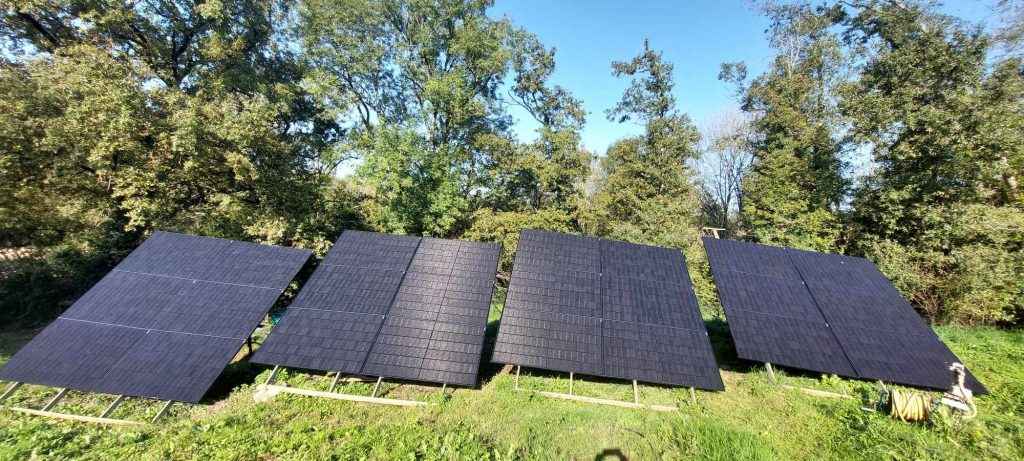
The combination of extensive battery storage and robust solar generation created a system capable of handling significant power demands. Glubux claims he can run his entire household from the system, including energy-hungry appliances like his washing machine.
Eight years of reliable service
Perhaps the most remarkable aspect of this entire project is its longevity and reliability. In a recent update posted in December 2024, Glubux reported that after eight years of continuous operation, he hasn’t needed to replace a single battery cell. This speaks volumes about both the quality of his initial selection process and the robustness of properly maintained lithium-ion technology.
The system has also proven remarkably safe. Despite concerns that naturally arise when dealing with large numbers of lithium-ion cells, there have been no reported incidents of fire hazards or battery swelling throughout the system’s operation. This success likely stems from Glubux’s careful approach to cell selection, proper ventilation in his dedicated shed, and ongoing monitoring of the system’s performance.
The technical reality behind the achievement
What makes this project particularly impressive is the technical knowledge required to make it work safely and effectively. Lithium-ion cells from laptop batteries aren’t designed to be used in large-scale stationary storage applications. They require careful management of charging and discharging cycles, temperature monitoring, and protection against overcharge or over-discharge conditions.
Glubux had to essentially reverse-engineer the battery management systems typically found in commercial energy storage products, adapting charge controllers and inverters to work with his custom battery configuration. The fact that his system has operated reliably for eight years suggests he got these critical details right.
One interesting technical challenge mentioned was a gas buildup under the plastic wrapping of some battery packs. This phenomenon, where gas accumulates between the outer wrapping and the actual cells, can make batteries appear swollen when they’re actually in good condition.
Environmental impact and sustainability
Beyond the technical achievement, Glubux’s project highlights an important environmental consideration. Electronic waste is a growing global problem, with less than a quarter of e-waste being properly collected and recycled according to UN statistics. Projects like this demonstrate the potential for extending the useful life of electronic components that might otherwise end up in landfills.
The environmental benefits extend beyond waste reduction. By creating his own renewable energy system, Glubux has likely reduced his reliance on grid electricity for eight years and counting. Depending on his local energy mix, this could represent a significant reduction in carbon emissions over the project’s lifetime.


