
From deepfakes to data: Pope Leo XIV’s AI guardrail message explained
 Follow Us
Pope Leo XIV warns AI needs law, not empty slogans and false promises
Unchecked AI risks deepfakes, inequality and digital-age slavery
Human dignity must anchor every AI guardrail debate, says the Pope

In the conversation on AI ethics and policy framework guidance, religion has finally entered the chat. Well, Pope Leo XIV, to be specific, and his remarks on artificial intelligence and its place in the world alongside humans and human intelligence.
 Survey
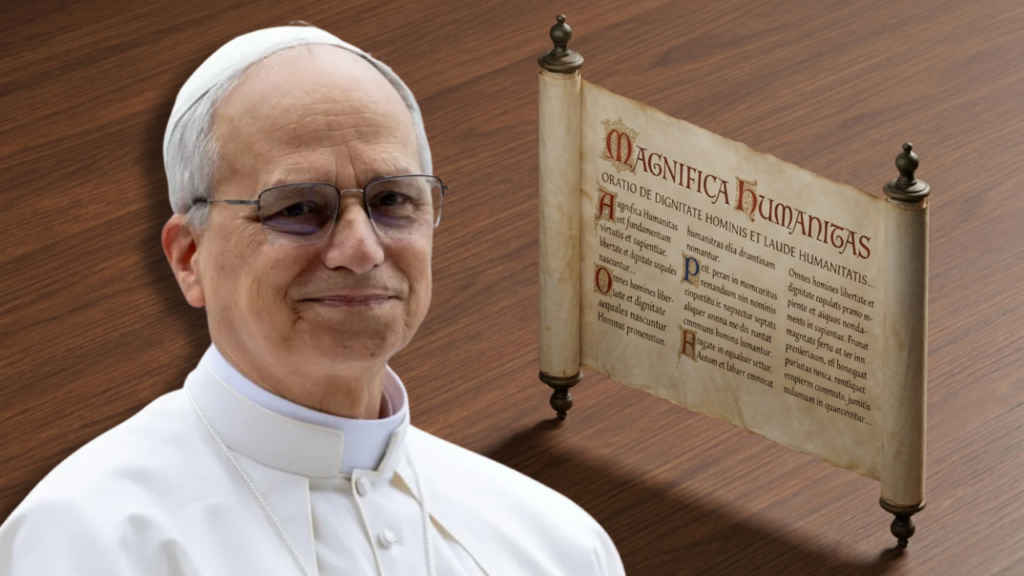
Pope Leo XIV was speaking on the occasion of publishing his first official memo to the public, known as an encyclical, titled Magnifica Humanitas. In no small measure, the Pope delivered a range of remarks concerning the ethical and moral risks posed by AI, which is developing faster than any previous tech phenomenon.
The Bishop of Rome, another official title of the Pope, also rang a warning to creators of AI and the responsibility they hold in shaping the future of humanity at an unprecedented scale. He also made remarks for anyone with any significant power, like heads of states, national governments, big tech companies and more.
On safeguarding the “human person” in the time of AI, here’s some interesting thoughts from Pope Leo XIV that may have a long-term impact on AI ethics.
“Technology is never neutral”
In matters related to AI, Pope Leo XIV neither showcased despondency nor preached worship. He, in fact, acknowledged the positive ways technology and AI can improve the quality of human life all over the world, across all social backgrounds.
But it depends on who’s building tech for what outcomes, the Pope added as an important caveat, as outlined in his encyclical. AI isn’t anti-human, but it’s not wholly neutral either, he put across. A lot depends on who funds AI development, how it’s deployed and its ultimate governing principles. This means asking who controls, who benefits and who is unintentionally harmed by AI advancements.
Invoking ethics in abstract not enough
On the matter of AI ethics, the Pope appeared unequivocal and explicit. Pope Leo XIV warned against hollow ethics washing without any concrete follow through.
Also read: What does the evolution of AI so far tell us about its future?
“It is not enough to invoke ethics in the abstract,” the Pope declared, calling stakeholders to work towards “robust legal frameworks” and “independent oversight” mechanisms on matters related to AI ethics. AI guardrails, he argued, need enforceable regulatory teeth to prevent misuse and harm caused by AI.
“Ownership of data can’t be left in private hands”
Pope Leo XIV sees data concentration as a governance problem brewing in the AI industry, one that can’t be tip-toed around. In his encyclical, the Pope warned how if power is concentrated in the hands of a few, it can be less transparent and operate above public oversight. In a democratic society, it’s a grave danger, he said.
“Data is the product of many contributors and should not be treated as something to be sold off or entrusted to a select few,” wrote the Pope. “It is necessary to think creatively in order to manage data as a common or shared good, in a spirit of participation.”
AI-generated unreality is a real danger
Taking a crack at the rise in AI-generated deepfakes of all kinds, Pope Leo XIV exercised his voice to address the menace directly, without mincing any words. His warning couldn’t be more stark, as he linked truth to democracy. “Indifference to truth leads to totalitarianism,” the Pope said.
Earlier in the year, on the occasion of World Communications Day, Pope Leo XIV had expressed a similar warning about AI deepfakes. He had said that AI shouldn’t twist and “interfere with information ecosystems” by simulating faces, voices and empathy. Overall, the Pope’s larger stand on AI makes misinformation not only a content-moderation issue, but a democratic-resilience problem.
Overall, Pop Leo XIV isn’t arguing that AI development should be slowed down because technology is scary. He is strongly suggesting that because AI is so important and its impact so far reaching, that it should be governed effectively for social and political good. “In the era of AI, when human dignity is threatened by new forms of dehumanization, ours is the pressing duty to remain profoundly human,” he emphasised.
Also read: Can religion help fix AI ethics or make it worse?


