Elon Musk says Apple-Google AI deal is bad for all of us, here’s why
 Follow Us
Google and Apple unveil partnership for Apple Intelligence push
Musk claims its an unreasonable concentration of power for Google
Musk voices his criticism of Google's data monopoly on X
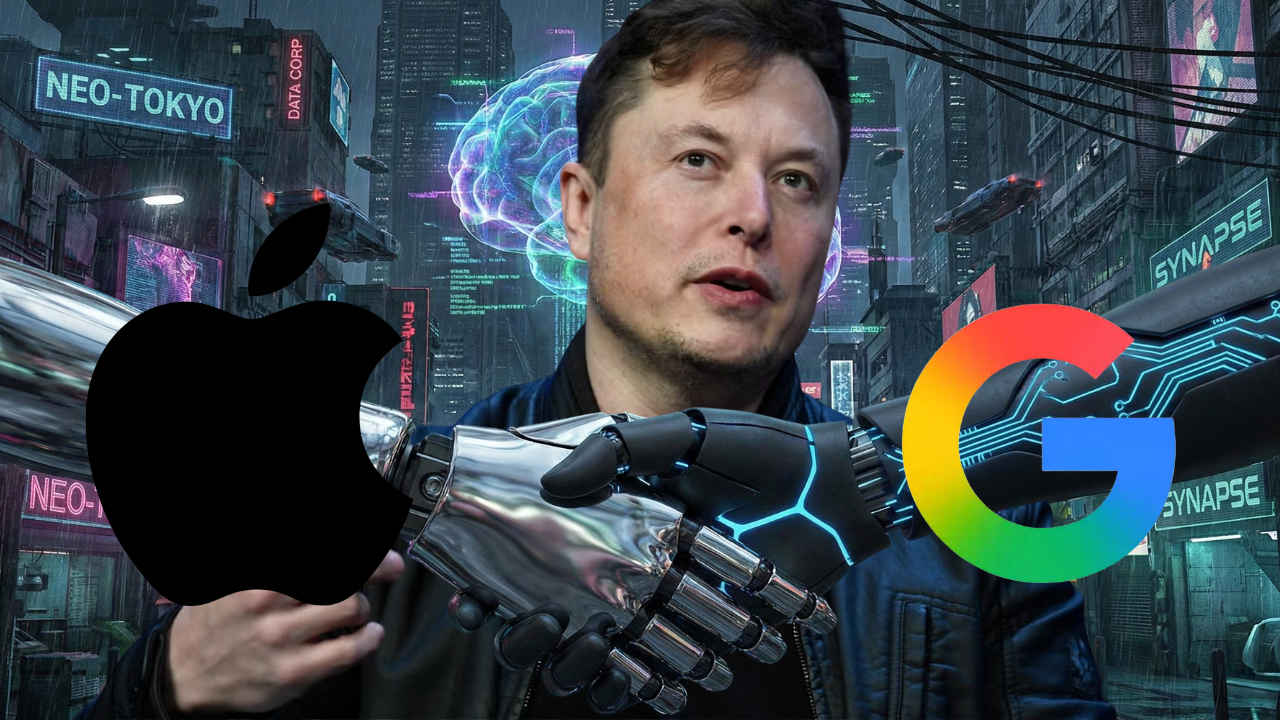

Apple and Google have confirmed a multi-year partnership to integrate Google’s Gemini models into the next generation of Siri, a move that effectively bridges the divide between the world’s two most dominant mobile ecosystems. While both the companies celebrated with Alphabet hitting a valuation of $4 trillion, Elon Musk wasn’t very happy with this development. He saw something far more sinister. Taking to X (formerly Twitter), the xAI CEO wasted no time branding the collaboration a threat to the digital order.
 Survey
Also read: Apple turns to Google Gemini to fix Siri’s long-standing AI problems: Here’s why
The triad of control
Musk’s critique, labelled as a warning by some on X while others call it sour grapes, hinges on the sheer scale of the data monopoly being formed. His argument is structural, Google already dominated the world’s mobile operating systems with Android and the web browser market with Chrome. By embedding its Gemini AI models directly into the iPhone’s consciousness via Siri and Apple Intelligence, Google is basically securing the last major independent fortress of consumer data that is the iOS ecosystem.
For Musk, who has positioned his own company, xAI, as a “truth-seeking” alternative to the corporate giants, this deal closes the door on competition. If the world’s two largest mobile platforms are fed by the same AI brain, where does a third competitor find the oxygen to breathe?
The xAI factor
Also read: Sam Altman’s problem: Apple’s Gemini pick for Siri disempowers ChatGPT
It is impossible to look at Musk’s comments in isolation away from his own possible commercial interests. His AI startup, xAI, creators of Grok is currently embroiled in a lawsuit against Apple and OpenAI, alleging that their previous partnership constituted an exclusionary monopoly. Musk views this new Apple-Google alliance as an extension of the same “walled garden” tactic. In his view, Apple isn’t just choosing a vendor, it is making a kingmaker. By standardising Gemini on iPhones, Apple makes it harder for Grok – or any other chatbot for that matter – to gain a foothold on the world’s most premium hardware.
A valid antitrust concern
Despite Musk’s obvious bias, his “power grab” narrative might resonate with regulators and users who already scrutinise big tech. The US Department of Justice has spent years arguing that Google illegally maintains its search monopoly. Musk is bringing up a newer talking point, that Google is leveraging its search dominance to corner the Generative AI market before it fully matures.
For now, the alliance stands. Apple gets a working AI infrastructure without the massive R&D sinkhole; Google gets access to 2 billion active Apple devices. But as the ink dries, Musk’s warning looms over the industry. Is this finally the dawn of a smarter Siri, or the moment the internet’s two gatekeepers decided to lock the gates from the inside?
Also read: Anthropic unveils medical AI suite to rival ChatGPT Health: Key features explained