
Developers need to stop shipping AI slop: AWS’ Darko Mesaros explains how
 Follow Us
Kiro Crew is an open-source AI agent workspace for developers based on spec-driven coding
Spec-driven development acts as a contract between developer and agent
Vibe coding stays valid for prototypes, specs for production code, says AWS
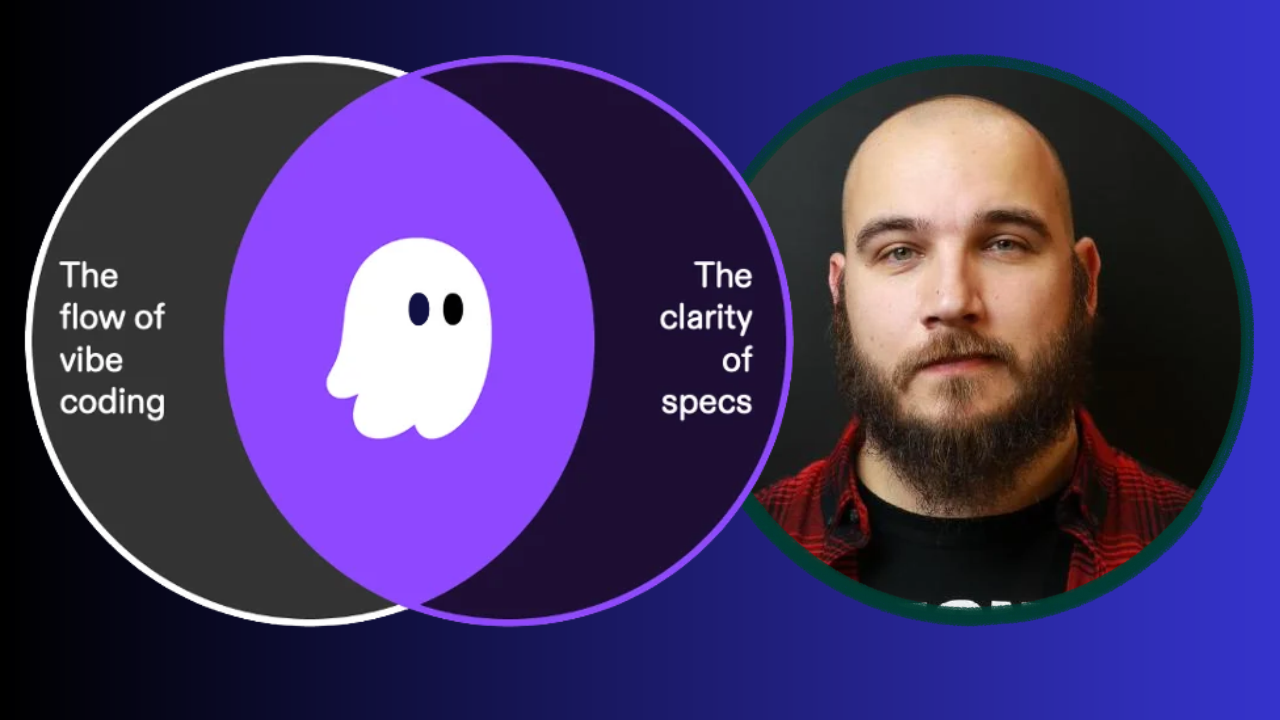

“From the world of AI slop we see online, where there’s just low-quality content being created – there’s also AI slop in software development,” says Darko Mesaros, Distinguished Developer Advocate at Amazon Web Services (AWS).
 Survey
And he even points to some of the tell-tale signs of poorly AI-generated code. “We all know how an AI-developed application looks. It has this look to it,” Mesaros points out. Same layout, same gradient, same README file.
“But it’s not about the looks, it’s also about the quality,” which matters, according to Mesaros. It’s 2026, and AI has advanced so much that even agents can write code. In this reality, knowing what the code is doing and caring enough to check if the generated code works as intended is going to be increasingly important for developers to master, argues AWS’ Darko Mesaros.
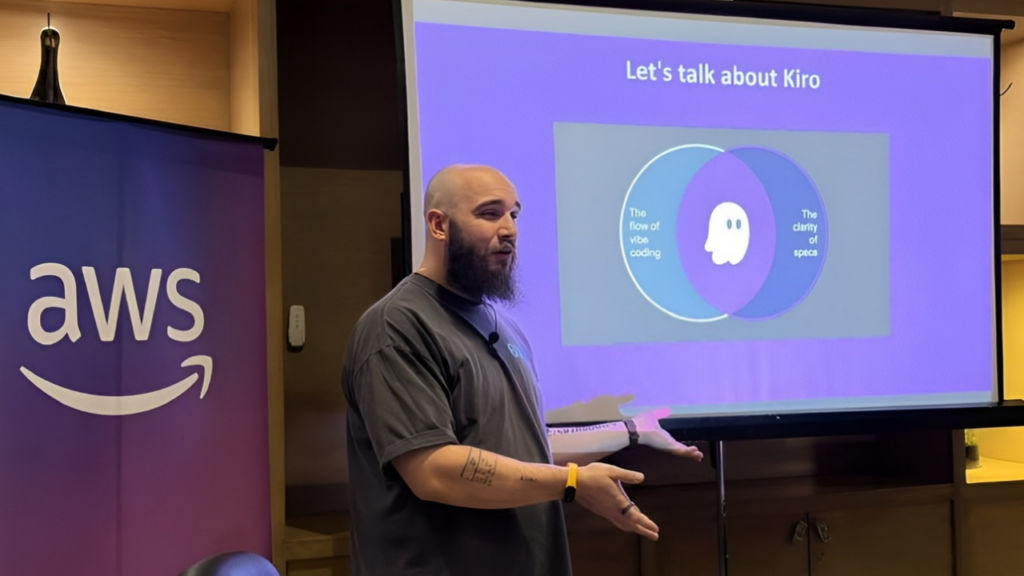
It’s not a model problem, it’s a process problem, and at a select media roundtable in Bengaluru, AWS wants to make the tedious part of coding and software engineering worth doing again.
Also read: Google introduces AI-powered vibe coding to turn ideas into real apps instantly
“How can we enable developers to apply the best practices of software development and use AI to build that good piece of software?,” asks Darko Mesaros. The response is Kiro, and the newly launched open-source toolkit called Kiro Crew.
Making AI-enabled coding spec-driven again
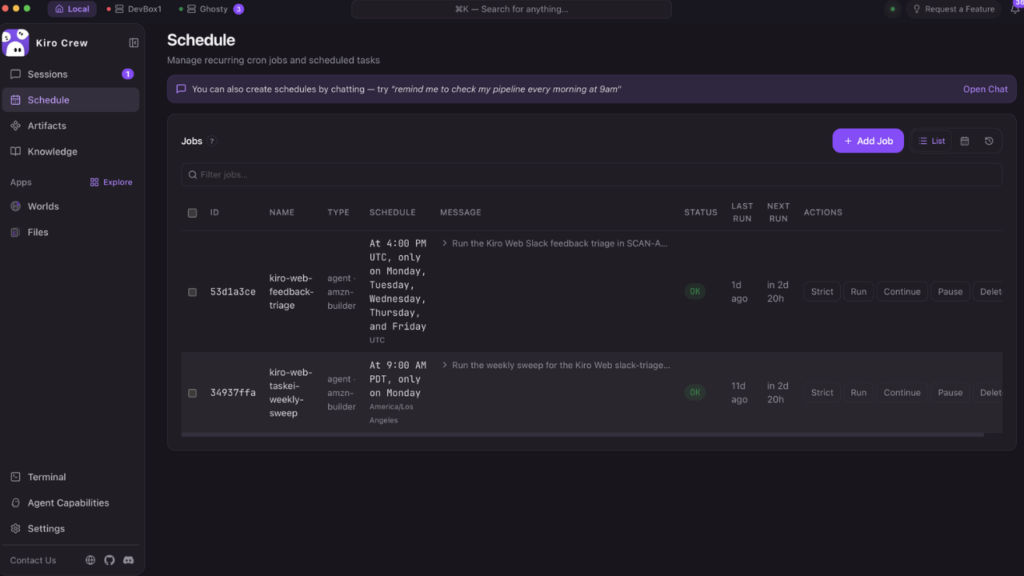
Kiro Crew is an open-source workspace with self-learning AI agents that act as autonomous teammates for code development. Not only is it heavily used internally within Amazon, but some Indian startups have started walking down Kiro’s spec-driven development path as well. Stock trading platform Dhan, healthcare provider Pristyn Care, and fintech firms Analytics Fox and Glimmertech all utilize Kiro’s structured workflows to dramatically accelerate prototyping cycles, according to AWS.
All this because Kiro is aimed to force developers to stop evading the best practice in coding, which is spec-driven development. Why do programmers and code developers bypass this important step? Because it’s quite tedious, forcing developers to come up with requirements doc, design doc, task list, and other project blueprints before even a line of code is written. AWS and Mesaros are honest about why developers have evaded spec-driven development.
“Spec-driven development is a practice that developers have been using in software development for a long, long time, but it is one of those things that’s incredibly tedious,” he said. “You have to create a requirements doc where you explain what a specific feature would do to users. Then you write a design document where you explain which libraries you’re going to be using, which frameworks, what’s the tech stack. And then you write a bunch of lists of tasks. That’s tedious and quite hard. As a developer, I would just write code. But with AI, spec-driven coding becomes the easy part.”
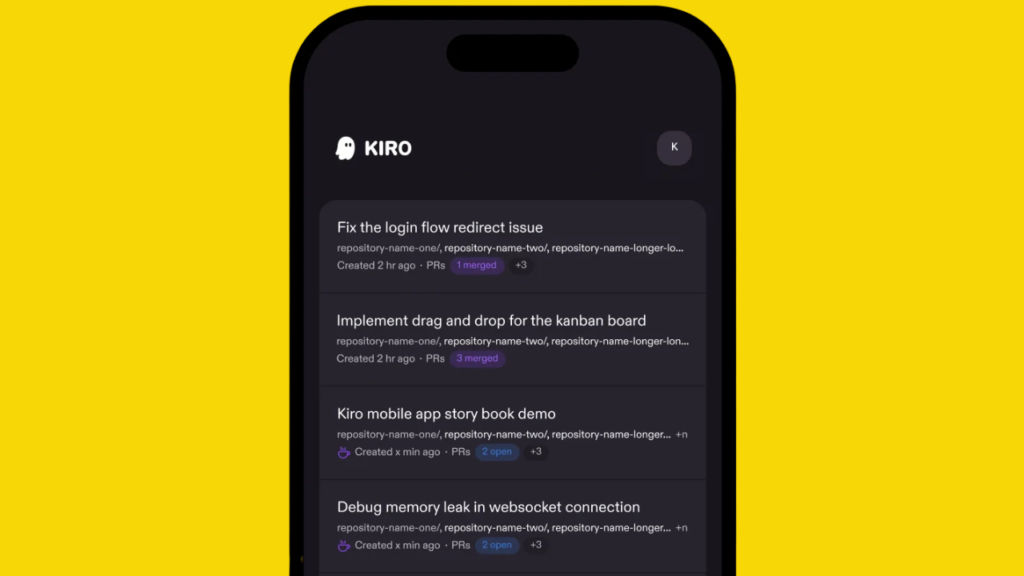
That inversion is one of the key features of Kiro Crew, with its emphasis on spec-driven development. Kiro generates all three documents from a prompt, then holds itself to these guidelines while generating code. “This is a contract between a developer and an agent – in this case Kiro – of what Kiro will be building,” Mesaros said. “So you can ensure that what you actually want to build will be built.”
Also read: Cursor unveils new AI agent to take on Claude Code and OpenAI Codex: What it can do
Why is this increasingly necessary in code development? Because it helps catch ambiguity before it gets cemented into shipped code, according to Mesaros, who explains with a relatable example. “A requirement may say, as a player, when I click a button, a thing will be deleted. The question is how it will be deleted. Will it be soft deleted or hard deleted? Those are some of the big questions that can actually bring the most expensive bugs – even before a first line of code is written.”
Kiro layers additional checks on top of its verification steps, using symbolic AI hand in hand with the language model to query requirements, in tandem with additional tests generated from the design doc. As Mesaros put it, “it’s so much more than just an LLM writing a markdown file and reading it again.” His own reason for wanting it is less architectural, “I hate when all of a sudden an agent is producing thousands of lines of code that I have no idea what’s going on.”
Vibe coding isn’t the enemy of developers
If you expected the spec evangelist to tell you to stop vibe coding, he won’t. Mesaros believes vibe coding is here to stay, and increasingly a necessary step in how code is generated going forward.
“I think vibe coding is a viable option,” he said. “Vibe coding is an excellent way to quickly get stuff out. Just prototypes and quick turnaround is just fantastic, and I think people should be exploring vibe coding as much as they can. But at a certain point, when you start introducing potential sensitive information, security, you want to make sure those things are actually quite solid. So the existence of spec-driven development doesn’t mean you should stop vibe coding. It means you should apply spec-driven development for things that need to be spec-driven developed.”
It all depends on your code’s blast radius, as developers like to call it – how your code will impact real world scenarios. Vibe coding is great for fast prototyping, but should be scrutinised extra carefully whenever it touches credentials, money or users. There is a cost argument too, which lands harder every month token bills grow.
Also read: Cursor, Claude, Codex: If you want to code with AI, look no further
“While spec-driven development slows you down initially, you’re actually done faster ultimately, and it potentially saves tokens and money,” Mesaros said. “When I’m certain on the spec, it can just literally one-shot things instead of iterating over multiple loops and costing many tokens.”
Developer need to control agents and AI slop
Ultimately, it all comes down to how good is the human in the loop, according to Mesaros. “A developer who knows what they’re doing plus an agent is so much better than a developer who doesn’t know what they’re doing plus an agent.”
He explains it with logic that’s hard to argue against. “An agent is pretty good at building code from scratch, but you’ll probably run into problems. What about operational metrics? How do you maintain it for the long term? So I always encourage my fellow developers to still keep honing the developer craft.”
Mesaros redefines the job description of a modern day developer in the AI era, without mincing any of his words. “The role of the developer is not the person who types in the actual code, per se, but the person who orchestrates a bunch of different agents to produce high-quality code. And also, it’s the responsibility of the developer to make sure that the project they’re building is resilient to AI slop.”
Mesaros’ practical advice to all developers? Stop treating agents as a bolt-on. “You need to optimize for agentic development. Trying to shove an agent into a traditional development work practice doesn’t work well,” he said, pointing to shipping skills alongside the project itself so agents know how to contribute, and to shifting left: “Local testing should be done as much as possible instead of pushing it somewhere else.”
AI-enabled code development often fails not because of incompetence alone but increasingly due to indifference from developers involved in the coding process, which is where AI slop creeps into software, warns Mesaros. “A lot of the source of AI slop is when you don’t care. Like if I say, build me a thing, I don’t care – it gets lost. But if you intentionally build something, if you pay attention to what you’re building, the thing that you produce is going to be way better.”
“In 2017, the paper that launched the whole AI revolution was called Attention Is All You Need,” says Mesaros, in his closing remarks. “It created the whole transformer model – it’s the T in GPT. And what’s interesting now in 2026 is that to be successful as a developer with AI, attention is all you need. If you just let it do its thing without caring, it’s probably not going to be good,” he warns.


