
Design for waste with no jugaad: Dassault Systemes on Indian tech IP innovation
 Follow Us
Three Dassault Systemes leaders explain why India still imports its blueprints
India's IP innovation problem isn't talent, but iterative jugaad and lack of deep tech funding
Semiconductors, datacentres, batteries are key areas where design IP begins to matter

If you examine India’s tech manufacturing ambitions in the last three years, and track the money beyond all the sloganeering, the numbers are genuinely staggering. From the fab announcement to 100-plus datacentre investments, gigafactories to quantum startups, things are gathering pace. PLI money has flowed, land allotted, ribbon-cuttings have taken place aplenty.
 Survey
However, there’s a far more fundamental question sitting beneath everything that’s being built on India’s burgeoning tech aspirations, a question that nobody in the ecosystem enjoys answering. Is India’s high tech building its own tech IP or still designing for IP owned by others?
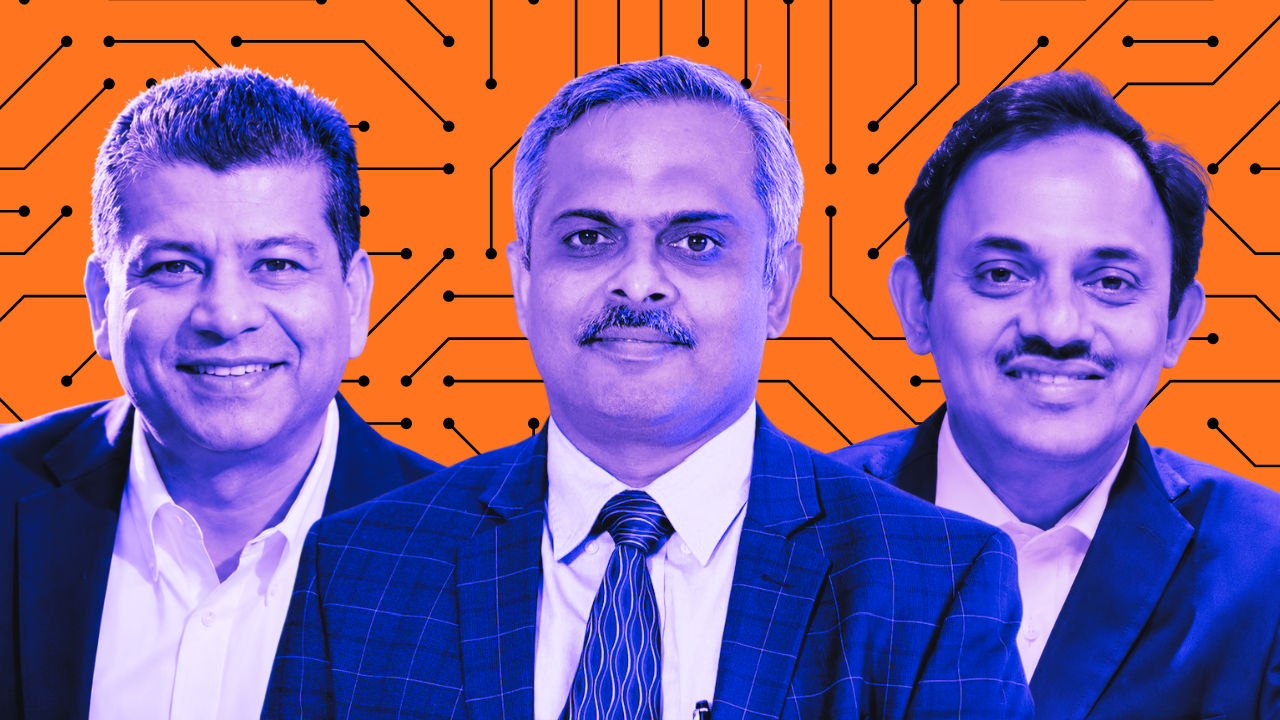
I put that broad question to three senior leaders at Dassault Systemes during a recent visit to the French engineering software major’s Pune campus. From R&D, boardroom and sales floor, I got a sense of what Indian manufacturers actually want and are doing to get to the promised land. Their response converged to form an answer more unique than the boilerplate Indian tech optimism story.
IP innovation in India: An honest assessment
Sudarshan Mogasale, CEO of Dassault Systèmes Solutions Lab in India, doesn’t dispute the fact that India has spent decades as the world’s back office for research. He counts it as a major contributing factor to India’s capability build up.
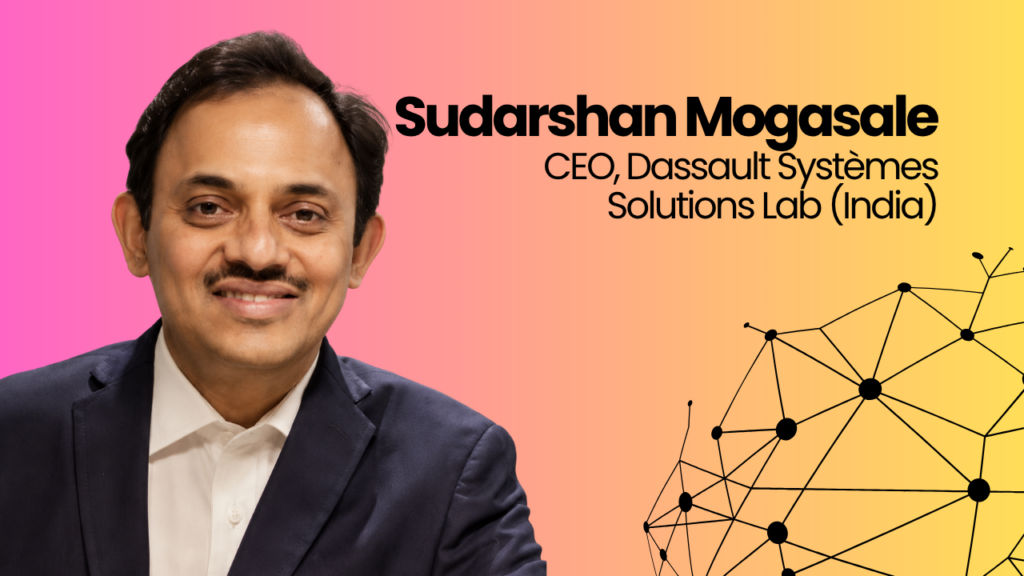
“We were the design research lab of the world, and there is no harm in being that. It has elevated our country in high tech research areas. Otherwise, where do you learn from? It’s great to be there and it should continue,” he says, while suggesting an ongoing acceleration of this trend.
Mogasale points to space research as the most visible proof of this acceleration. Skyroot is the name everyone knows now and for good reason, but around 400 companies are now working in India’s private space sector, according to Mogasale. In his own lab, he’s witnessing a diversification of tech applications – quantum companies, biotech founders, an MRI-imaging outfit called Brainsight. “I’m surprised how much progress we have made from two years back till now” Mogasale points out.
Nevertheless, Mogasale explains the tech IP gap in practical terms. “For foundational technologies, it takes years, because the gestation period is high and so is the risk. And traditionally, building these long-term capabilities has attracted low capital in India. But that’s changing, and it’s only a matter of time.”
That’s the whole IP problem from a cutting edge research lens, one that has nothing to do with engineering ability. Indian startups cluster in SaaS and applications because that’s easiest to attract investors. “Most of the companies are bootstrapped or not well funded, so it’s quite natural that people come there first,” as Mogasale puts it. Deep tech endeavours that leads to IP innovation asks investors for a decade of patience which hasn’t had many backers in India.
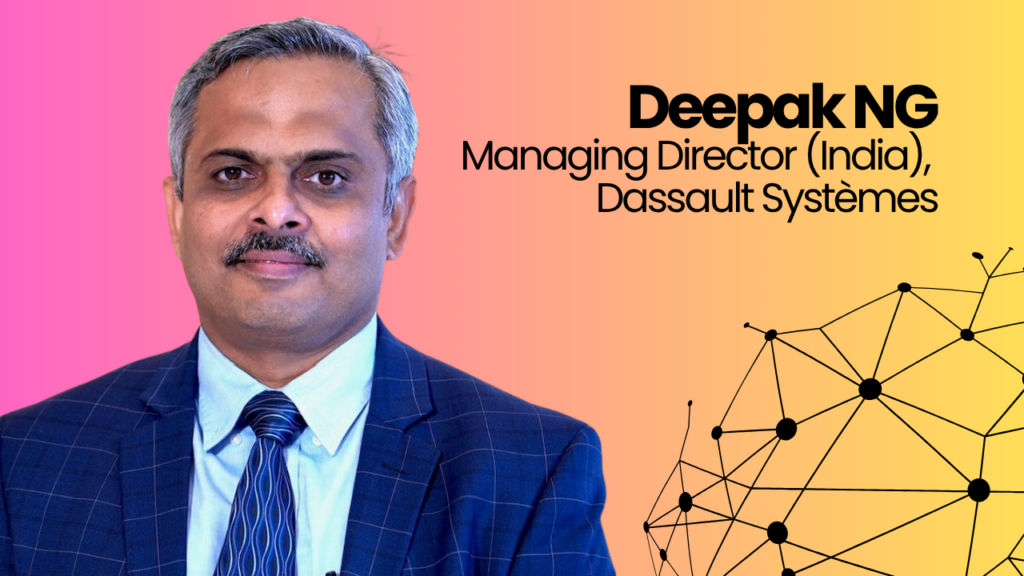
“Overnight, it may not happen,” agrees Deepak NG, Managing Director for India, Dassault Systemes India, on the topic of breakthrough IP innovation in India. “But I believe we are on the right adoption curve, because we are unhindered by legacy, by that I mean we aren’t building something that was there for the last 40 years and then trying to reinvent the wheel. That helps us take advantage of leapfrogging tech and move faster, innovate better.”
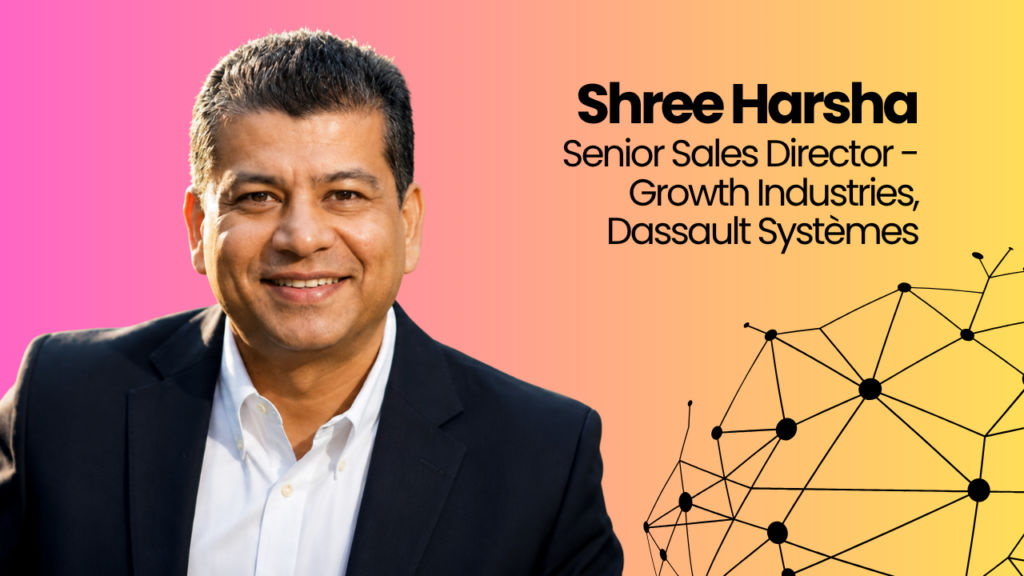
Shree Harsha, Senior Sales Director for Growth Industries, Dassault Systemes, a 26-year veteran at the company, explains the shift he’s witnessing in Indian enterprise when it comes to tech leadership.
“We saw initially a huge focus on manufacturing issues, how to improve quality, how to align with Kanban, Kaizen-related Japanese activities. Help me to understand the efficiency in the factory,” recounts Shree Harsha, on Indian manufacturing companies’ main pain points of the past. “Later it evolved towards governance. I have so many suppliers, how can I collaborate efficiently with them? Now the shift is completely towards design. People want to invest in R&D and design. They want to make in India, for the Indian market.”
Having spent nearly three decades in the industry, Shree Harsha’s observation is echoed by Deepak NG, himself an industry veteran of three decades. “The major shift that I see is the way the interactions are happening with companies that want to make in India. It’s not with respect to features or functionality.”
Increasingly, Deepak NG says, customers arrive with an outcome rather than a requirement. “Everybody is actually giving us the end objective. Oh, I want to reduce my design cycle time by 18 months. Now, what can you do for us?”
Key challenges of Indian tech innovation
Beyond all the optimism, there’s genuine arithmetic driving Indian IP innovation. Shree Harsha’s take on this challenge is revealing, because he sharpens the focus on key industries India is betting on hardest – semiconductors, electronics, datacentres, energy resilience, among others.
“Because of this AI onslaught, the need for AI factories has been going up multifold. And I think there’s over 100 datacentre investments coming in India. And the need for more local electronics manufacturing is only increasing,” highlights Shree Harsha.
We are building AI infrastructure on a supply chain we don’t fully own, and the design problems that come with it aren’t the ones Silicon Valley is willing to solve, he says. “Unlike a hyperscaler who is more focused on the compute and the rack and thermal runways inside a datacentre, Indian challenges are how do I make sure that the lead time required for the component procurement – sourcing from a European supplier or a Chinese supplier or a Korean supplier – is different,” he says. “Cooling solutions also need rethinking because water sources are so less.”
The same dependency shows up in batteries, where Shree Harsha expects the BESS market to explode as datacentres and renewables both demand stable power. On semiconductors, Deepak NG is candid that the country is doing the easier half first, and for good reason. “Manufacturing is taking off, and I’m very positive that we aren’t far from R&D when things start improving.”
Mogasale suggests that as we learn to walk and expand our strides in manufacturing, the innovation journey is bound to follow. “Just like in pharmacy, how we became the world’s pharma system, especially for low-end and off-the-shelf items, similarly we will become the semiconductor powerhouse of the world for small things. The new drug discovery is still a challenge, but we will get there eventually.”
Why innovation journeys often fail
If Indian industry has decided it wants to design, why do so many digital transformation programmes die quietly around month twelve? “Because people think that by just applying digital to existing processes, magic will happen. It will not. The game is how do you transform business and business models,” emphasizes Shree Harsha, without mincing any words.
“Driving change ultimately comes down to people. You need the right people and you need POCs to really experiment, test and then scale. Big bang approach of going full blown, and not doing the right homework – that is a big cause of failure,” says Shree Harsha.
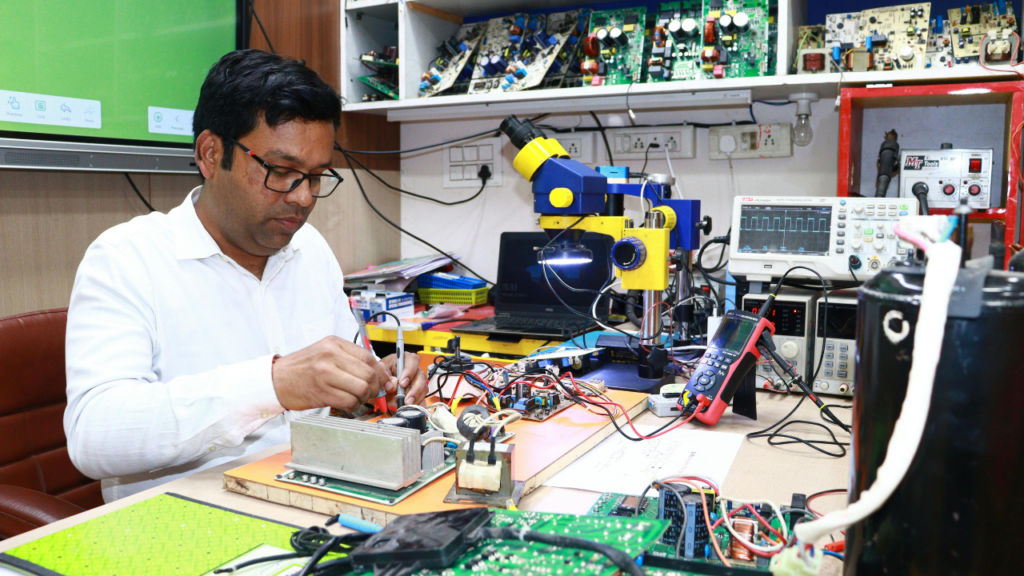
Mogasale names another popular and oft-romanticized obstacle, and it isn’t a technology gap. Jugaad.
“For me, jugaad is being economically sensitive and conscious of design thinking. Jugaad doesn’t and shouldn’t mean a lifetime of iteration. I think we need to get out of this iterative mindset of jugaad, where things aren’t well thought through at the design and conceptual stage itself,” insists Mogasale.
I must say I have to agree with Mogasale on this point on jugaad, a trait India has spent twenty years marketing as a virtue. It’s hard to argue with the take, if you’ve watched a flyover get resurfaced three times in a decade, especially here in Mumbai after every monsoon.
Ultimately, a design-first mindset with first principles reasoning is key for building innovative IP in India, according to Deepak NG. “Whatever ultimate product you come out with, look at what it can do after its life. Can you make it more sustainable? Don’t just design the product, design your waste also,” he sums up.
Also read: Dassault Systemes wants to be the operating system for Industrial AI in India


