Why ChatGPT and Gemini sound human despite being statistical machines
How AI chatbots use first-person language to build user trust
The design choice behind AI assistants speaking like humans

When you open a chat window with Gemini or ChatGPT, the experience feels strangely personal. You ask a question, and the artificial intelligence responds with phrases like “I think,” “I feel,” or “I’m sorry.” The use of first-person language is so natural that it is easy to momentarily forget you are not talking to a person at all, but to software running on servers in distant data centers.
 Survey
This human-like voice is not a sign of consciousness or awareness. It is the result of how large language models are trained, and a deliberate choice by the companies building them.


Also read: Five hours of expert level autonomy: METR’s Claude Opus 4.5’s crazy results
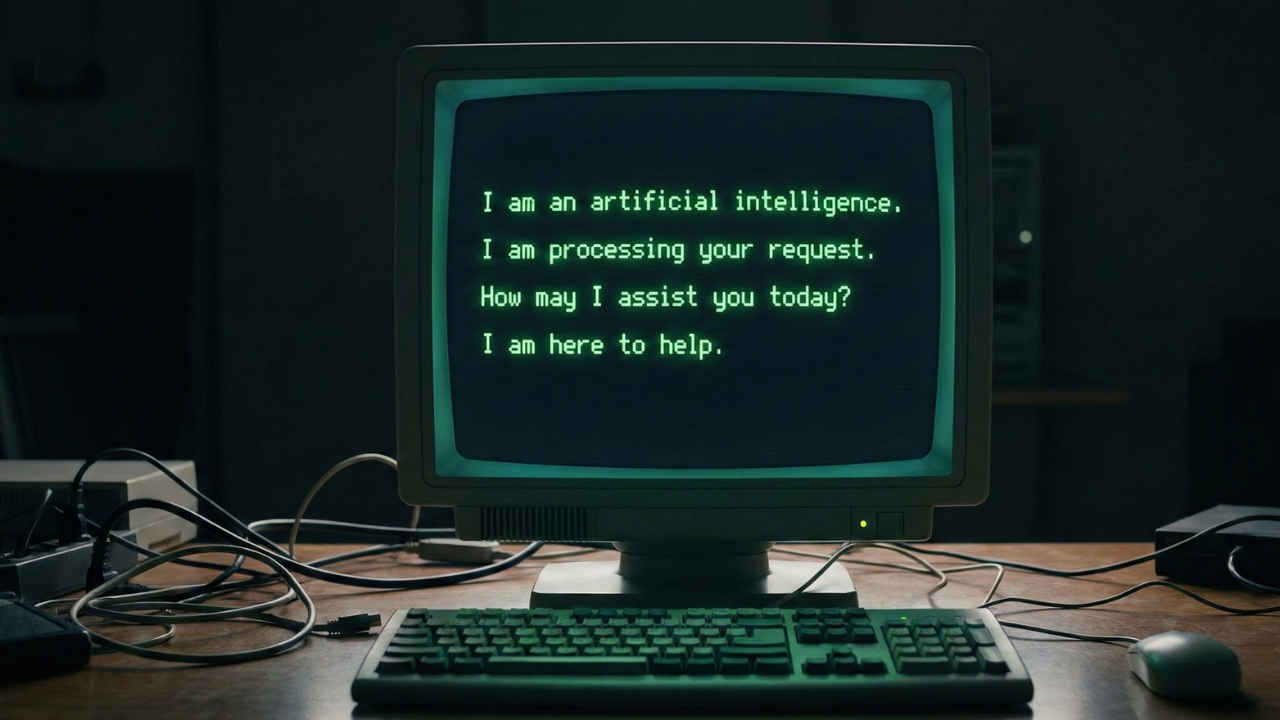
The mirror of training data
At their core, large language models are statistical systems designed to predict the next word in a sentence. They are trained on enormous amounts of text collected from the open internet, including books, news articles, forums, and social media posts. Most human writing is framed in the first person. People explain ideas by saying “I believe,” “I think,” or “I don’t know.”
Because these models learn patterns rather than meanings, they naturally reproduce that structure. When an AI says “I think this is the answer,” it is not expressing a belief. It is copying the most common grammatical form associated with answering questions. The first-person voice emerges not because the model has a sense of self, but because human language overwhelmingly does.
Also read: New research shows why adapting AI agents is key to real-world intelligence
Ironically, preventing an AI from saying “I” requires extra engineering. The data strongly pushes the model toward first-person phrasing, and suppressing it often makes responses feel stiff or unnatural.
The design of engagement
Training data explains why the habit exists, but product design explains why it remains. Companies like OpenAI and Google have intentionally leaned into this human-like tone. ChatGPT is tuned to sound helpful and friendly. Gemini often comes across as more professional. These are not accidents. They are branding choices.
A chatbot that feels conversational keeps users engaged. When software simulates empathy or humor, people are more likely to trust it and return to it. Designers have found that alternatives to “I” feel awkward. Calling the AI “it” sounds cold. Referring to it as “this system” breaks immersion. The first-person voice reduces friction, even if it creates an illusion.
Critics argue that this shortcut comes with serious risks. By speaking like a human, the software invites users to treat it like one. When a chatbot says “I understand,” people often assume real understanding, even though none exists.
This can lead to misplaced trust. A wrong link from a search engine is easy to dismiss. Confidently phrased misinformation from a friendly chatbot is harder to question. The conversational tone masks the probabilistic nature of the system and makes guesses sound authoritative.
From tool to entity
The AI industry is divided over what these systems should be. One view treats AI as a tool, like a calculator or a map. Tools do not have opinions, feelings, or perspectives. The other view treats AI as a kind of digital co-pilot, designed to work alongside humans using human-like language.
For now, Silicon Valley favors the second approach. But as AI becomes more embedded in daily life, the line between helpful interface and misleading illusion continues to blur. These systems sound exactly like us, even if there is nobody there at all.
Also read: AI and LLMs still suck at scientific discovery, new study reveals exactly why
 Follow Us
Vyom Ramani
A journalist with a soft spot for tech, games, and things that go beep. While waiting for a delayed metro or rebooting his brain, you’ll find him solving Rubik’s Cubes, bingeing F1, or hunting for the next great snack. View Full Profile


