
Bulbul to Vision: Sarvam AI challenges global models with Indic stack
 Follow Us
Sarvam AI launches vision and voice models ahead of India AI Impact Summit
India-focused AI stack challenges global competitors for Indic applications
Indigenous models push India toward sovereign AI leadership

If India’s AI ambitions needed a pre-India AI Impact Summit flex, Sarvam AI delivered it loud and clear. Days before the India AI Impact Summit 2026 kicks off in New Delhi, the Bengaluru-based startup has rolled out a rapid-fire trio of models spanning vision, speech recognition and text-to-speech.
 Survey
The timing of the announcements from Sarvam AI isn’t accidental. It’s a signal that India’s indigenous AI stack is serious about earning its seat at the global table.
At the centre of the announced updates is Sarvam Vision. It’s a 3-billion-parameter vision-language model built around multilingual document intelligence. According to Sarvam AI, Vision is designed to better understand images, charts and scanned documents across India’s various languages. Specifically, the Sarvam Vision model focuses on OCR, layout understanding and visual reasoning, according to the release notes.
What’s new here isn’t just another VLM (vision language model), but a VLM that claims to be distinctly tuned for making sense of the haphazard maze of Indian paperwork and public-facing digital infrastructure.
Sarvam Vision claims leading performance on global OCR and document benchmarks, while outperforming models like Gemini-class systems and other OCR engines on Indian language accuracy – especially in low-resource languages.
The Sarvam Vision model is capable of interpreting nested tables, scene-based text and chart data across various Indian language scripts and layouts, and to prove this Sarvam has made its APIs free for developers through February 2026 – which goes to show just how confident they are about the model’s performance.
The second key announcement from Sarvam AI is Bulbul V3, their newest text-to-speech engine. Built for over a dozen Indian languages (expanding to 22), this text-to-voice model focuses on production-grade voice that challenges the likes of ElevenLabs, rather than something that’s just demo-friendly. Sarvam AI highlights improvements in Bulbul V3 with respect to natural speech generation across regional accents and scripts, and it’s billed as a major step forward for Indic voice generation and synthesis.
Also read: India AI Impact Summit 2026: Top tech leaders set to attend
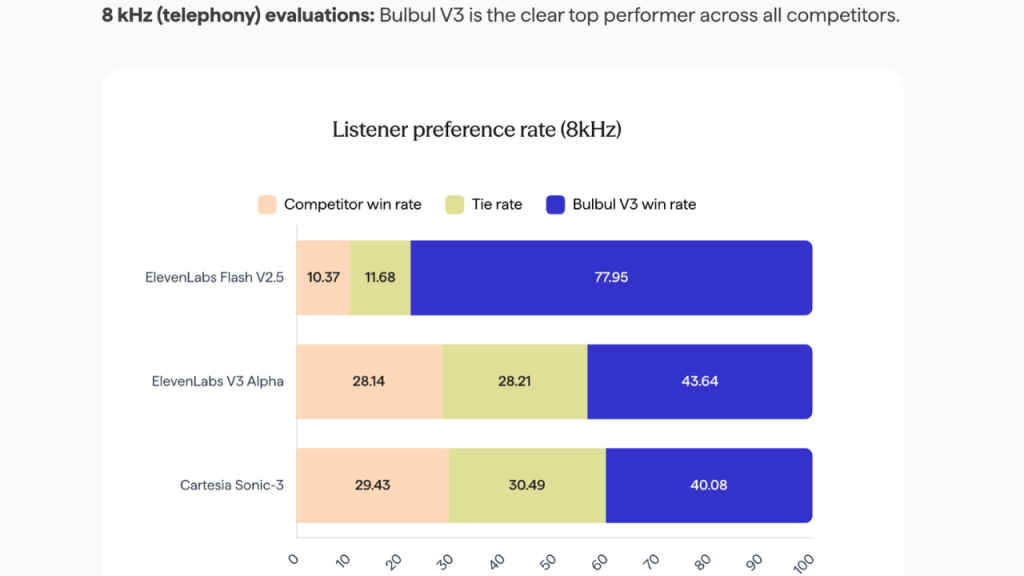
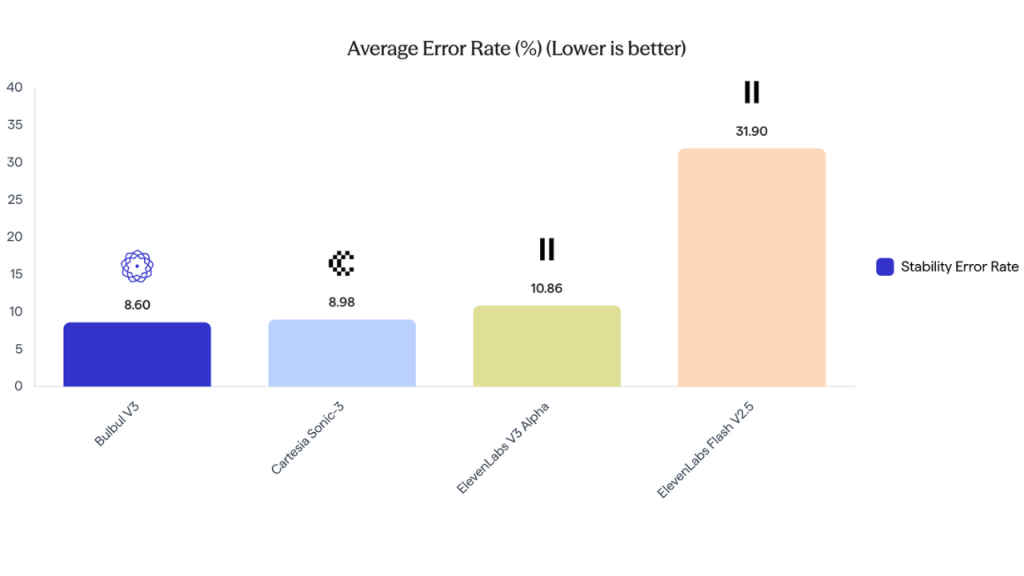
Sarvam claims Bulbul V3 outperforms several global competitors in robustness and telephony-grade scenarios, where speech is mixed with deliberate numeric pronunciations for added complexity. Add real-time streaming, voice cloning and 35+ voice options, and everything from customer support in call centres to conversational agents in public services at scale is possible with Sarvam AI’s Bulbul V3 – not just AI-based narration in YouTube videos.
Completing the stack is Sarvam Audio, launched earlier in the same week, extending speech recognition across 22 Indian languages with strong performance on accents, noise and multi-speaker environments.
Sarvam has already joined the AI Alliance back in 2024, announcing itself as a serious AI player from India on the world stage. What’s unmistakable with these announcements is that Sarvam isn’t chasing ChatGPT users but trying to solve for true India-scale usability. This matters because Sarvam sits at the heart of India’s sovereign AI ambitions.
In case you didn’t know, Sarvam AI has already been selected under the IndiaAI Mission to help build a homegrown foundational model for the country, where achieving linguistic diversity and strategic autonomy is key. That mandate explains the company’s focus on Indic OCR, multilingual voice and document intelligence – which is undoubtedly the plumbing of governance, fintech and citizen services.
In practical terms, Sarvam’s latest launches push India closer to owning its full AI stack – from speech and vision to foundational models – rather than renting intelligence from Silicon Valley. The real test will be adoption. If government services, enterprises and developers begin integrating these models at scale, Sarvam could become the reference layer for India’s AI ecosystem – much like UPI did for fintech.
Also read: 40000 GPUs not enough for India’s AI ambitions, says IndiaAI chief


