

AI resumes are the new headache LinkedIn’s hiring assistant is trying to solve for
 Follow Us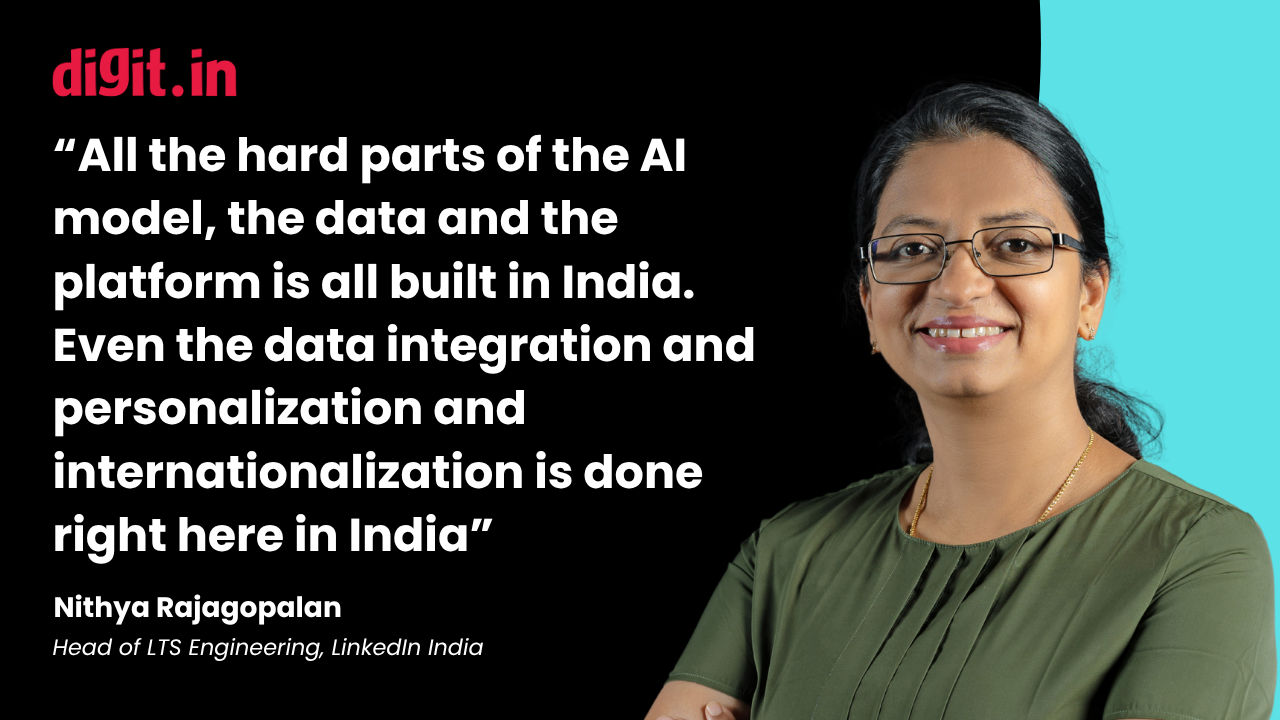

It’s crazy and unbelievable to think about it, but the thing losing most value in the hiring process is an applicant’s CV. Just think about it, everyone and their grandma now uses ChatGPT, Gemini and Claude to spruce up their resumes that would put everyone from Sundar Pichai to Elon Musk to shame.
 Survey
And LinkedIn knows about this problem only too well. Just like LinkedIn is developing AI to help recruiters, it’s well aware that job applicants are using AI to oversell and stand out in the jobs marketplace. Resumes are becoming more AI-tweaked, some even AI-written, and “it’s a moving problem,” says Nithya Rajagopalan, Director of Engineering of LinkedIn Talent Solutions India. During my recent interview with her, she flagged this rising trend of AI-enhanced CV as a major problem Liha, LinkedIn’s Hiring Assistant is tackling at scale – not just in India but globally.
The solution implemented by LinkedIn is not about more clever parsing. It’s about getting more evidence. The platform went from verifying your place of employment to actually validating your ten most important skills and finding evidence for their validity through confirmation of their actual use and certification of them. This may not be glamorous work, but it may very well be the only solution to an AI arms race.
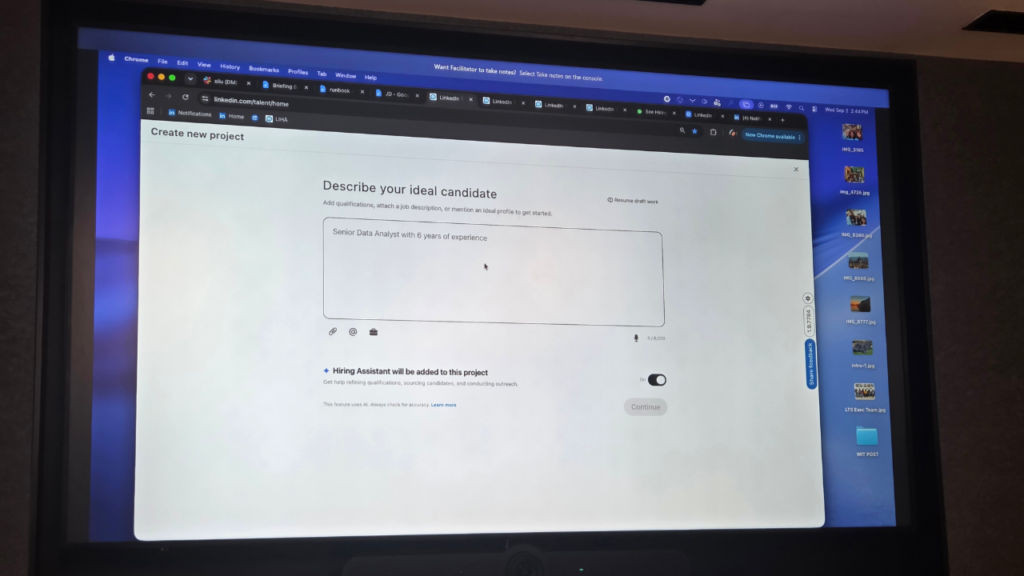
It has been six months since I last spoke with Nithya Rajagopalan, the Head of LTS Engineering, LinkedIn India, on the Hiring Assistant which people at LinkedIn seem to fondly refer to as Liha. The product was still in the experimental stage back then, full of promise but not completely trusted by recruiters who were still testing the limits of this promising new idea. This experimental phase is no longer there. Liha has moved past this stage and has become infrastructure for LinkedIn’s recruiters.
Also read: AI impact on Indian workplaces: Humans are getting more important
The plumbing nobody sees, except it’s built in India
Here’s the bit that should make Indian techies puff their chests out a little. When I asked Rajagopalan how much of Liha’s actual model, architecture and training is India’s work versus something shipped over from the US, she wasn’t shy about it. “All the hard parts of the data, the platform… is built in here in India,” she told me, throwing in that Liha’s recent language expansions, the ones with genuinely global impact, were also engineered out of India.
Basically, the unglamorous, deeply unsexy infrastructure work, the stuff that has to survive contact with messy, real-world enterprise data, is a Bangalore problem through and through.
And enterprise hiring is about as messy as it gets. Every ATS, be it Workday, Greenhouse, or SuccessFactors, speaks a completely different dialect of data. Rajagopalan’s team essentially had to build a universal translator, a layer that keeps Liha “agnostic” to whichever system it’s plugged into, so nobody has to rebuild the wheel every time a new enterprise client signs on.
When your resume and your LinkedIn profile don’t agree
Naturally, I had to ask the obvious troublemaker question: what happens when a candidate’s ATS record says one thing and their LinkedIn profile says another? Does the algorithm just crown a winner and move on?
Also read: 5 AI agent security failures in 2026: From OpenAI’s hidden Wiki incident to Anthropic’s PyPI breach
Turns out, no. Rajagopalan calls it a reconciliation process, and there’s no dramatic verdict at the end of it. The two datasets get merged into what she calls an “enhanced profile,” stitched together with verification data, so Liha works off the fullest picture available instead of picking a side. “I wouldn’t say that this would win or that would win,” she said. A little less dramatic than I was hoping for, but far more sensible.
Engineers don’t just code anymore
Rajagopalan was refreshingly blunt about what all this means for her own team too. Foundations haven’t changed, she insists, but the days of an engineer clocking in, writing code and clocking out are gone. “It’s never like that anymore,” she said, describing engineers who are now expected to think like product people, lean on AI-native tooling daily, and treat responsible AI as a baseline skill rather than an afterthought.
And India isn’t slowing down on this front either. Rajagopalan pointed to speed-to-hire features, like notice period and expected salary prediction, as distinctly India-first bets, born out of what she calls LinkedIn’s fastest-growing market for talent solutions. More are apparently on the way.
Also read: 5 Best AI tools for turning photos into comics


