

AI is changing classrooms, helping students learn, experiment and build real-world solutions
 Follow Us
AI is changing how students learn and explore new ideas.
Teachers are adapting to new technology and guiding students.
Students are using technology to solve real-world problems.
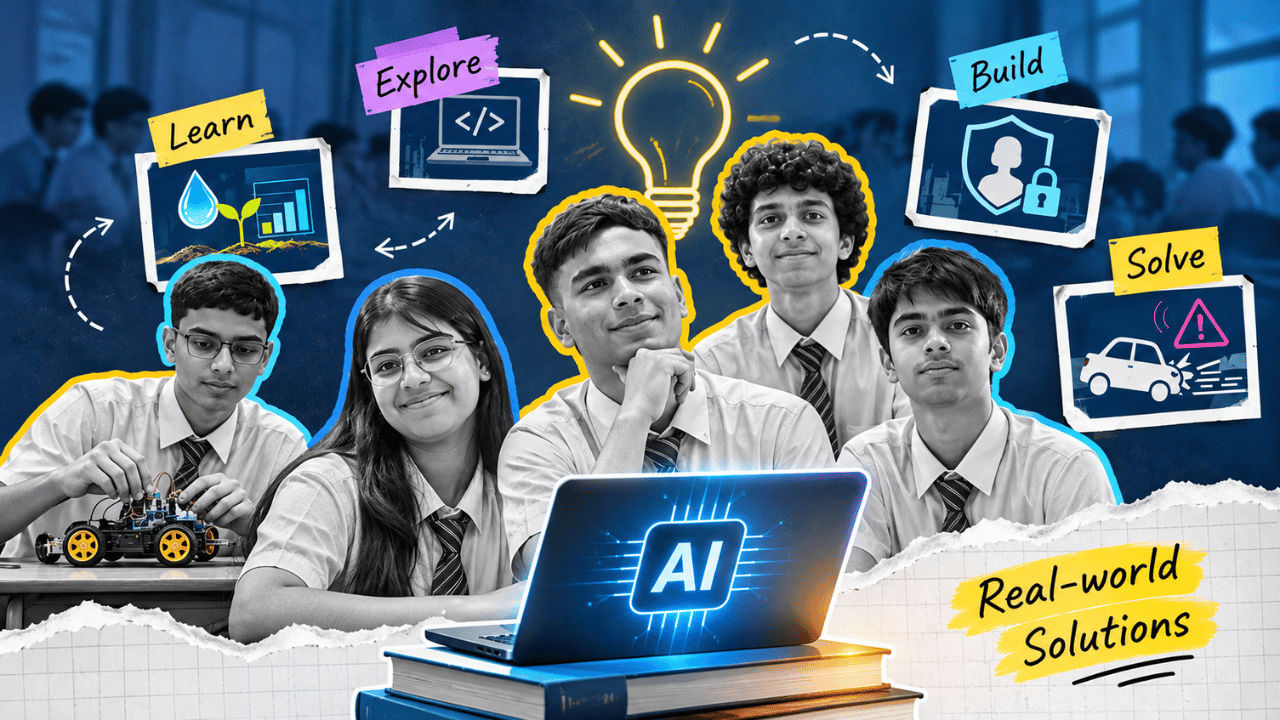

Back when we were kids, we used to take days searching for information, understanding concepts, and finding someone who could explain how to put an idea into practice. However, today, with AI technology on the rise, things have been changing. Students can now use these tools to understand concepts, analyse data, explore approaches, and get help developing a software interface. Not only that, but the young minds today are also identifying the issues in our society and using the latest technology to help solve them. This shift is also changing the relationship between students and teachers, too.
 Survey
As always, the teachers are expected to be the torchbearers for the young minds in this tech-savvy world. As technology advances, teachers are also required to constantly upgrade themselves as they have to guide the students towards the right direction, check the information they are getting, and make room for independent thinking.
Vivo recently wrapped up its fourth edition of Vivo Ignite, a platform that allows the students to showcase the solutions they have developed for the real-life problems they identified. Aside from that, this was the first time the platform also felicitated teachers for their support in this journey. Digit interviewed some of the student innovators and educators associated with vivo Ignite and tried to learn about the use of technology and AI in their daily lives and respective roles. What’s interesting is not that students are handing over their thinking to a machine, but that they are learning how to work with technology, question its outputs, and use it to develop responses to everyday problems.
Turning data into predictions
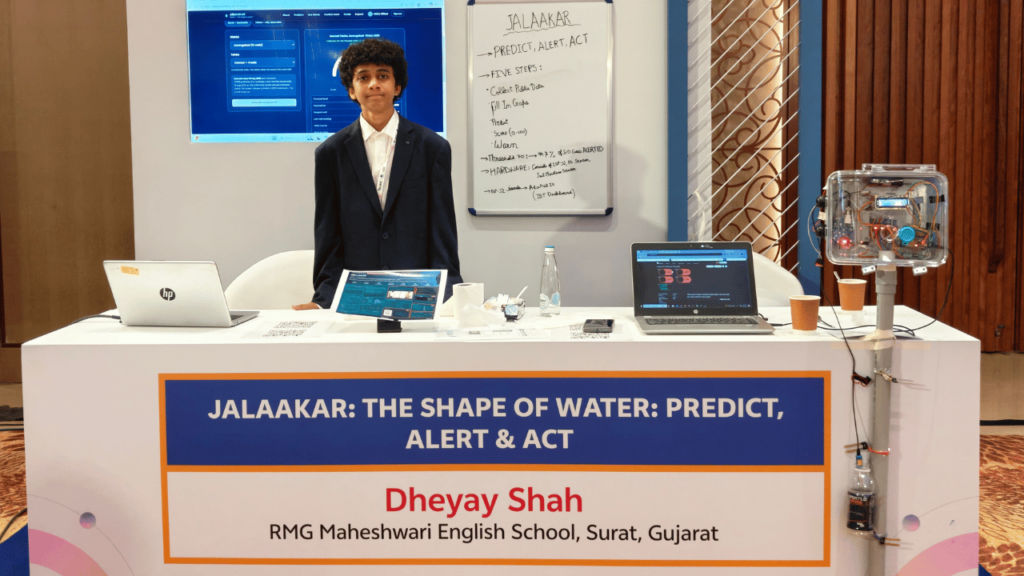
Dheyay Shah of RMG Maheshwari English School, Surat, won the first prize in Vivo Ignite 2026. He developed Jalaakar, a tool that estimates groundwater availability using historical borewell readings, rainfall, and soil-related information. Shah described that he used machine learning to develop a system that can help users ‘forecast the water crisis 30 days ahead’.
He further added that the system can not only detect the crisis but can convert those readings into a score and can send WhatsApp alerts in three languages, notably Hindi, English and Marathi. His demonstration included soil-moisture readings and suggested actions for users.
The project shows how AI can help make large amounts of information easier to interpret and act on. However, Shah said the system was currently validated across Maharashtra, with government collaboration planned after further testing. A prediction is only one part of putting a solution into practice.
AI as a learning partner
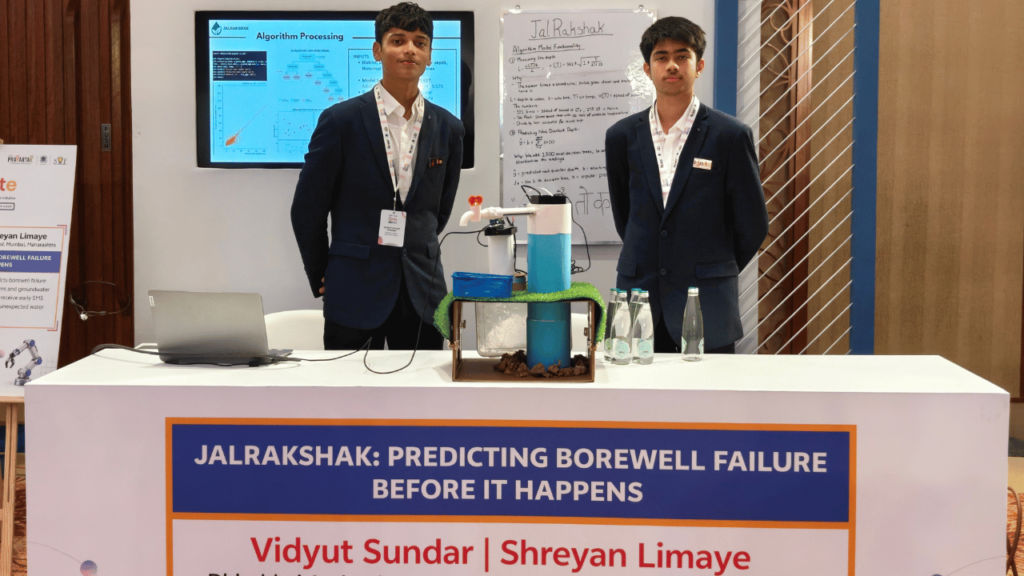
AI can help them quickly understand subjects they do not know much about. And Vidyut Sundar and Shreyan Limaye from Dhirubhai Ambani International School, Mumbai are a prime example of that. The team behind JalRakshak, who were also the runners-up of Vivo Ignite 2026, studied 1,03,000 rows of groundwater data from the Central Ground Water Board to find out what causes borewells to fail. They also used an AI model called XGBoost and compared its results with two other models, Random Forest and AdaBoost.
AI tools supported parts of their work. While interacting with Digit, one of the students on the team clarified that ‘The machine learning is done by us,’ but we used Claude to understand mathematical representations, explore technical specifications, and analyse the dataset. They further added that we used AI assistance while developing the dashboard.
AI for online safety and support
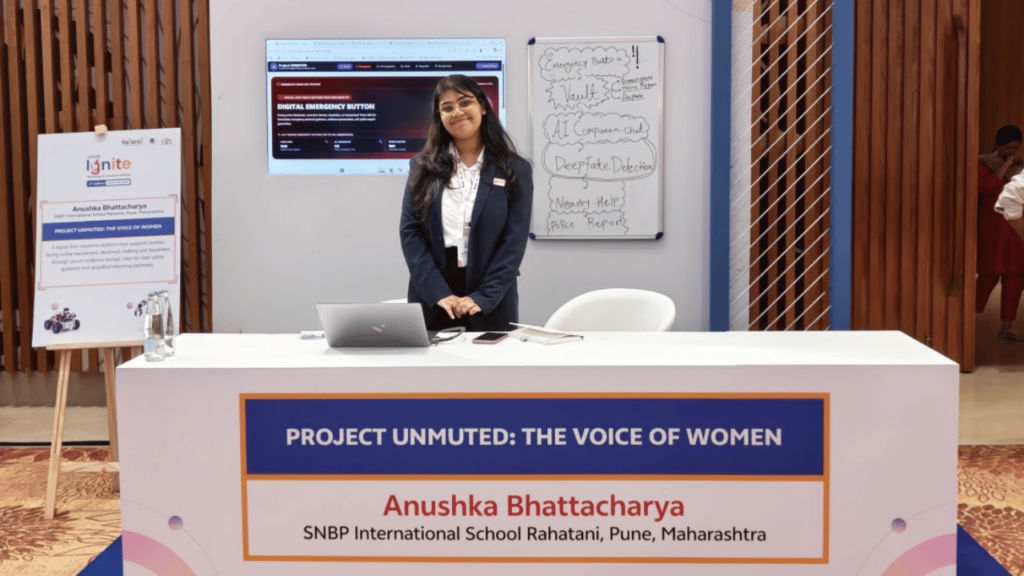
Project Unmuted: The Voice of Women, developed by Anushka of SNBP International School, Maharashtra, shows how AI can help people facing online crimes such as deepfakes, online blackmail, stalking, and identity theft. The platform has a step-by-step reporting process, an AI companion powered by the Gemini API, and a digital vault to store important details and evidence. The AI companion assists the user in giving a coherent explanation of the events as they happened, and this is an added advantage when reporting to the authorities. The platform also has an image verification tool that detects deepfakes in images.
She further added that, at the time of the demonstration, the project had been tested on a limited set of datasets and would require more extensive testing to improve its accuracy. Not only that, but she mentioned that AI may occasionally provide inaccurate information.
However, she confirmed that if a user expresses thoughts of self-harm or suicide, then the platform will instantly direct them towards helplines and human support. Moreover, it also ensures that reports are not shared with authorities without the user’s permission. In my opinion, the project is a prime example that shows how AI can make it easier for people to seek help, organise evidence and find support, while making it clear that technology cannot replace human help.
When technology automates an emergency response
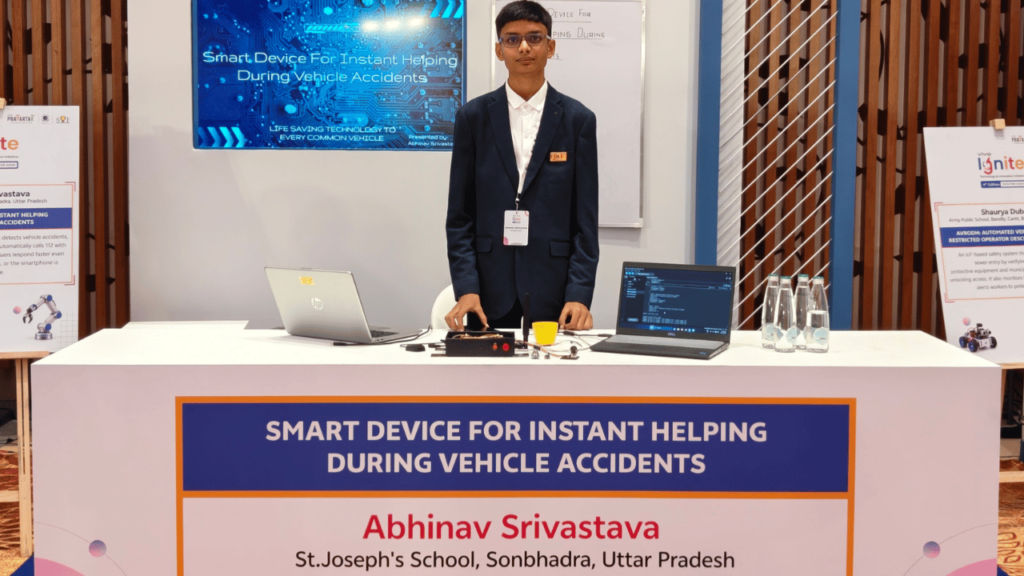
Not every student innovation in the interviews used AI. Abhinav Srivastava of SJS Shaktingar Sonbhadra, Uttar Pradesh, developed a device to detect vehicle accidents and trigger alerts. It uses a crash sensor, backup power, and a metal probe designed to detect when a vehicle is submerged. After a possible accident, it gives the driver 10 seconds to respond before alerting people nearby and initiating calls.
Srivastava said the impact threshold would be set high to distinguish a serious crash from an ordinary bump: ‘There is a difference between normal impact and crash impact.’ He used Arduino IDE and an ESP32-based setup for the prototype, and hopes to approach automobile manufacturers about integrating it into vehicles. The project is not AI-powered, but shows how sensors, coding and automated communication can also turn an idea into a practical response.
Teachers are learning alongside students
Teachers are also using AI in lesson preparation and adapting to students who may already be exploring new tools. Some prime examples of such teachers are those felicitated by Vivo during its fourth edition of the Ignite event.
While a total of ten teachers were awarded during the event, Digit was able to have a word with some of them, and here is how they are implementing technology in their teaching methods and taking advantage of the latest AI tools. But that’s not all, because one thing that’s common is that each one of them cautioned the students and the rest of the world not to get overly dependent on AI.
Lalit Mohan Sahu of Paramita Heritage School, Telangana, told Digit that he uses AI to create songs around classroom concepts. He further added that, ‘AI gives all the rhythmical lines for the song I want,’ saving time. However, he also added that ‘it also kills our innovative thought processes. Lastly, he also warned the students that easy access to instant answers could discourage independent thinking.
Describing the challenges faced by teachers, Sadhna, an ATL in-charge at Father Agnel School, Greater Noida, told Digit that as a Zoology Honours graduate, she faced many difficulties after taking the role, but she used YouTube and other online resources to keep herself informed about the latest technology. She further added that her students’ enthusiasm motivates her to keep learning.
Neeta Jawale, who teaches Computer Science at Vivekanand English High School, said, ‘Students are very smart today. They use advanced technology that teachers also don’t know.’ Building on that, she also suggested that her fellow teachers keep upgrading their own knowledge, especially at a time when AI is evolving on a daily basis.
Periyasamy, an ATL in-charge at MS Dhoni Global School, Tamil Nadu, sees AI as a way to speed up research, but says educators must verify its output. While discussing students’ increasing use of AI, he said, ‘AI is subject to hallucination, and as teachers, it’s our responsibility to put them in the right direction.’
The value of asking better questions
AI is changing the process of learning, not removing the need to learn. Students can use it to understand a formula, explore a dataset, or develop a first version of a tool. Teachers can save time and find new ways to explain a subject. But the work still depends on asking the right question, checking the answer, and testing whether an idea works beyond a screen.
R. Chandrasekaran, a science teacher at Government Higher Secondary School in Nathakullipatti, Tamil Nadu, told Digit that he encourages his students through an initiative called ‘Your Problem, Your Solution’. Describing the initiative, he told us that he asks his students to notice local challenges and build practical responses, taking help from modern technology. For him, innovation is not necessarily about expensive technology. Rather, it’s about observing, thinking, and making something useful.
The experiences shared by students and teachers associated with vivo Ignite point to a simple lesson. AI can make knowledge easier to access and experimentation easier to begin. It cannot supply curiosity, judgement, or an understanding of the people a solution is meant to help. Those still have to come from the learner.


