
5 Crazy ways logistics companies are using AI
 Follow Us

When most people hear “AI,” they think of chatbots, photo filters, or maybe a self-driving car that still can’t park properly. What they probably don’t picture is a warehouse in Chennai, a courier weaving through traffic in Mumbai, or a shipment being rerouted mid-flight over Europe. But that’s exactly where AI is making some of its biggest moves, in logistics.
 Survey
Behind every package that shows up at your door is a thundering network of planes, trucks, warehouses, and people. Companies like DHL keep this machine running, and increasingly, they’re relying on artificial intelligence to do it. Not in flashy, science-fiction ways, but in gritty, practical ways that make the difference between “on time” and “lost in transit.”
Here are five of the craziest ways logistics companies are already putting AI to work.
Also read: OpenAI and AI filmmaking: Why Critterz could change animation forever
AI tracking planes need every month
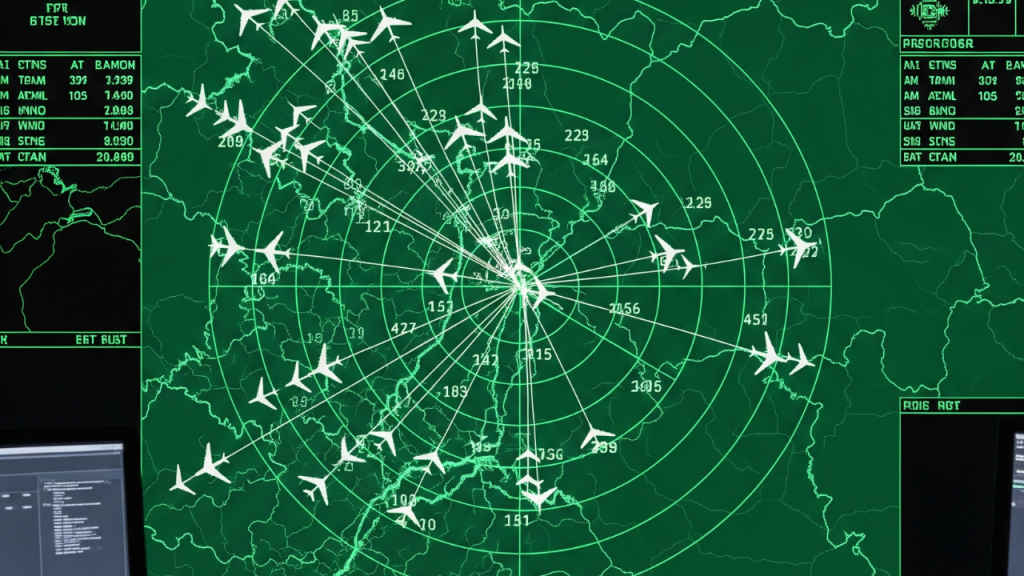
Moving packages across 220 countries isn’t a matter of luck – it’s a math problem. Logistics companies have always relied on forecasting, but the sheer scale of modern trade makes it impossible for humans to calculate alone. That’s where AI steps in.
These models ingest mountains of data: past shipment patterns, seasonal shopping spikes, sudden economic shifts, even changes in tariff rules. From there, they can predict demand weeks or months in advance. If AI forecasts a surge in e-commerce orders ahead of a holiday season, companies can line up additional aircraft, lease more warehouse space, or shift trucking fleets into position before the rush hits.
This is more than efficiency, it’s risk management. Without AI, companies might overstock expensive warehouse space or under-deploy planes, leading to delays that anger customers. With AI, they hit the sweet spot: just enough capacity to handle demand, but not so much that resources sit idle. It’s invisible work, but when your holiday gift arrives on time, you’ve got AI forecasting to thank.
Beating traffic with algorithms
The last mile of delivery is where promises are kept or broken. Couriers often have dozens of stops crammed into a single day. Throw in snarled traffic, unpredictable weather, or a sudden street closure, and chaos ensues.
AI-driven route planning is becoming the secret weapon here. Unlike static GPS directions, these systems are dynamic. They analyze live traffic data, predict bottlenecks before they form, and even factor in things like fuel efficiency and delivery time windows. In practice, that means a courier in Mumbai can zigzag through neighborhoods with an optimized route that saves both time and fuel.
When something unexpected happens – say, a road is shut down for construction – the AI can instantly recalculate. Instead of wasting an hour idling, the courier is back on track in minutes. This not only makes deliveries faster, it reduces fuel costs and cuts carbon emissions, which is increasingly important for companies pledging sustainability.
For customers, it feels simple: the delivery shows up when promised. But under the hood, it’s a delicate ballet of real-time data and AI decision-making, keeping the entire chain moving even when the streets are unpredictable.
Virtual assistants that answer “Where’s my package?”
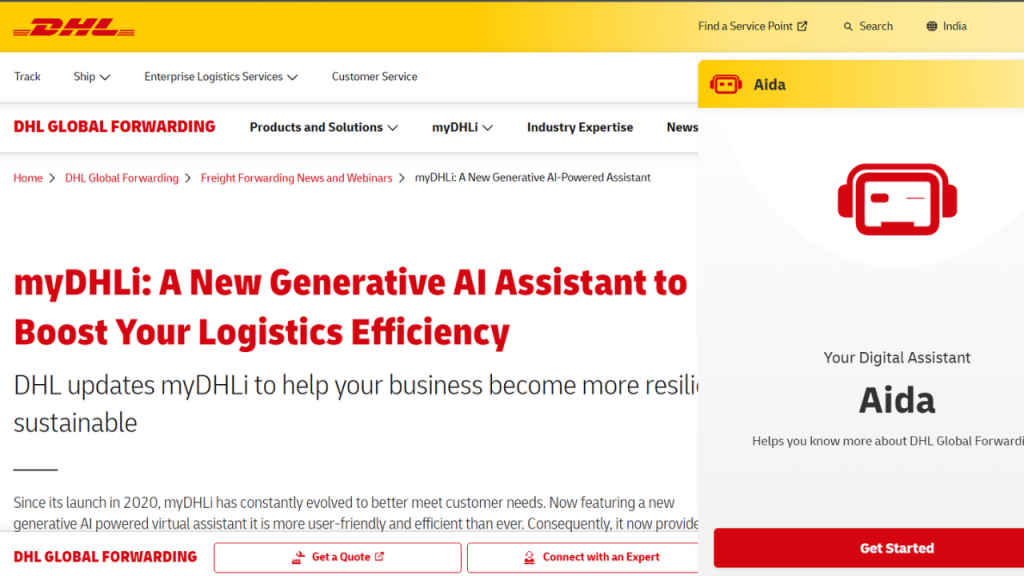
If you’ve ever sat on hold waiting to ask where your package is, you know the frustration. Multiply that by millions of customers worldwide, and you see the challenge logistics companies face.
AI-powered virtual assistants are now handling this tidal wave of questions. They aren’t the clunky chatbots of ten years ago. Today’s assistants understand natural language, pull live tracking data, and give instant answers. A customer can type “Why is my package stuck in customs?” and get a real-time explanation instead of a generic “please wait” message.
The impact is huge. Customers get faster answers and less frustration. Call centers, which used to drown in repetitive queries, are freed up to handle complex cases that really need human attention. DHL reports that this shift doesn’t just save time, it also improves customer trust. If people know they can get answers immediately, they’re more likely to stay loyal.
These virtual assistants are also improving behind the scenes. By analyzing the most common questions, they feed data back into the system, helping companies identify pain points in the delivery process. In a way, every customer question becomes a learning opportunity for the entire network.
Robots that read resumes
Logistics runs on people as much as planes and trucks. Every system that keeps packages flowing requires engineers, analysts, and IT specialists. But finding and hiring them quickly has always been tough.
AI is changing that too. Companies are experimenting with AI-assisted hiring platforms that can scan thousands of resumes in minutes, identify the skills that matter, and match candidates to the right roles. Some systems even help schedule interviews and generate summaries for managers, shaving days off the hiring timeline.
Inside the company, AI is becoming a digital colleague. DHL built an internal knowledge chatbot that employees can query for guidance on IT systems, policies, or processes. The adoption numbers are staggering: within a year, more than 80,000 staff were using it regularly, making it the fastest-growing tool in the company’s history.
The effect is twofold: HR teams get a head start on recruitment, while existing employees get support on demand. For an industry that runs 24/7, having AI as a back-office assistant is proving just as valuable as having it in the warehouses or on the roads.
Spotting a delay before it happens
Every shipment leaves a trail of digital breadcrumbs. From the moment a parcel is scanned at pickup to the moment it clears an airport checkpoint, each step is recorded. A single delivery can generate 30 or more data points, and AI is learning to read them like a detective.
This isn’t just tracking, it’s prediction. If a plane departs late from Frankfurt, the system can calculate the knock-on effects for packages bound for Delhi or New York. Before the customer even notices a delay, AI can suggest alternatives, like rerouting the shipment onto another flight. In some cases, it even triggers automatic customer notifications with updated delivery times.
For logistics companies, this predictive power is gold. It turns “reacting to problems” into “fixing them before they happen.” Customers no longer hear, “Sorry, your package is delayed.” Instead, they see a proactive update: “Your shipment was rerouted and will still arrive tomorrow.”
This predictive capability has become one of the clearest examples of AI’s value in logistics. It doesn’t just make operations smoother, it turns uncertainty into reliability, which is exactly what customers are paying for.
The big picture
Most of this AI work stays invisible to the customer. You don’t see the models calculating warehouse space, or the assistants answering thousands of queries an hour, or the algorithms quietly rerouting planes mid-flight. You just see a courier at your doorstep.
But behind the scenes, AI is now stitched into the fabric of global logistics. It’s not hype, it’s the thing that makes deliveries faster, hiring smarter, and supply chains more resilient.
And while Silicon Valley debates the ethics of generative art, logistics firms are showing a more grounded truth: when there’s no room for error, AI isn’t a toy. It’s the engine that keeps the world moving.
Also read: Apertus, the Swiss open-source AI model: What it does and how it is different?


