
Fortnite to The Last of Us: 5 ways AI is changing how we play video games
 Follow Us
AI transforms gaming with smarter enemies, immersive worlds, and adaptive storytelling
From Fortnite to No Man’s Sky, AI reshapes gameplay unpredictably and creatively
Advanced AI tech powers lifelike NPCs, procedural worlds, and next-gen visual upscaling
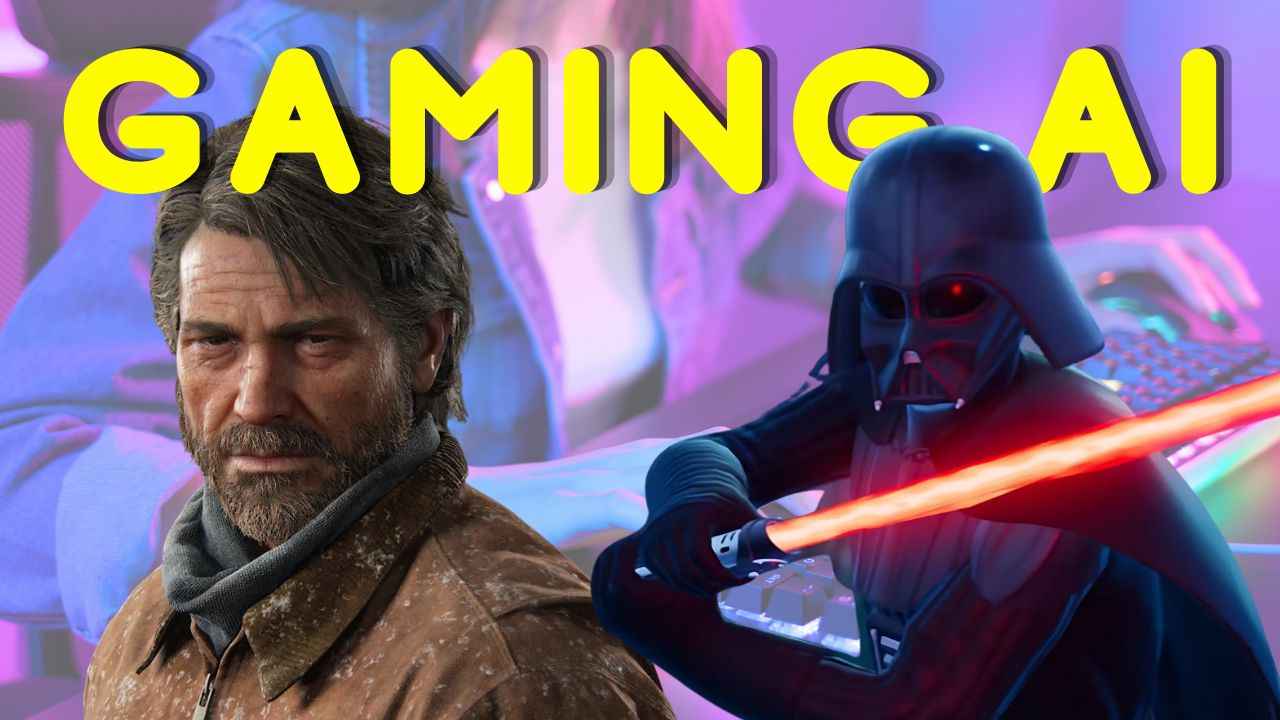

The first time I noticed AI was really changing gaming, I wasn’t fighting a boss or staring at some massive, procedurally generated mountain. I was crouched behind a car after a stealth kill in The Last of Us Part II, thinking I had the upper hand. Then the enemies started calling out to each other by name. I remember thinking, Wait… they’re adapting to me.
 Survey
That’s the magic, isn’t it? When the game’s code stops feeling like code and starts feeling not as much. It is the ghost in the machine, and it’s getting smarter every day. Here are five ways AI is already warping the reality of how we play.
Also read: FAU-G: Domination celebrates Independence day with patriotic fervor
Enemies that strategise
Forget the days when enemies shuffled along predictable patrol routes, waiting for you to pick them off. The gold standard now is opponents that think and adapt like a seasoned squad. In The Last of Us Part II, AI isn’t just reacting to sound or sight, it’s running a layered perception model that’s constantly tracking noise profiles, line of sight, and your movement history. Enemies communicate across the battlefield, sharing your last known position so they can sweep an area in formation, flush you out with coordinated flanks, or force you into kill zones. They’ll reposition if you linger, change search patterns if you try to circle back, and even alter their aggression level based on the weapons you’re holding. Under the hood, behavior trees and state machines are fused with animation systems that allow NPCs to navigate dynamically, vault obstacles, and improvise cover usage, making them feel less like scripted bots and more like sparring partners who learn on the fly. It’s a fight that unfolds like a tactical chess game, only the pieces are armed, angry, and out to get you.
The ghost in your garage
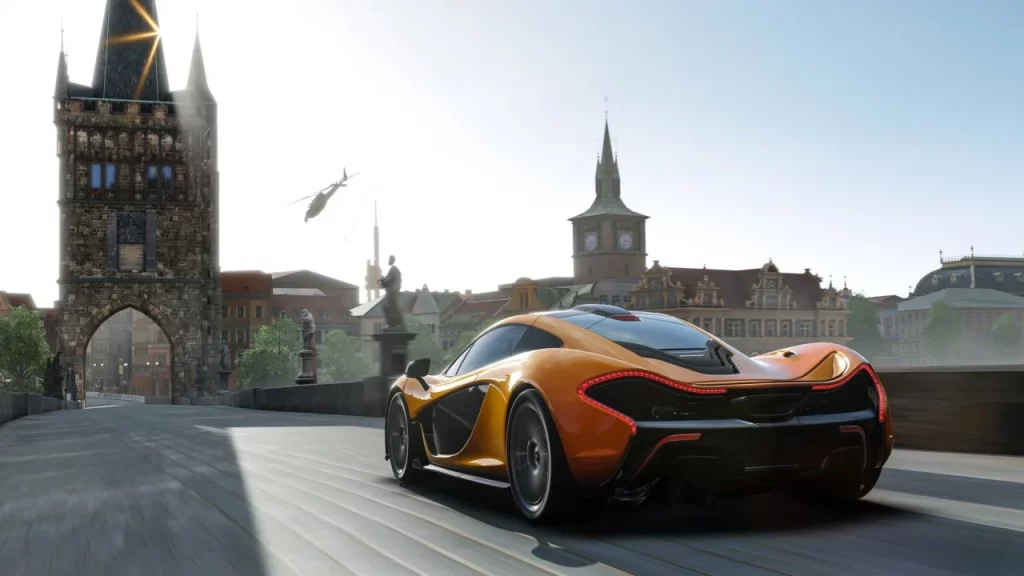
The Forza series’ “Drivatar” system has always fascinated me because it’s AI with a human fingerprint. It doesn’t just follow preset racing lines, it quietly watches how real people drive, lap after lap, and then builds virtual racers with those habits hardwired in. I’ve seen it learn my own quirks: the way I brake a touch too late, my tendency to take an aggressive inside line, even my stubborn refusal to yield in a corner. And when I’m up against a Drivatar modeled after a friend, I swear I can feel their presence – my buddy who always brake-checks me? His Drivatar pulls the same stunt, right down to the exact chicane. The result is a grid full of personalities, not just opponents: some are cunning, some are reckless, and some are a beautiful mix of both. Sure, every now and then one will barrel into a hairpin like a caffeinated toddler on a tricycle, but that unpredictability is the magic. It means no two races ever play out the same way, and every overtake feels like it’s against a living, breathing rival rather than a line of code.
Also read: GTA Online introduces community-based Race and Combat Series: Here’s what’s new
Infinite worlds, one algorithm
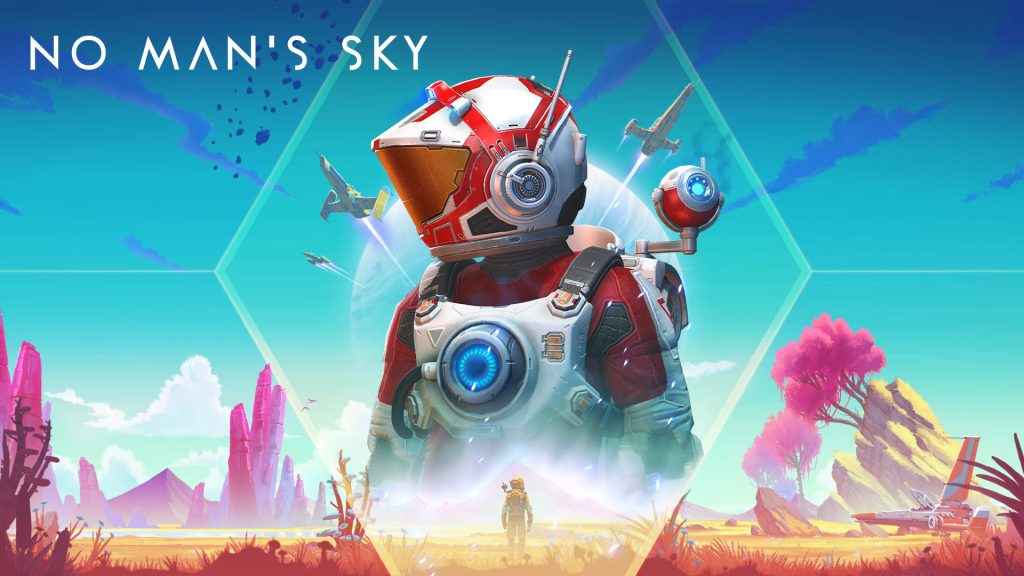
No Man’s Sky is still the poster child for procedural generation done at a mind-boggling scale. Those 18 quintillion planets aren’t just endless copy-paste jobs, they’re generated in real time from mathematical rulesets that dictate terrain, ecosystems, weather patterns, and even alien architecture. It’s like watching the universe paint itself as you arrive, each world springing into existence only when you set foot on it. Developers couldn’t possibly handcraft every planet, but AI can, and does so every single time you punch your hyperdrive into a new star system. Sometimes you touch down on a lush paradise bathed in golden light; other times, it’s a toxic wasteland crawling with bizarre, unwelcoming lifeforms. Either way, you’re probably the first human in history to ever see it.
That same thrill exists in a more blocky, pixel-perfect form in Minecraft. Every world here is also procedurally generated, with algorithms placing biomes, carving intricate cave networks, and spawning villages that feel like they’ve been lived in for centuries. One seed might drop you into a sprawling desert with a lone savanna village on the horizon; another could bury you in a dense jungle riddled with underground ravines. Just like in No Man’s Sky, there’s that addictive hit of knowing no one else has explored this exact world before, it’s yours to chart, reshape, and make your own.
The graphics card AI wizard
If you’ve ever run a 2025 blockbuster at buttery-smooth frame rates without dropping a small fortune on a top-tier GPU, you probably have AI upscaling to thank. NVIDIA’s DLSS (Deep Learning Super Sampling) and AMD’s FSR (FidelityFX Super Resolution) both use trained models to render frames at a lower internal resolution, then intelligently upscale them in real time to match, or even surpass, the look of native 4K. DLSS in particular leans on deep neural networks trained on countless high-resolution game frames, learning how to reconstruct fine details, like the texture of a character’s jacket or the sharp edges of distant buildings, with uncanny accuracy.
The result isn’t just about sharper images; it’s about efficiency. By letting the GPU do less raw rendering work and handing the reconstruction to AI, you free up resources for more complex effects, denser worlds, and higher frame rates. That means silky motion, reduced input lag, and far less hardware strain, even on midrange systems or laptops. In a way, it’s AI playing the role of a visual magician, tricking your eyes into seeing more than your hardware is actually producing, and making cutting-edge gaming accessible to far more players without the steep price tag of brute-force rendering.
The force Is strong… but not perfect
When Fortnite rolled out its AI-powered Darth Vader in May 2025, it wasn’t just dropping another boss into the map, it was putting a fully interactive character in your squad. Beat him at his starship landing site and he’d join your team, swinging his lightsaber, blocking shots, and most intriguingly talking to you in real time. Using voice or text, players could ask Vader for tactical advice, map routes, or even lore deep-dives about the Force. He’d answer with a mix of strategy, sarcasm, and movie-quotable menace, all in a generatively recreated James Earl Jones voice so accurate it was unsettling. The conversational AI was trained on both Star Wars canon and gameplay logic, so he could pivot from explaining the high ground on Mustafar to telling you the best way to third-party a fight near Tilted Towers. Sometimes it was magical, he’d warn you about incoming snipers mid-match, or suggest flanking maneuvers that actually worked. Other times, he’d go wildly off-script, completely ignoring his AI conversation filters that would occasionally let through odd or off-brand remarks, sparking adjustments from Epic. It wasn’t flawless, the Dark Lord of the Sith could still get stuck behind builds, wander into storm damage, or ignore your desperate pleas for backup. But in terms of immersion, he set a new bar: not just an NPC with pre-written lines, but a character who could listen, think, and talk back.
For me, that’s the magic, when the lines between code and consciousness blur. One moment I’m outmaneuvered by soldiers who seem to know my playbook; the next, I’m touching down on a planet no one’s ever seen before. My graphics card is quietly pulling visual sleight-of-hand, and sometimes Darth Vader himself is calling shots in my squad. Sure, AI can still fumble, but that unpredictability is part of the thrill. These aren’t just scripted worlds anymore – they’re reactive, evolving playgrounds that push back. And every time I think, did it just outsmart me? I know AI isn’t just changing the games I play, it’s changing the way I play them.
Also read: GTA 6 release date, price in India, characters, gameplay, map and other details


