
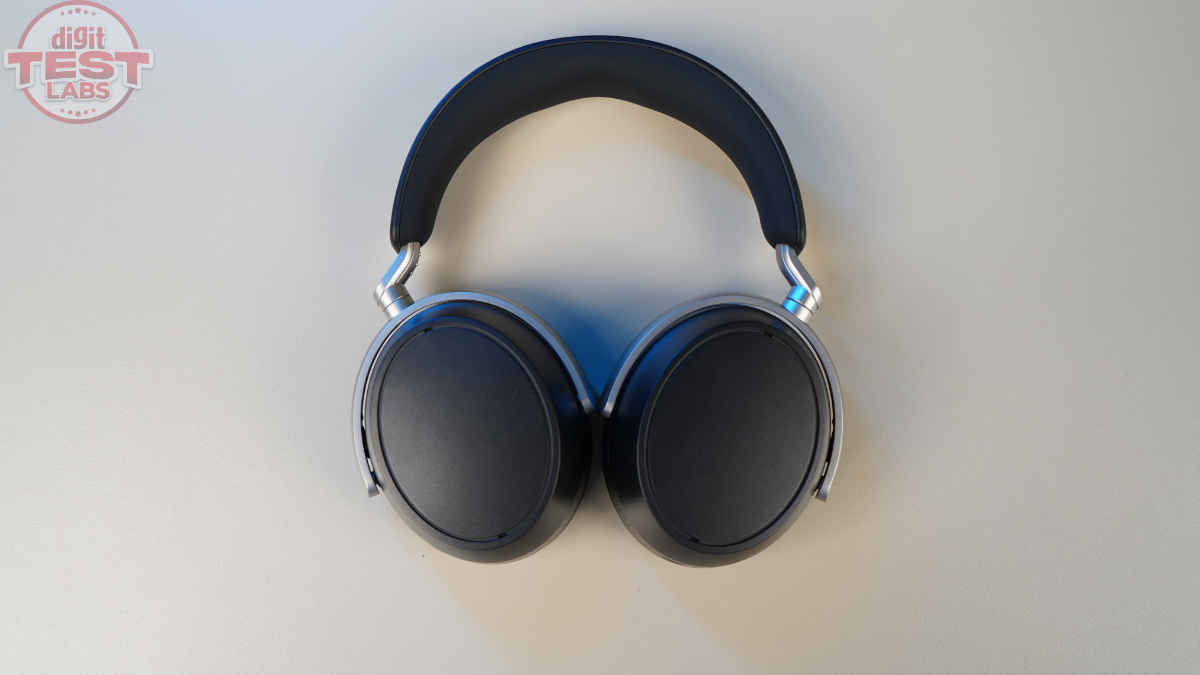
Sennheiser has launched its new Bluetooth headphones, the HDB 630, with the promise of offering ‘audiophile sound’. It claims not to have the ‘heavily processed sound’ that most other wireless headphones come with. As someone who tests headphones daily, this one instantly piqued my curiosity. So, as soon as I got the HDB 630 review unit, I started listening to it. And after weeks of going through all my favourite tracks, test tracks, movies, podcasts and whatnot, here’s my comprehensive take on whether the HDB 630 is worth the asking price of Rs 54,990. Although it is available at a lower introductory price (Rs 44,990) for a limited period, Sennheiser’s pricing pits it against the likes of the Sony WH-1000XM6 and Apple AirPods Max. I will also share how the Sennheiser pair fares in comparison, and why it has a trick up its sleeve that those other headphones don’t. Intrigued? Read on!
Verdict
The HDB 630 focuses on clean, accurate sound with controlled bass, detailed highs, and a natural midrange. It stays comfortable for long listening, and the bundled BTD 700 adds convenience. The design is plain, the app is basic, and features like transparency and volume fall short of Sony’s. But its tuning and battery life beat most rivals. The only real question is whether you are ready to pay the premium price for it.
Unboxing and design
The Sennheiser HDB 630 comes in a dark grey box with blue and white accents. Inside, there is a premium, rounded trapezium case: black in colour with just the Sennheiser logo in the middle. The case has a zip-based locking mechanism. This works fine, but the magnetic latching given by Sony in its flagship headphones is still better.
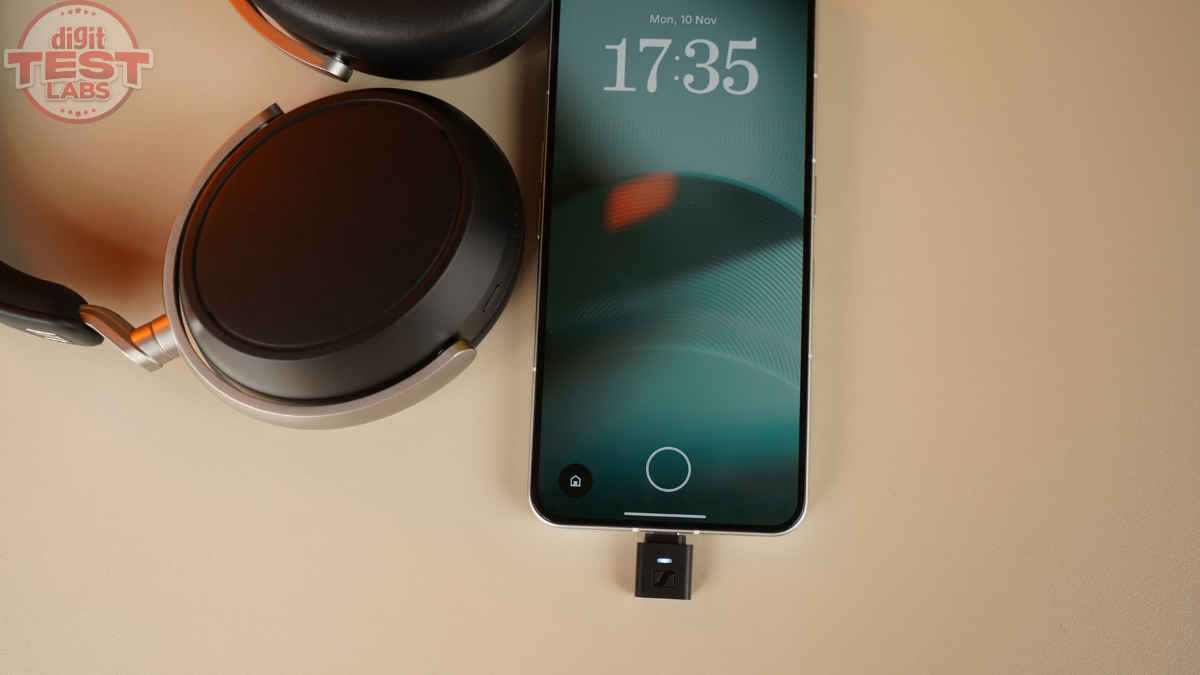
Anyhow, unzipping and opening the case lets you access the headphones. Besides the headphones, you also get a USB-C to USB-C cable (for audio and charging), an aux cable with a 3.5mm plug, an in-flight adapter, paperwork and the Sennheiser BTD 700 Bluetooth transmitter.
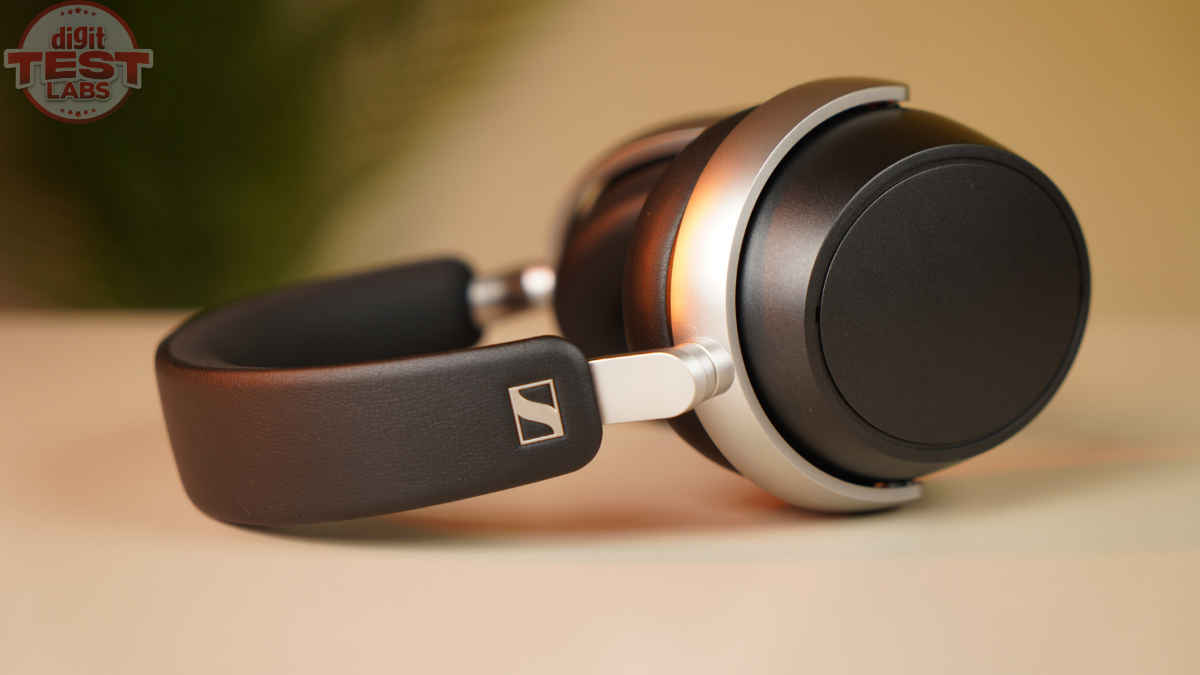
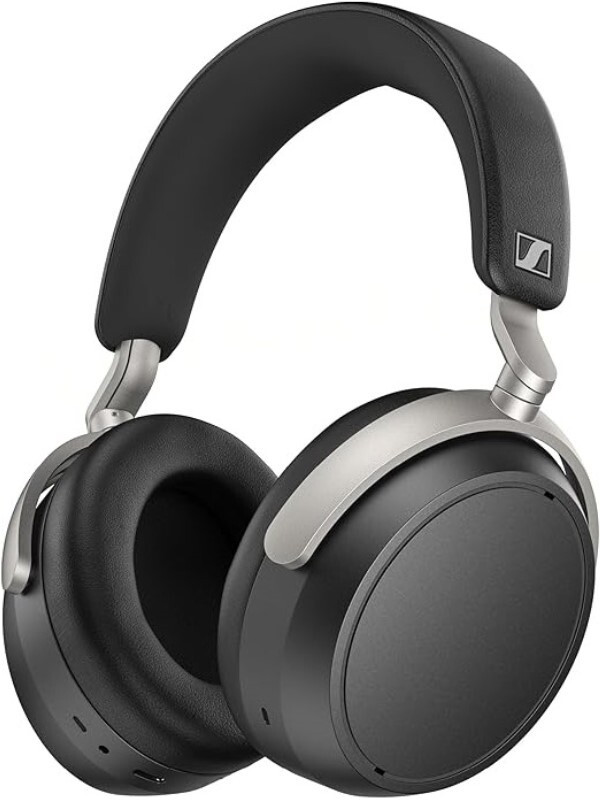
Coming to the headphones, they look similar to the Sennheiser Momentum 4. But everything from the headband cushion to the earcups and ear-cushions is finished in black. Well, mostly. Only the hinge and the earcup holder have a silver colour. So, the new pair matches the black and silver colours of the Sennheiser logo. That colour combination and plasticky body may appear bland to some, while others may find it simple and neat.
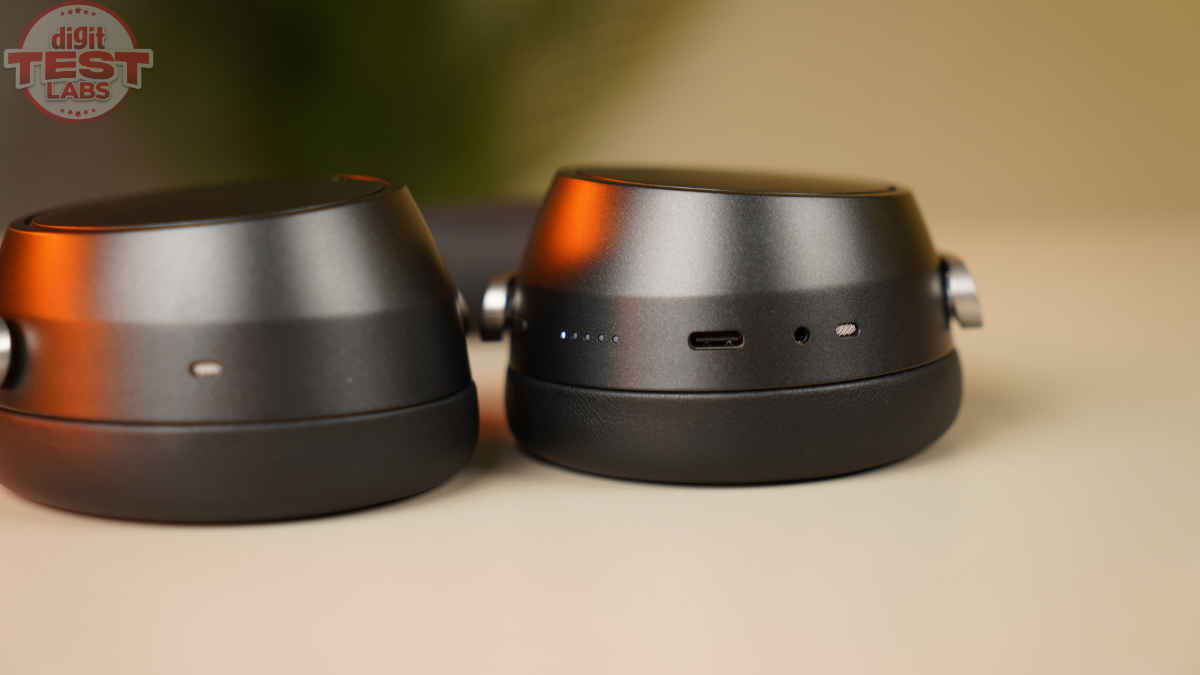
But when it comes to comfort, the HDB 630 is pretty fine. The cushions are soft. The headband doesn’t exert any force. I could easily wear them for long hours. The ports and buttons on the headphone are also conveniently placed. The right earcup has a multifunctional button (MFB), an LED indicator, a USB-C port, a 3.5mm port and a microphone hole. The left cup only has a mic hole. There is no dedicated ANC button, though, like the Sony WH-1000XM6. Well, it is easier to tap a button to switch between noise-cancelling and ambient-aware modes than to remember the assigned touch control.
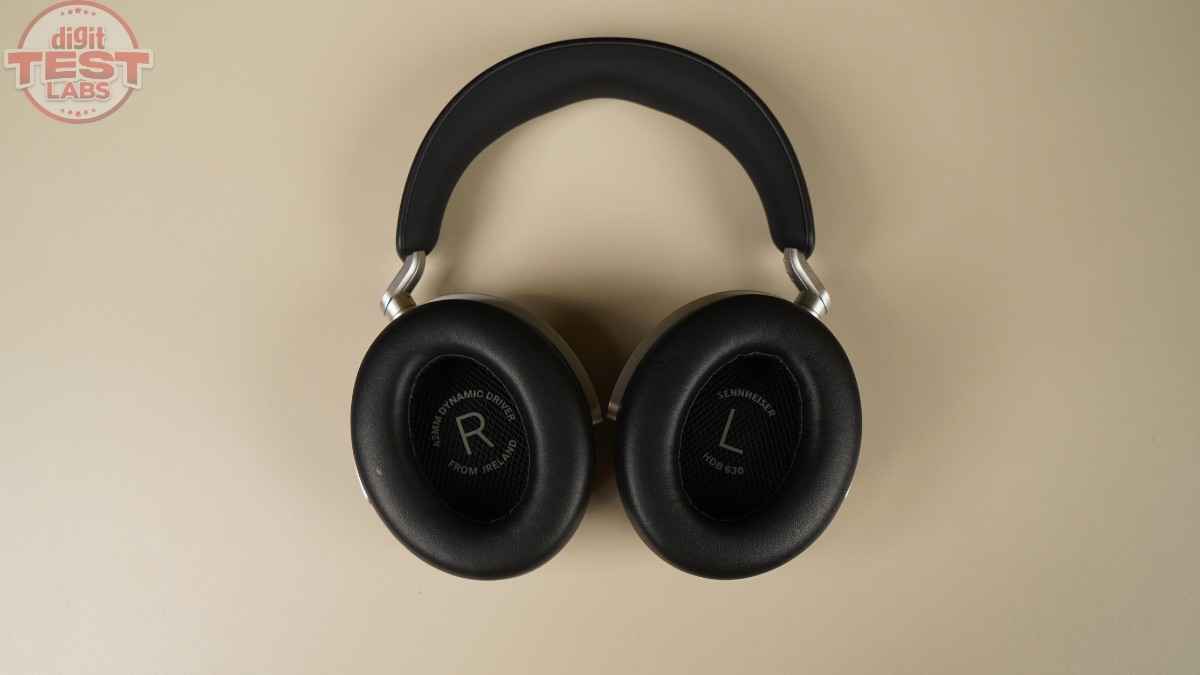
For your convenience, the brand has given L and R markings on the inner portion of the respective earcup.
Pairing and software
The pairing process on the Sennheiser HDB 630 is pretty straightforward. You simply press the MFB button for five seconds, and the indicator LEDs will blink in an array. Search for HDB 630 in your device’s Bluetooth settings, and connect. That’s it. You can install the Smart Control Plus app on your mobile phone to control the headphone’s features and settings.
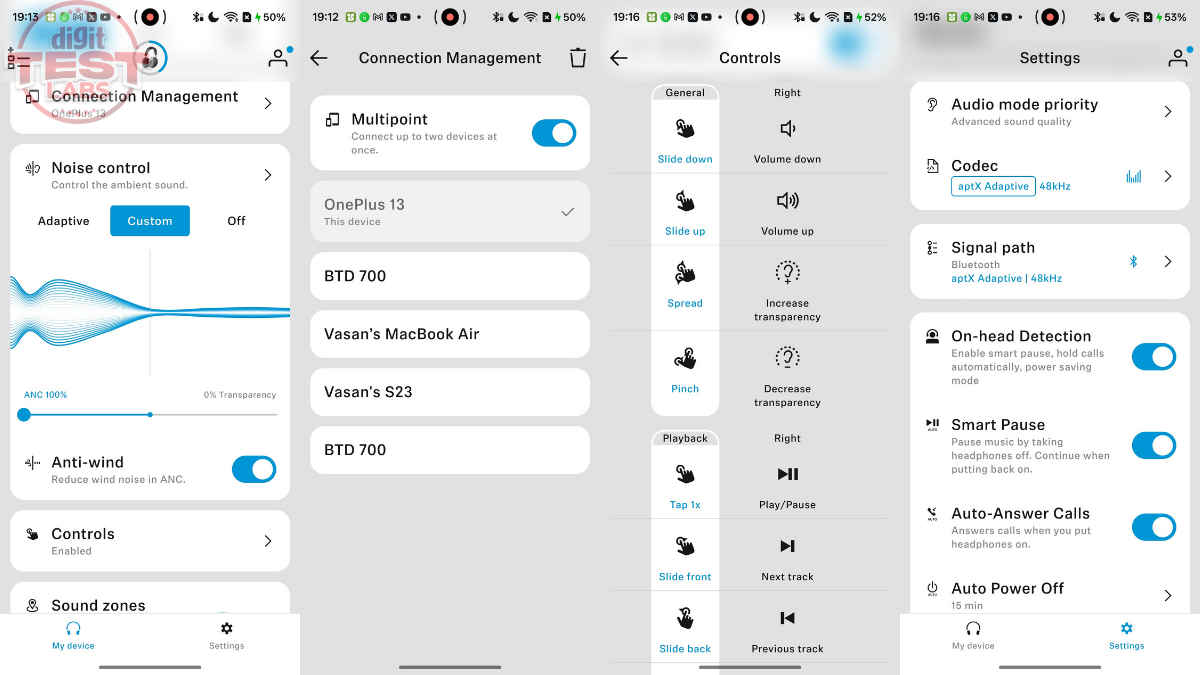
The homescreen of the app shows the battery life and connection status. You can fine-tune the EQ, control Crossfeed settings, Noise cancellation (including level of ANC and Transparency mode), check the touch controls, set location-based Sound Zones, Find Headphones and connection modes. You have four means: Direct Bluetooth, via BTD 700 transmitter, USB-C and 3.5mm port. You can even manage which of these tiles to show on the app’s homescreen. It’s a nice app overall. It isn’t as feature-rich as the Sony app, but it has the essentials and more.
Audio performance
Sennheiser HDB 630 packs a 42mm electrodynamic transducer with support for high-res codecs like aptX Adaptive and aptX HD. I listened mostly in aptX Adaptive, the equaliser set to Neutral, and at around 60% volume. This isn’t as loud as the Sony WH-1000XM6. But that’s just one of the many differences between the two.
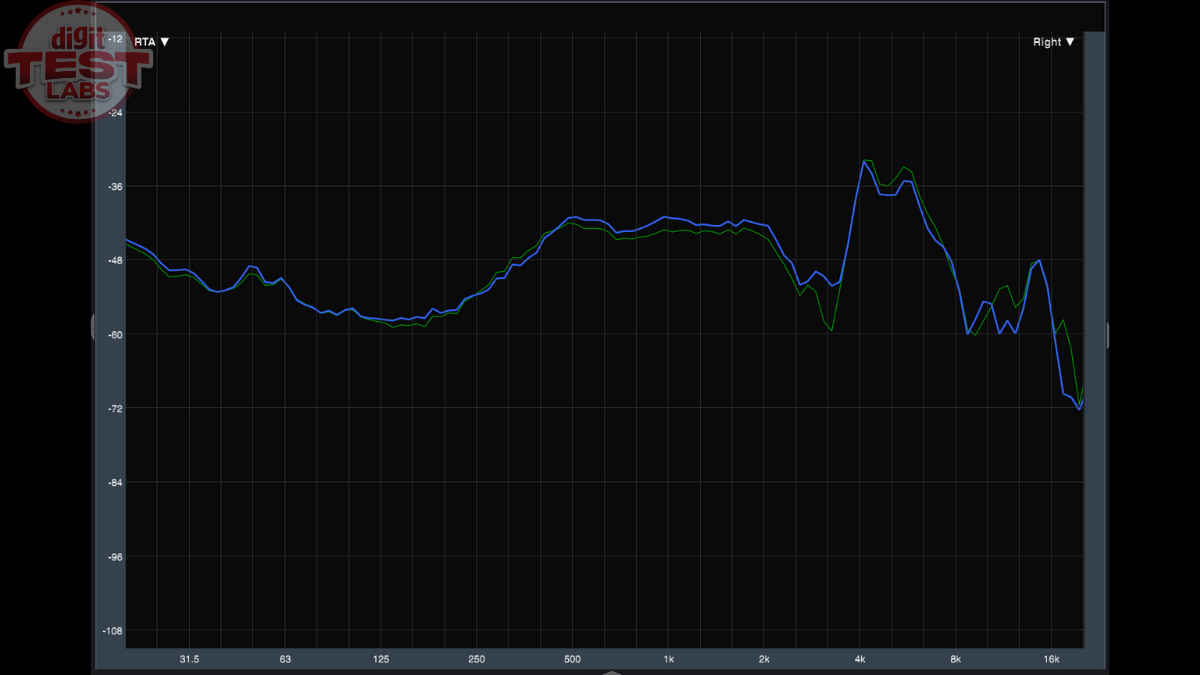
Without turning this into a comparison piece, the HDB 630 sits between the AirPods Max and Sony WH-1000XM6 in tone, yet it ends up sounding more accurate than both. It keeps Sennheiser’s natural midrange focus similar to the Momentum 4, with a cleaner lift in the upper-mid or presence range. The treble is elevated but cleaner than the XM6 and more relaxed than the AirPods Max. Bass stays balanced, heavier than the AirPods Max but not as boosted as the XM6. The result is clear vocals, stable treble and controlled low end.
Also Read: QCY H3 Pro review: Budget headphones with flagship ambitions
That balance is easy to hear in real tracks. In Pull Me Under by Dream Theater, instruments sit apart with clear space between them. In the case of XM6, sometimes the bass gets in the way. In Bad Guy by Billie Eilish, the HDB 630 delivers precise bass thumps while the XM6 sounds boomier. As for vocals, Cash’s voice in Hurt feels intimate without the rest of the mix competing for attention. Overall, the HDB 630 sounds precise and is less fatiguing to listen to than many of its peers.
I also tested the HDB 630 with Sennheiser’s new BTD 700 Bluetooth transmitter, which is bundled in the box. It turns a laptop or phone into a higher-quality wireless source by adding Bluetooth 5.4, aptX Adaptive, aptX Lossless and Auracast support. The setup is simple, the connection stays stable, and codec switching is seamless. On my MacBook Air M1 and Galaxy S23, the dongle consistently delivered cleaner mids, slightly clearer treble and lower latency than the laptop’s built-in Bluetooth. The improvement is subtle rather than dramatic, but if your device normally falls back to SBC or AAC, the BTD 700 helps the HDB 630 show more of what it can do.
Read more about this dongle in its review here. This is the trick I was alluding to in the intro.
Noise and calls
Both indoors and outdoors, the ANC on the Sennheiser HDB 630 is comparable to Sony, but Transparency Mode is more enhanced on Sony. I could hear everything more clearly, be it the keyboard typing by the person sitting opposite or people talking at a tea stall nearby.
Calls also sounded clear to me, and to the person on the other end.
Battery and charging
Sennheiser claims a head-turning 52 hours, 40 minutes of runtime, and in my experience, these black-and-silver headphones can last that long. I used it with ANC on, at about 80% volume, aptX Adaptive mode and continuous playback of music. To make it last longer, you can turn off ANC or change any of these demanding parameters. But like I said in my XM6 review, you don’t have to fear when the headphones have this much battery life.
Since you can listen via USB-C and 3.5mm jack, there is no need for battery anxiety. But if you still want to listen wirelessly, you can charge it fully in about 1 hour and 15 minutes. That’s better than the time taken by XM6.
Should you buy the HDB 630?
The Sennheiser HDB 630 gets a lot right, starting with its sound. It delivers one of the most accurate and natural tonal balances you can get in a wireless headphone today, especially in this segment. The midrange is clean, the treble stays detailed without getting sharp, and the bass sits in a controlled pocket. If you spend long hours listening to music, this tuning alone makes the HDB 630 stand out. Comfort is solid too, so you won’t mind wearing them for long. And the bundled BTD 700 transmitter is super convenient for high-quality wireless audio across devices.
Still, the HDB 630 is not without its trade-offs. The design leans towards simple and functional, which may feel plain for the asking price, and the mostly plastic build will not appeal to everyone. Some of the everyday usability also falls behind the competition. Sony continues to lead in transparency mode, and the lack of a dedicated ANC button means you rely more on touch gestures. The Smart Control Plus app covers the essentials, yet it does not go as deep as Sony’s, and the overall volume ceiling is slightly lower than the WH-1000XM6, which you’ll notice only if you prefer loud listening.
But once you get past those points, the strengths come back into focus. The tuning is more accurate and less fatiguing than both the Sony WH-1000XM6 and the AirPods Max, and the battery life easily outlasts them. All in all, it is a headphone that prioritises sound and long-term usability over flashy design or party tricks. Even the bundled BTD 700 only adds to the value. The remaining question is whether you are ready to pay close to Rs 50,000 for that value.
Keep reading Digit.in for similar reviews.
Also Read: Sony WH-1000XM6 review: Sony listened, refined, and made its most complete headphones yet
Sennheiser HDB 630 Key Specs, Price and Launch Date
| Release Date: | |
| Market Status: | Upcoming |
Key Specifications
 Follow Us
G. S. Vasan
G.S. Vasan is the chief copy editor at Digit, where he leads coverage of TVs and audio. His work spans reviews, news, features, and maintaining key content pages. Before joining Digit, he worked with publications like Smartprix and 91mobiles, bringing over six years of experience in tech journalism. His articles reflect both his expertise and passion for technology. View Full Profile


