The new Lenovo smart glasses has a 38 g lightweight frame with resin diffraction waveguide display.
On the front, it has up to 2,000 nits peak brightness, monocular or binocular mode
Lenovo AI Glasses V1 is priced at CNY 3,999 (~Rs 50,000), and is China-only for now.
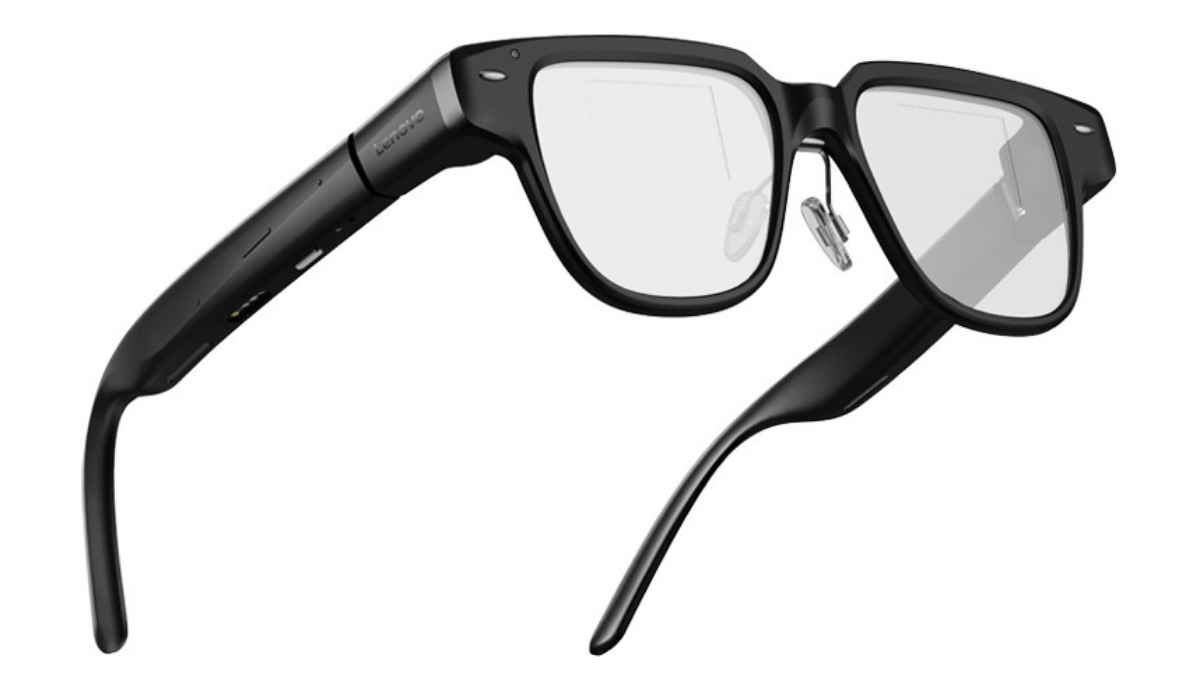
Lenovo has launched the AI Glasses V1 in China, which is a pair of lightweight AI-powered smart glasses. It weighs only 38 grams and is lighter than previous Lenovo smart glasses. It is even lighter than the 48 g Rokid glasses, which are known as the lightest product of this kind. Besides the light build, the glasses also offer a resin-based waveguide display with up to 2,000 nits of peak brightness and up to 2.6 hours of media playback. Lenovo targets its new pair at users who want hands-free translation, on-screen prompts, and AI assistance in a compact form factor. Here are the details you need to know:
 Survey
Price and availability
The Lenovo AI Glasses V1 are available to pre-order in China for CNY 3,999 (about Rs 50,000). It will be available from 9 November on JD.com. Lenovo has not shared plans for global availability yet.


Also Read: Samsung Galaxy XR vs Apple Vision Pro: Specs, features and key differences explained
Specifications
The AI Glasses V1 use a micro-LED panel paired with resin diffraction waveguide optics, a first in a consumer product, according to Lenovo. The display supports up to 2,000 nits peak brightness and a 15×11 mm eye-box range, helping maintain image stability even when the user moves. The glasses can operate in monocular or binocular view depending on the task.
The frame weighs 38 g, lighter than the 48 g Rokid Glasses, the 70 g Meta Ray Ban glasses, and Lenovo’s own ThinkReality A3, which weighed 130 grams. The new glasses feature 1.8 mm lenses, which are designed to reduce pressure on the nose and ears for longer use. Stereo speakers and dual microphones are built into the temple area for calls, audio prompts, and media playback. Controls are handled through touch panels on the sides.

The glasses run Lenovo’s Tianxi AI assistant. Features include live voice-and-text translation, conversation mode, a teleprompter screen for presenters, and AI-based navigation when paired with an Android phone. Translation mode lasts up to 10 hours on a single charge, while video playback drains the 167 mAh battery in roughly 2.6 hours at full brightness. A 40-minute charge cycle restores full battery, and standby time is rated at 250 hours.
Connectivity is limited to Bluetooth 5.4, and the device does not include a camera, unlike its rivals, like Rokid and Meta Ray Ban glasses.
So, the headline feature is the resin diffraction waveguide display, which Lenovo claims enables higher brightness and a thinner optical module than glass-based waveguides used by most AR wearables. The 2,000-nit brightness is also higher than Rokid’s 1,500-nit dual-display setup, but not as bright as Meta Ray Ban glasses’ claim of 5,000 nits. Still, the 2,000 nits brightness should aid in outdoor visibility. Teleprompter mode and visual live translation can come in handy in real-world use. The absence of a camera could, however, limit use in AR capture and remote-assist scenarios.
Furthermore, the 2.6-hour playback time means these function more as a productivity tool than an entertainment headset. You will have to charge it to watch Nolan’s Oppenheimer fully. Another thing to note is that AI navigation only works with Android for now.
While it lacks mixed-reality capabilities, Lenovo could be positioning it for daily wear and utility. If Lenovo brings the AI Glasses V1 to global markets, pricing will determine whether they compete with creator-focused wearables like Meta Ray-Ban or productivity-plus-entertainment models like Xreal.
We will be keeping tabs on Lenovo’s plans on this front. Keep reading Digit.in for similar stories.
 Follow Us
G. S. Vasan
G.S. Vasan is the chief copy editor at Digit, where he leads coverage of TVs and audio. His work spans reviews, news, features, and maintaining key content pages. Before joining Digit, he worked with publications like Smartprix and 91mobiles, bringing over six years of experience in tech journalism. His articles reflect both his expertise and passion for technology. View Full Profile


