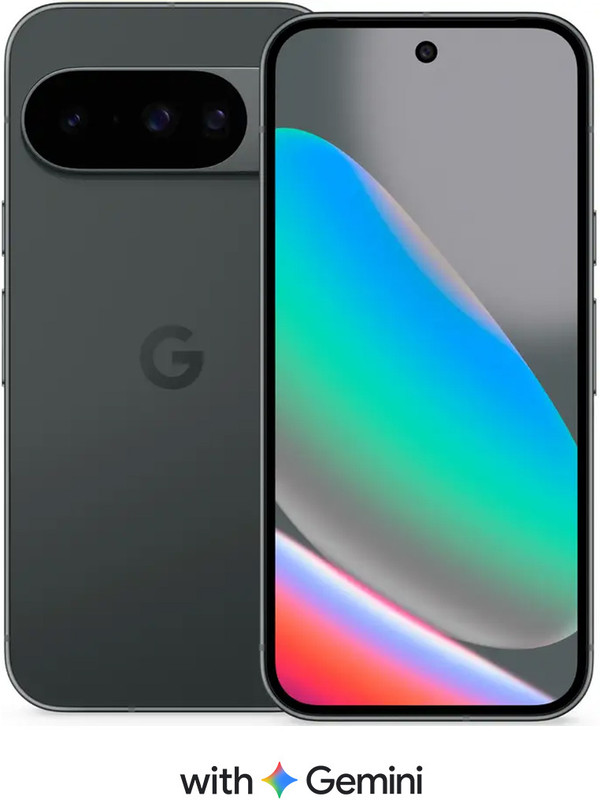
Google Pixel 10 Review: A compact flagship that thinks smarter, not faster
 Follow Us

I’ve been reviewing Pixels long enough to remember how Google has been in a constant state of evolution. Every year, Google refined its AI-driven playbook, but the hardware was almost always playing catch-up to the promises. But with the Pixel 10, it feels like Google has finally arrived at the version of Pixel it’s always wanted to make.
At Rs 79,999, the Pixel 10 isn’t trying to undercut its competition anymore. It’s positioning itself as the compact, intelligent flagship for those who prefer thoughtful innovation over raw performance. With the new Tensor G5 chip built on a 3 nm process, a sturdier and slightly heavier frame, and deeper integration of Gemini across the phone, this is Google leaning fully into its AI identity without apology.
The question now isn’t whether the Pixel can do clever things; we already know there’s a lot on offer, but now it’s whether it can do them faster, cooler, and more reliably than before.
Design and Build

The Pixel 10 carries forward Google’s minimalist design DNA but feels more mature this year. The familiar camera bar remains, but it’s slimmer and now blends more fluidly into the polished aluminium frame. The flat sides give the phone a more modern aesthetic, and the matte glass back feels smooth yet grippy. The colour options, especially the new Indigo, add a splash of personality without straying from Google’s understated palette.
At 204 grams, it’s slightly heavier than the Pixel 9, but the added density works in its favour, lending it a reassuring, premium hand-feel. The 8.6 mm thickness doesn’t make it bulky, and the balanced weight distribution ensures it sits comfortably during long one-handed use. The buttons are tactile, the haptics crisp, and the IP68 rating adds the expected layer of durability.

Google continues to use Gorilla Glass Victus 2 on both sides, making it resistant to scratches and minor drops. The only quirk here is the slightly raised camera bar, which still prevents the phone from lying perfectly flat, though the wobble has been reduced compared to last year’s model. It looks distinctly “Pixel” while finally achieving the kind of craftsmanship you’d expect from a flagship nearing the Rs 80,000 mark.
Display
The Pixel 10 features a 6.3-inch OLED panel that finally feels flagship-grade. The display retains the familiar 2424×1080 pixels resolution but now delivers up to 3,000 nits of peak brightness, a noticeable leap from the Pixel 9’s 2,700 nits. In daily use, it’s bright enough to stay legible even under harsh afternoon sunlight, and HDR playback in apps like YouTube and Netflix looks punchy without appearing oversaturated.
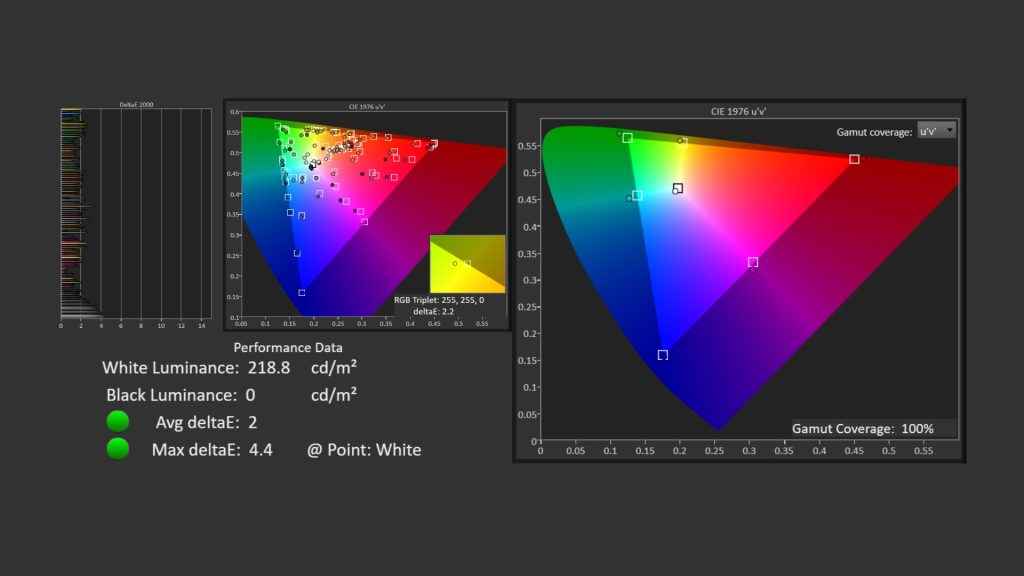
In our Calman tests, the panel achieved 100 per cent coverage of the sRGB colour gamut and excellent accuracy, with an average Delta E of 2.0 and a maximum Delta E of 4.4 at the white point. That puts it among the most colour-accurate panels in its class, rivalling what you’d find on the Galaxy S25 or iPhone 17. The RGB balance chart shows a slight blue bias at full brightness, but nothing that affects everyday viewing.
The screen produces deep blacks and well-defined highlights, and HDR10+ certification ensures consistent tone-mapping across content. Google has also upgraded the colour depth, resulting in smoother gradients and fewer visible banding issues when watching HDR videos or editing photos.
The 120 Hz adaptive refresh rate feels responsive, although the panel still doesn’t use LTPO technology, meaning it can’t drop dynamically below 60 Hz. That’s one area where the Pixel 10 trails pricier flagships, but in daily use, scrolling, gaming, or even simple animations, the fluidity feels top-tier.
Paired with stereo speakers that deliver clear mids and crisp highs, the Pixel 10 offers one of the most balanced multimedia experiences in this segment. Whether you’re streaming Dolby Vision content or editing photos, the display feels tuned for accuracy.
Performance & Software

Google’s Tensor lineup has always been more about intelligence than brute force, and the new Tensor G5 continues that philosophy, but this time, it feels a lot closer to striking the right balance. Built on a 3 nm process, the G5 delivers efficiency gains that the older Tensor G4 could never quite manage, along with noticeably improved sustained performance.
In synthetic benchmarks, the Pixel 10 shows measurable improvement across the board. It scored 1,165,176 on AnTuTu, a marginal bump over the Pixel 9’s 1.16 million, but a more meaningful jump appears in Geekbench, where single-core scores rise from 1,654 to 2,043, and multi-core from 4,233 to 4,481. These numbers still trail Qualcomm’s Snapdragon 8 Gen Elite and Apple’s A19, but they indicate that Google has finally closed the performance gap enough for everyday use to feel fluid and consistent.
The CPU throttling test saw the Pixel 10 maintain 59% of its peak performance only after 5 minutes, roughly the same as the Pixel 9, though the heat dispersion is more controlled this time. While you’ll still feel warmth during heavy gaming or extended camera use, it’s no longer the uncomfortable kind that plagued earlier Tensor generations.
Productivity benchmarks back this up: the Pixel 10 logged 14,522 in PCMark Work, a significant leap from the Pixel 9’s 10,997, showing clear optimisation for multi-tasking and real-world app performance. In 3DMark Wildlife, it achieved 3,104 points, again outpacing its predecessor’s 2,568 but falling short of gaming-focused rivals like the iQOO 13 or OnePlus 13.
In practical terms, the Tensor G5 feels swift across most scenarios, such as launching apps, switching between tasks, or processing photos in the background. The AI-assisted operations, such as live translation and Magic Editor, execute faster thanks to an upgraded on-device NPU. However, gamers and performance enthusiasts might still find the sustained frame rates in demanding titles like BGMI or Genshin Impact a step below Snapdragon-powered phones.
It’s not the most powerful chip in its class, but it’s finally efficient, stable, and capable enough to support Google’s AI ambitions.
The Pixel 10 runs Android 16 out of the box and continues Google’s promise of seven years of OS and security updates, making it one of the longest-supported Android phones available. The UI remains clean, minimal, and free from clutter.
The new Gemini Nano model powers on-device features like Magic Cue, Pixel Screenshots, and Circle to Search, all working offline without noticeable lag. Gemini Live brings conversational assistance and feels faster and more natural than before.
Photo editing tools such as Reimagine, Best Take, and Zoom Enhance now output noticeably quicker, while Call Assist and Live Translate benefit from improved contextual accuracy.
Battery and Charging
Battery life sees a notable step up this year. The Pixel 10 packs a slightly larger 4,970 mAh cell, and thanks to the more efficient Tensor G5 chip and Android 16 optimisations, endurance has improved significantly. In the PCMark Battery Test, it clocked 18 hours and 14 minutes, up from the Pixel 9’s 14 hours and 45 minutes, which is a solid 23% gain in longevity.
In everyday use, the phone comfortably lasts a full day of mixed usage, including camera, GPS, and streaming, often stretching well into the next morning with moderate use. Heat management under sustained use is also noticeably better than before.
Charging, however, is where the Pixel 10 still feels conservative. The 30 W wired charging takes about 100 minutes to reach full capacity, but is slower than most competitors in the Rs 80,000 range. On the plus side, you do get 15 W magnetic wireless charging (Qi2) and reverse wired charging, along with a new bypass charging mode that powers the phone directly during gaming or navigation to preserve battery health.
Camera

The Pixel 10 introduces a triple-lens system featuring a 48 MP main sensor, 13 MP ultra-wide, and a 10.8 MP telephoto lens with 5x optical zoom. While the hardware doesn’t appear drastically different from the Pixel 9 on paper, the results tell a story of refinement.
In daylight, the Pixel 10 continues Google’s tradition of exceptional computational photography. Colours are strikingly natural yet vibrant when needed. The blues of the sky are deep without oversaturation, reds and greens pop with accuracy, and exposure remains impressively balanced even in harsh backlighting. Highlights stay in check, and shadow detail is well preserved, producing images that look true-to-life rather than overly processed.





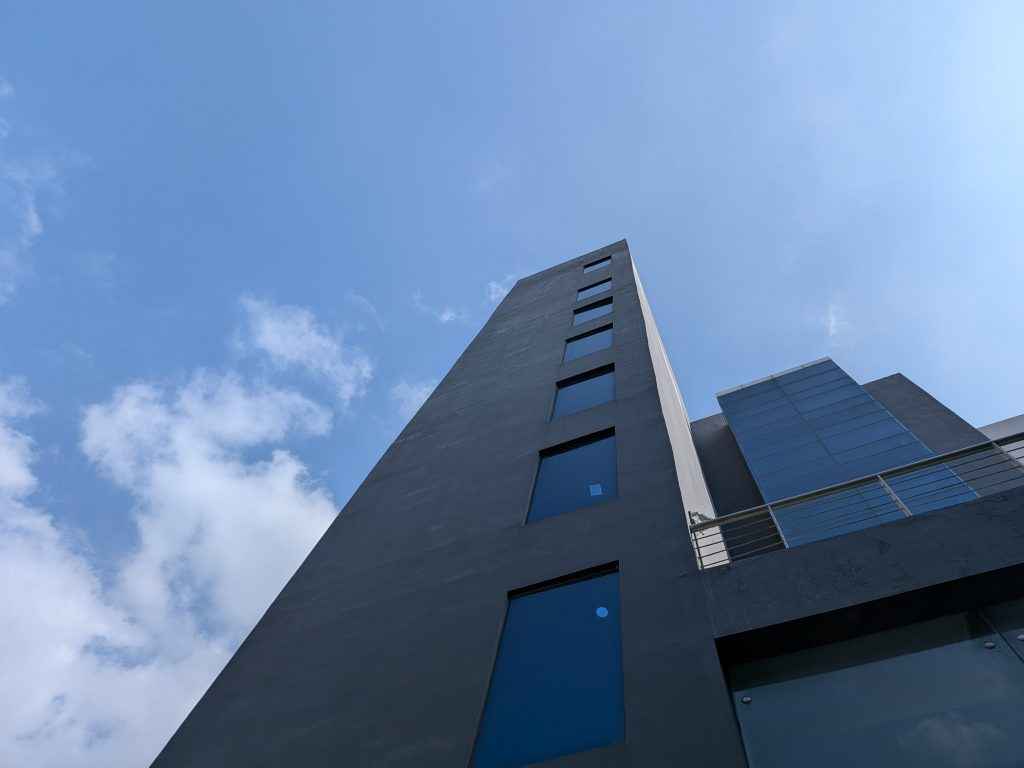

Detail retention is another strength. Whether it’s the fine stone carvings of an old building or the intricate pattern on a car grille, textures appear crisp and realistic, with no excessive sharpening. The ultra-wide camera complements this beautifully, maintaining consistent colour and exposure across lenses, while the telephoto delivers clean results up to 5x optical and holds well up to around 10x using Google’s Super Res Zoom.







Portrait performance is among the best in class. Subject separation is near-perfect, with soft, natural background blur that mimics optical bokeh rather than artificial depth cutouts. Skin tones are rendered with lifelike warmth, and edge detection around hair and complex outlines is impressively accurate.
Low-light performance remains a Pixel hallmark. Night Sight kicks in quickly, producing bright, well-detailed images with minimal noise and accurate white balance, even under mixed or artificial lighting. Close-up shots benefit from Macro Focus, which captures fine textures with shallow depth and excellent focus precision.
If there’s one minor quirk, it’s that very bright skies in HDR can occasionally appear slightly flattened, which could be a side effect of Google’s aggressive tone mapping. But that aside, the Pixel 10’s imaging pipeline feels cohesive and reliable.
Verdict

The Google Pixel 10 quietly refines everything the Pixel 9 aimed for and finally makes it feel complete. This is Google’s most polished phone yet, and more importantly, the first one that makes its AI layer feel invisible.
The new Tensor G5 chip still isn’t built for benchmark glory, but it delivers stability, efficiency, and consistency, three things the Pixel lineup has long needed. Battery life has improved meaningfully, the display feels flagship-grade, and the camera system continues to lead with realism and dynamic range that few rivals can match.
It’s not without faults: charging remains slow, gaming performance is still secondary, and the lack of LTPO limits its premium credentials slightly. But for users who value thoughtful software, intelligent photography, and a clean, intuitive Android experience, the Pixel 10 nails the brief. It’s not the flashiest flagship of 2025, but it might just be the smartest one.
Google Pixel 10 Key Specs, Price and Launch Date
| Release Date: | 21 Aug, 2025 |
| Market Status: | Launched |