
AC not cooling properly after heavy rain? Here are 5 possible reasons
 Follow Us
Heavy rain can affect your AC's cooling.
Frozen coils, dirt around the outdoor unit and power fluctuations can reduce cooling performance.
A blocked drain line or low refrigerant may also stop your AC from cooling the room properly.

Heavy rain can bring down the temperature outside. But it can also create problems for your AC. It may happen that the AC is running, but the room is not getting cool enough. In some cases, the unit may only blow normal air. Rain does not always damage an AC directly. However, heavy storms and waterlogging can affect different parts of the cooling system. Dirt and mud can block airflow. Meanwhile, lightning and sudden voltage changes may damage electrical components. If your AC has stopped cooling properly after heavy rain, here are five possible reasons you should know about.
 Survey
5 possible reasons why AC is not cooling properly after heavy rain
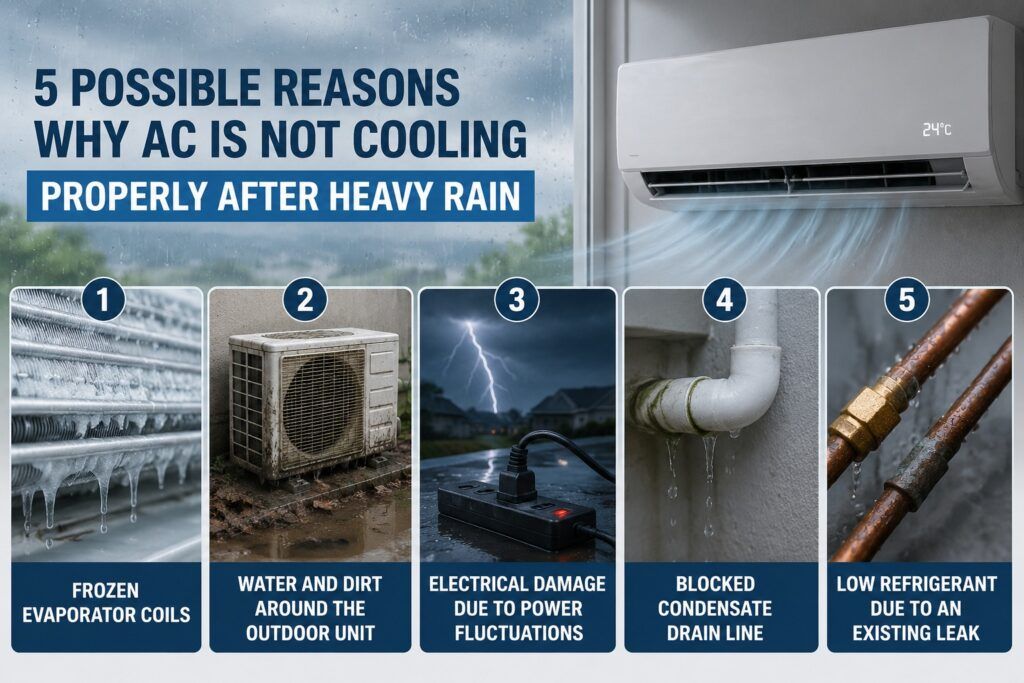
Frozen evaporator coils
Heavy rain increases humidity levels. This means your AC has to remove more moisture from indoor air. The problem can become worse if the air filters are dirty or blocked. Reduced airflow can make the evaporator coils too cold. Moisture on the coils may then freeze and turn into ice. This ice blocks airflow and affects cooling.
Water and dirt around the outdoor unit
The outdoor unit needs proper airflow to release heat. Heavy rain or flooding can leave water, mud or dirt around the unit. Dirt may also collect on the condenser fins. This makes it harder for the AC to release heat outside. So, the system may struggle to cool your room properly.
Also read: Air purifiers in monsoon: How they can help improve indoor air quality
Electrical damage due to power fluctuations
Thunderstorms can cause sudden power fluctuations. A strong power surge may damage electrical parts inside the AC. The capacitor or other components linked to the compressor and outdoor fan can be affected. If these parts fail, your AC may continue to blow air without actually cooling it.
Blocked condensate drain line
Your AC removes moisture from indoor air and drains the collected water through a pipe. During heavy rain, dirt, leaves or mud may block the drain line. Water can then collect inside the system. Some ACs have a safety switch that stops cooling when too much water collects in the drain pan. This can make it seem like the AC has suddenly stopped cooling.
Low refrigerant due to an existing leak
Rain itself does not directly cause refrigerant leaks. However, wet conditions can expose existing cracks or small holes in the copper refrigerant lines. Moisture may enter the system through these gaps and contaminate the refrigerant. A low or contaminated refrigerant charge can reduce the AC’s ability to absorb heat and cool your home.
Also read: How rain can damage your AC and what you can do to prevent it


