
Humanoid robots may have their ChatGPT moment soon, says Unitree CEO
 Follow Us
Unitree’s benchmark is a robot completing 80% of tasks in an unfamiliar home.
Major improvements in robot software could arrive within 2-3 years, he says.
Unitree is investing heavily in world models to help robots understand real-world environments.
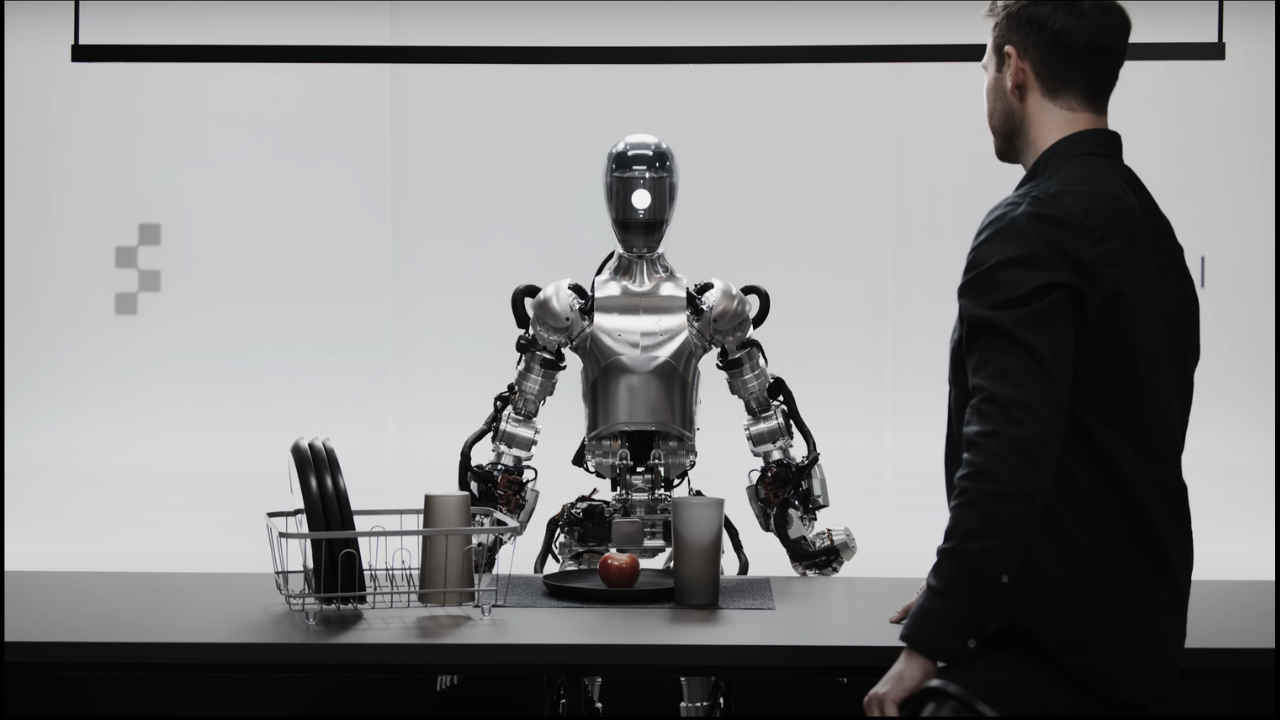

Unitree founder and CEO has said that the robotics industry is moving towards the breakthrough and is comparable to the one that propelled ChatGPT into the mainstream. At the World Robot Conference in Beijing, Wang Xingxing said the sector is nearing a turning point where robots can grasp instructions and carry out real-world tasks with far greater independence, what he called a ChatGPT moment.
 Survey
This statement came day after Unitree’s shares tumbled 11 percent on the Shanghai exchange, following a debut in which the stock had rocketed nearly sixfold. Wang also outlined a benchmark- a robot placed inside an unfamiliar home that can complete roughly 80 percent of everyday tasks purely through spoken or written instructions. Reaching that point, he said, would mark a genuine inflection moment for the industry’s growth.
He also stated that a big improvement in robot software may happen in two or three years if things go well, but it might also take five to ten years if progress is slower. People who attended the event noticed that his tone was more careful and realistic compared to the excitement around the conference and Unitree’s huge stock market debut.
Also read: Samsung Galaxy event date announced: Here is when Galaxy S26 FE will launch
He also admitted that today’s humanoid robots still are not ready to be used widely. The biggest problem as per him is that the AI models powering these robots still struggle to make good decisions on their own. He also shared that Unitree, world’s biggest maker of robot dogs and and the second-largest maker of humanoid robots is now putting most of its money and effort into something called world models that help robots understand and move around in real environment.
Other robotics leaders share similar expectations. Wang He, founder of rival company Galbot, believes this big breakthrough moment will arrive by 2028, a point where robots can handle 70 to 80 percent of everyday tasks without needing special training.


