
 E-Magazine
Thousands of Android apps may face Google Play ban from 2027: Here is why
Google will make basic foldable app support mandatory from April 2027.
Apps must meet new screen adaptation and multitasking standards.
Developers must submit three foldable-specific screenshots for Play Store listings.
Foldable devices are growing fast in the smartphone market, and when it comes to Android foldables, we have plenty of options. But one common issue is that not all apps are optimised for foldable screens, which hampers the experience. Now, Google will require Android apps to meet a basic standard for foldable devices from April 2027. Apps that fail to meet it won’t be able to publish new apps or updates on the Google Play Store. Meanwhile, Google has said well-adapted apps will get better visibility on the platform. Follow along with the article to learn everything you need to know about the new requirements from Google.
Google sets three levels of adaptive app quality
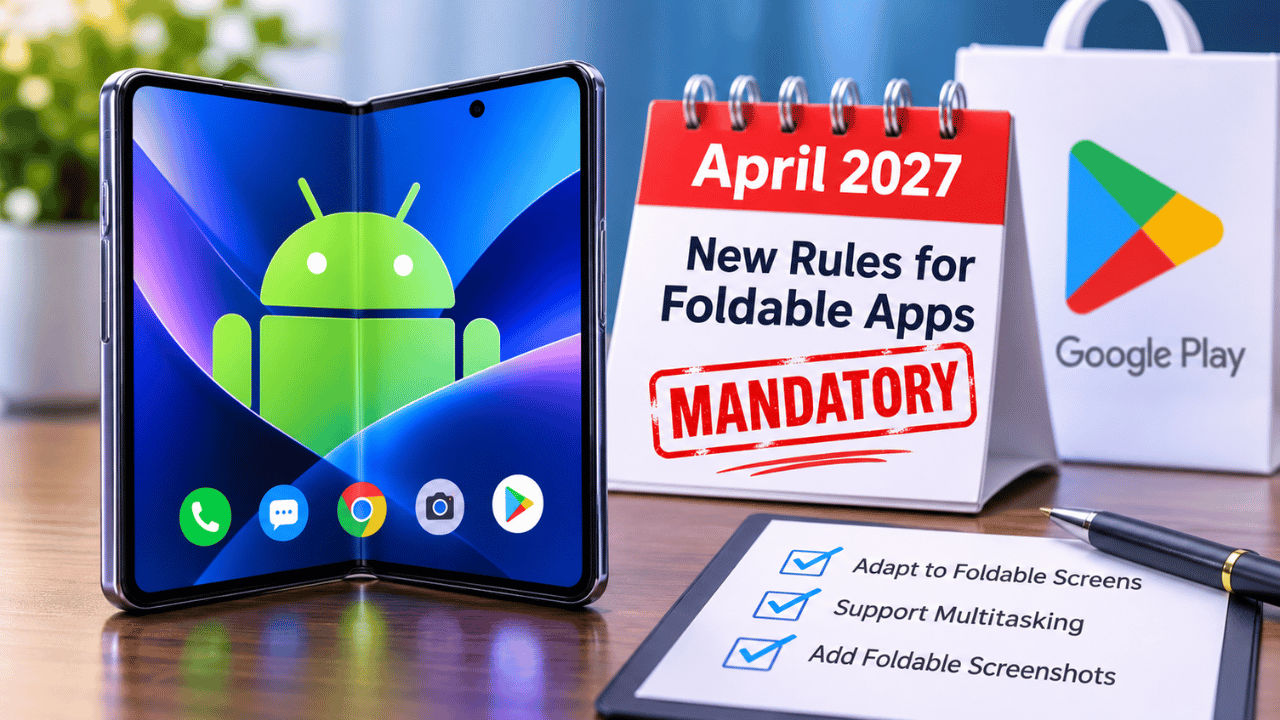
To keep the app experience smooth across devices, Google has updated its adaptive app quality guidelines, which now come in three levels. The Tier 3 level, called ‘Adaptive Ready’, is the minimum requirement for developers and becomes mandatory in April 2027.
Applications must not run in compatibility mode. They should fill the entire screen without displaying black bars. Additionally, they should allow for the simultaneous use of multiple apps and appropriately adapt to various screen sizes and orientations.
Apps should keep their current state when users fold or unfold their phones, rotate the screen, or resize app windows. For example, text, scrolling, and media playback should all go on without interruption.
Google provides two higher levels in addition to the fundamental Tier 3 requirements to assist developers in improving the user experience on foldable devices.
The Tier 2 standard is called ‘Adaptive Optimized’ and focuses on layouts that make better use of larger displays. For example, apps can show two columns or multiple sections instead of simply stretching a regular phone interface.
Whereas the Tier 1 series is known as ‘Adaptive Differentiated.’ It’s important to note that Tier 1 is the highest level of the standards set by Google. In this, the tech giant encourages developers to build experiences designed around the device, including support for multitasking and foldable postures such as tabletop mode. Developers who meet the higher tiers can also apply for Play Store badging and editorial spotlighting.
Foldable screenshots also become mandatory
Developers will also have to provide three foldable-specific screenshots for their Play Store listings starting April 2027. These must include at least one 1:1 inner-screen screenshot, at least one 4:3 inner-screen screenshot, and at least one outer-screen screenshot. They are in addition to the standard phone screenshots. Furthermore, Google has also confirmed that the option to submit these images through the Play Console is already live.
Game developers get more time
Google has provided game developers with additional time to meet the Tier 3 requirements, as their deadline is set for August 2027. However, they will also need to provide three foldable screenshots from April 2027.

Bhaskar Sharma Bhaskar is a Senior Copy Editor at Digit India who keeps a close watch on everything shaping the world of technology from smartphones and home appliances to AI, government tech initiatives, digital safety, and the latest industry developments. Whether it's breaking news, in-depth features, hands-on reviews, practical how-to guides, or exclusive scoops, he translates complex tech into stories that are easy to understand and worth reading. His work has been featured in iGeeksBlog, GuidingTech, and other leading publications. Before joining Digit India, he served as an assistant editor at TechBloat. A B.Tech graduate and full-time tech journalist, he is driven by just one goal, which is to help readers stay informed, stay secure, and stay ahead in an ever-changing digital world.
View full profile