

Can AI beat doctors at diagnosing medical conditions? Microsoft claims its AI can do it at lower costs, here is how
 Follow Us
Microsoft says its AI achieved 83 per cent and 80 per cent accuracy in two clinical benchmarks, compared with 36 per cent and 46 per cent for general physicians.
The GPT-5-powered system uses a step-by-step diagnostic approach, asking questions and recommending tests based on patient information.
The technology reportedly reduced diagnostic costs, but its effectiveness in real-world healthcare settings remains unproven.


AI use cases in healthcare have been an aspirational vision in the medical industry, and it appears Microsoft is working in this direction. In a recent conversation with The Verge, Mustafa Suleyman, CEO of Microsoft AI, claimed their AI tool can diagnose health conditions better than a doctor. The newly published research claims the AI takes a step-wise approach and can reportedly be more accurate as a general physician when dealing with medical conditions.
 Survey
In a study published in the research journal Science, Microsoft claims the AI can work as a ”panel of physicians” to frame a staggered diagnosis and choose cost-effective measures for treatment. With the benchmark, the AI system delivered an accuracy of around 83 per cent and 80 per cent, versus 36 per cent and 46 per cent for general physicians, in clinicopathological conference cases and emergency department admissions during the controlled trials.
Also Read: Microsoft says Chinese hacking group attacked over 100 organisations using agentic AI, here is how
The GPT-5-powered AI model can question patients to better understand the condition and suggest exams and tests that can be undertaken via a “diagnostic orchestrator”, Reuters reported. Unlike existing AI that works on an all-at-once approach, the simulated panel divides the diagnosis and treatment into steps based on the results of a medical examination and the patient’s input and condition.
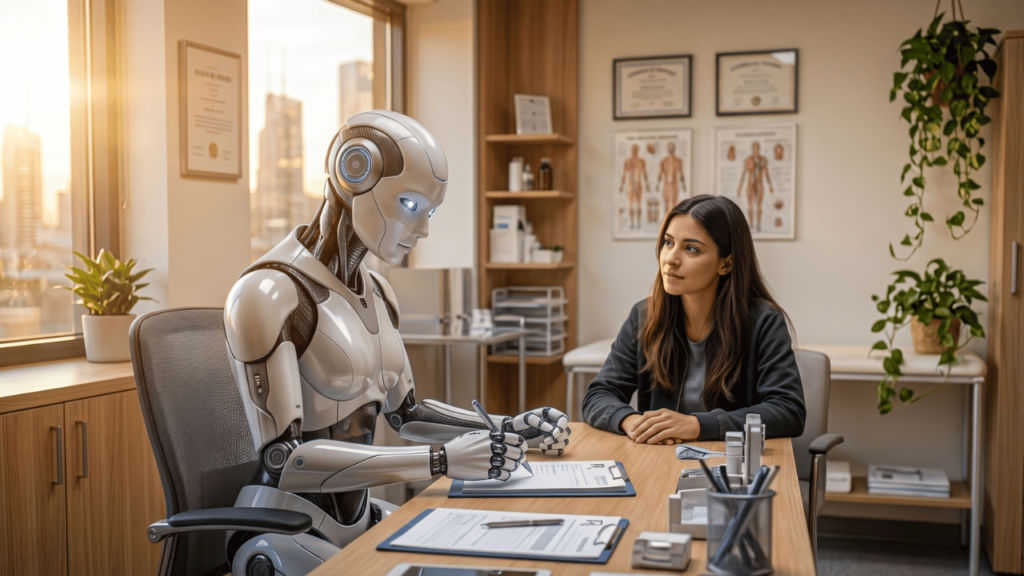
Based on the outcomes of previous reports, the orchestrator can plan an extended diagnosis or further examination. The AI model in question was tasked to solve 300 complicated medical dilemmas and emergencies, where it delivered two times more accurate diagnosis compared to medial practitioners using books and the web sources.
Also Read: Anthropic introduces proactive AI agent Claude Duet: What it can do, how to access and more details
Unlike previous assessments that checked the efficacy of medical AI models using MCQs, where the model can easily achieve 100 per cent accuracy but still be irrelevant in the real world, Microsoft opts for a more unusual and step-wise approach for testing. Plus, Microsoft notes the cost of the diagnostic process was relatively lower than the one suggested by human alternatives. However, the efficacy and real-world use cases of this technology at a large scale, beyond research-based studies, are yet to be demonstrated.


