

Anthropic release list of jobs that will get affected by AI: Are you safe?
 Follow Us
Anthropic created a tool to study how AI could affect different jobs in the future.
Tech and office roles like programmers and customer service may face higher AI impact.
Physical jobs such as cooks and lifeguards are less likely to be affected by AI.
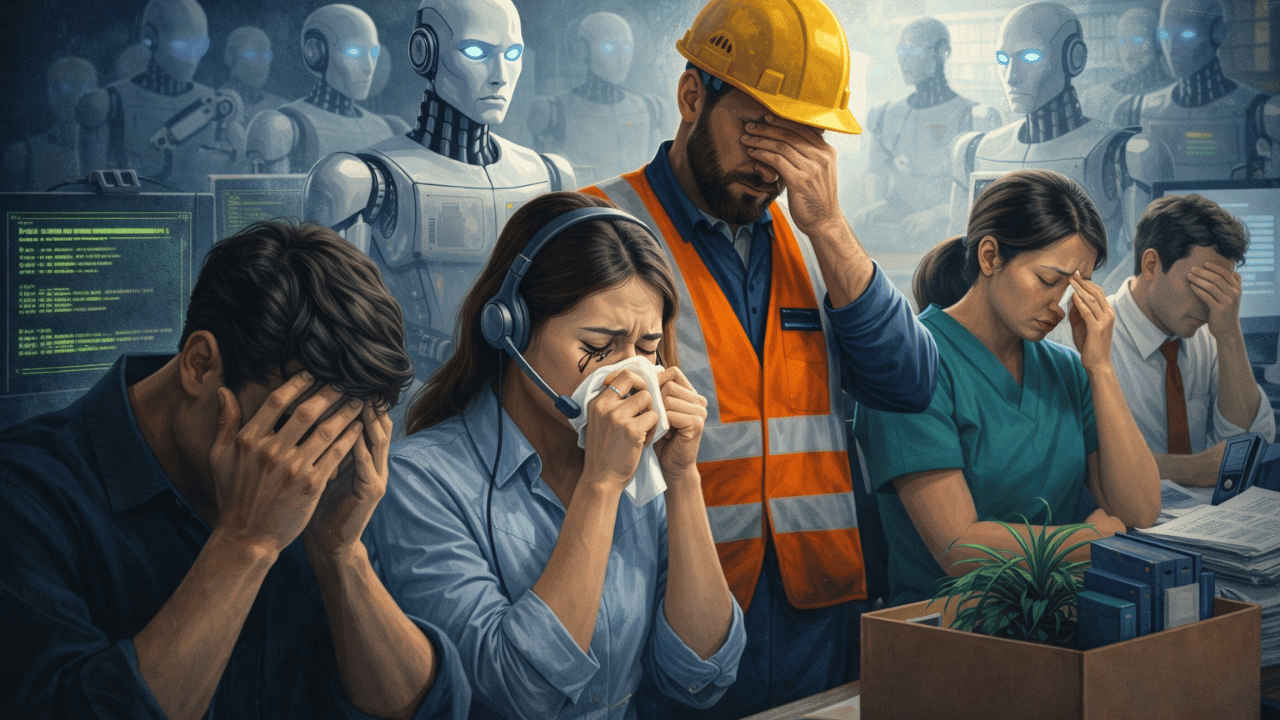

Artificial intelligence may reshape office jobs in the coming years, but measuring that impact early has been a challenge for economists. Anthropic confirms that they are currently attempting to track these possible changes before they become visible in the labour market. The firm said that they have developed a new system that studies how much different jobs rely on tasks that artificial intelligence can perform. Furthermore, they said that by analysing both job descriptions and real-world usage of AI tools, the company hopes to create an early signal of disruption.
 Survey
According to a new research paper by economists Maxim Massenkoff and Peter McCrory at Anthropic, the system functions as an index that measures how exposed different occupations are to automation by large language models. The index looks closely at the tasks that make up a job. If a large share of those tasks can be handled by AI and are already being performed using AI tools, the occupation is considered more exposed to automation.
Also read: Amazon Electronics Premier League 2026: Realme GT 7 Pro price drops to under Rs 48,000
The company’s analysis suggests that some technology-focused roles could face the highest level of exposure. According to the report, the programmers rank among the most affected occupations, as AI systems are capable of handling roughly three quarters of their common tasks. Other than programmers, the customer service representatives, data entry workers and medical record specialists also appear high on the exposure list.
At the same time, many occupations still remain less vulnerable. Jobs that depend heavily on physical work and human presence appear more protected from automation. These include roles such as cooks, lifeguards and dishwashers.
Also read: Vivo X300 Ultra camera details tipped ahead of launch: Here’s what it may offer
Although the concern over the number of jobs lost due to artificial intelligence is increasing, the study does not show strong evidence that the disruption caused by AI has started. The study indicates that the difference in unemployment between AI-exposed and AI-resistant jobs has changed slightly since the introduction of ChatGPT.
However, the data does point to a small shift in hiring trends. Researchers also observed signs that the recruitment for the young workers, especially the ones aged between 22 and 25, is slowing. According to them, the trend is usually seen in the occupations where AI tools could be used to fill in for them.


