
 E-Magazine
AI may have cracked complex math problems that are too dangerous to make public: Report
AI models may be making major mathematical breakthroughs that could threaten today’s encryption technologies.
Experts warn that discoveries related to P vs NP could potentially threaten existing cryptographic security systems.
With the change, banks, governments and other organisations may need to rethink their data security strategies.
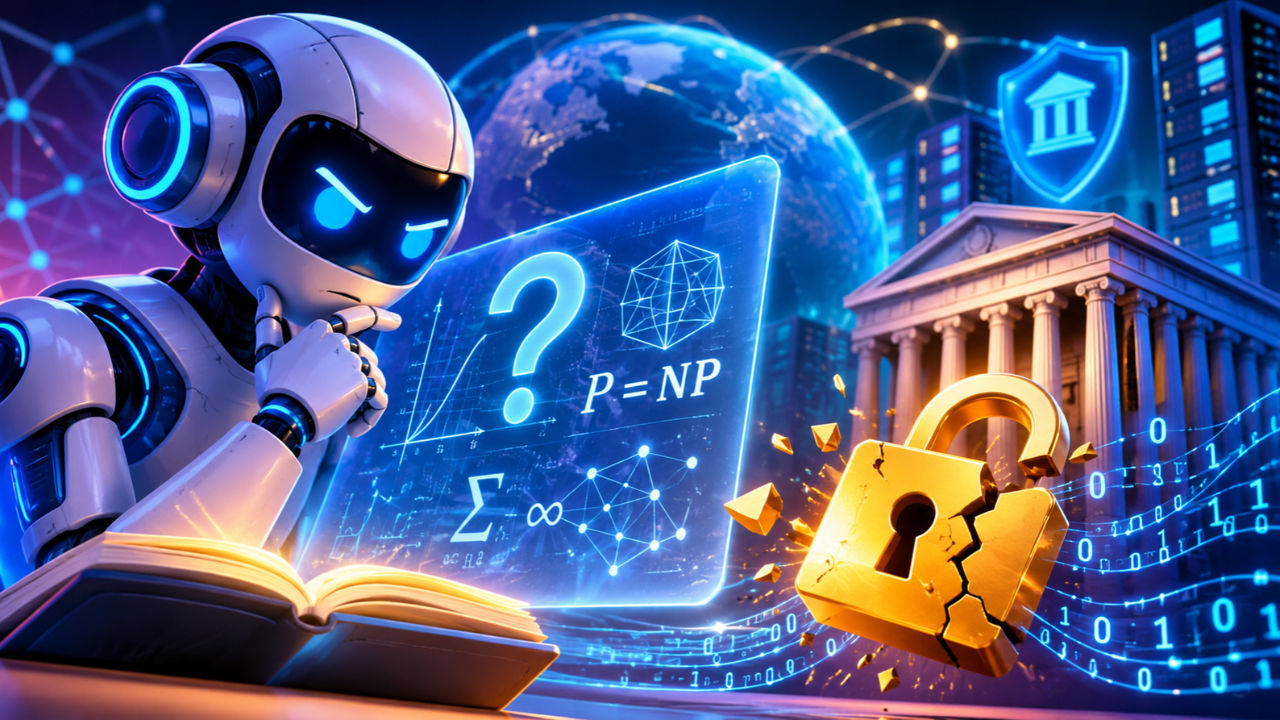
Artificial Intelligence firms such as OpenAI, Anthropic, DeepMind and more have made headlines in the past for breakneck advancements across key sectors. In a recent update, The Guardian reported AI firms could make “bombshell” revelations that could impact a wide set of banks and organisations, including government agencies, in a few months. Citing theoretical computer scientist Scott Aaronson, the news outlet noted that “well-attested” leaks suggest AI tools have solved decades-old problems in the mathematical domain that could significantly affect how data is encrypted.
If these rumours turn out to be true, this could ease how hackers sneak into secret systems of banks, e-mails and communication across government channels, and force these stakeholders to reconsider their foundational approach towards security and protection of sensitive data or remain highly prone to data breaches and leaks. This update comes amid reports of AI frontier models achieving unreal advancements in mathematics and solving extremely difficult problems recently.
According to Axios, solving these problems, such as “P=NP”, a widely contested question among scientists, could lead to major advancements. These transformations have forced AI tool makers to reconsider the fact whether these frontier models should be even used internally, leave aside a public release.
Recent developments include a Claude-assisted proof of the Riemann hypothesis presented by an Anthropic staffer. Anthropic and OpenAI have also shared claims of solving Valiant’s conjecture, a cousin of the VP vs VNP debate, open since 1979. Think of P vs NP like a Sudoku puzzle, where finding a solution can be tough, but telling if the solution is correct takes seconds. And if a method to exploit this is found, it may affect key sectors such as aviation, science, medicine and more, including training and development of AI systems.
And this is not it. The speed of discovery has led researchers to warn that these are just a fraction of the successes AI models have achieved behind closed doors. As a result, existing encryption technologies may become obsolete, and the vulnerability of tech that authenticates transactions, software, and more may increase. The scale of the advancements has reportedly forced AI companies to reconsider making the details public. Bank of England had earlier warned that these advances may jeopardise critical financial data.

Vikas Yadav
Vikas Yadav Vikas, a Copy Editor at Digit, writes to express his interest in technology. He covers consumer-centric tech news while hunting the day's most "VFM" smartphone deal. Plus, this curious geek enjoys digging into the last-mile intricacies of latest gadgets. Before Digit, he reported for Jagran English. Off work, you'll find him emotionally attached to historical sites or lost in tales of India's past. Simply put, tech is his 9-to-5, the rest is history.
View full profile