
Temple pre-orders may open next week: How Deepinder Goyal’s wearable may be different from smartwatches and rings
 Follow Us
Temple uses a light-based BrainFlow system to monitor blood-flow changes around the temple instead of relying on wrist or finger-based tracking.
Its proprietary Entropy score is designed to reflect changes in physiological load, stress, fatigue and recovery on a scale of 1 to 250.
Expected to cost around Rs 75,000 to Rs 1 lakh, Temple is positioned as a premium wellness device rather than a certified medical wearable.

The wearable market has seen a lot of improvement over the years. There are smartwatches that can count steps, measure heart rate and track workouts along with managing your notifications, calls and more, while smart rings have made sleep and recovery monitoring increasingly discreet. But that is not all. The wearable market is seeing a lot of new products including fitness bands. But what I am particularly excited about is the Temple wearable.
 Survey
The device has been in the headlines for a while. Backed by Zomato and Eternal founder Deepinder Goyal, Temple is an experimental health-tech wearable designed to sit on the side of your head to monitor changes in blood flow. Then it will use that information to generate a proprietary metric called Entropy, which the company says can provide insights into cognitive load, fatigue, stress and overall physiological demand.
Six colors for the launch edition of @temple Pre-orders open soon – hopefully next week; just need certainty on a couple more items. Folks on early access waitlist get priority access. Join the waitlist at https://t.co/XxGR9Hpq58 Can’t wait to get this 𝗂̶𝗇̶ ̶𝗒̶𝗈̶𝗎̶𝗋̶ ̶𝗁̶𝖺̶𝗇̶𝖽̶𝗌̶ on your temple 😄
— Deepinder Goyal (@deepigoyal) October 1, 2026
It is said to enter a consumer pre-order phase soon, but how will it exactly differ from the already available smartwatches and smart rings and what exactly it is.
Temple is worn on your head, not your wrist
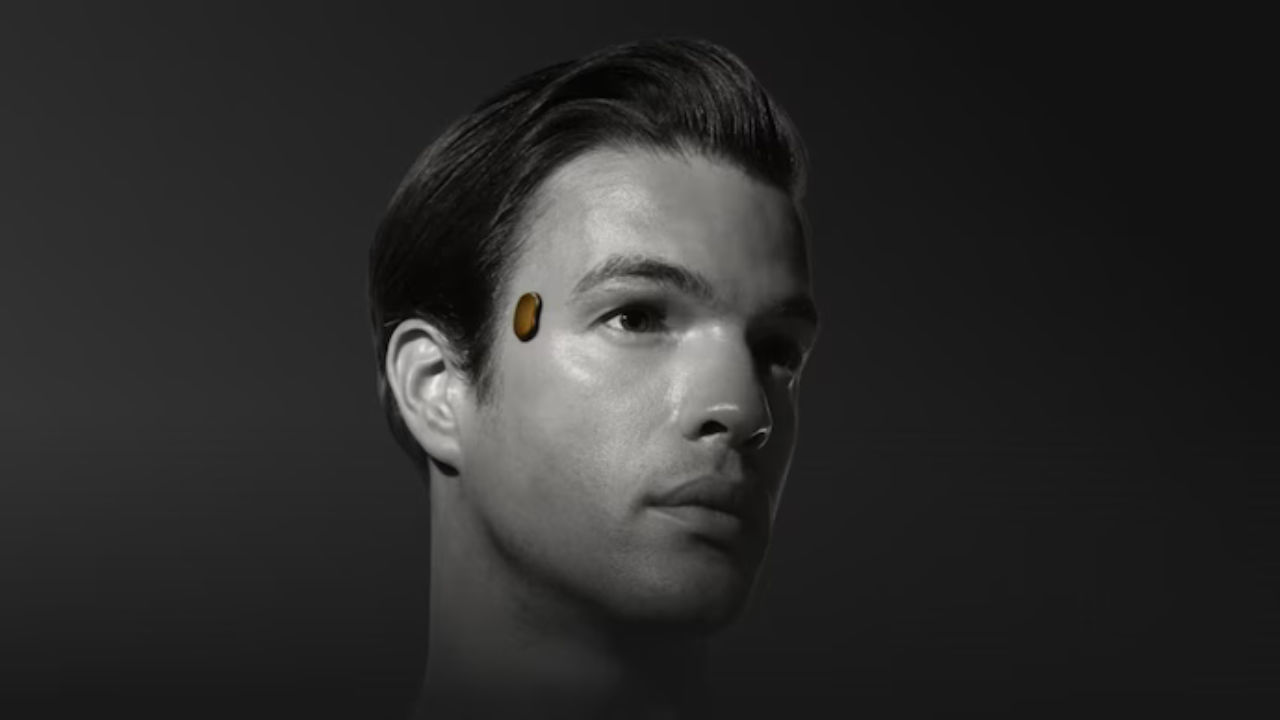
The most obvious difference is where the Temple sits. As you might have seen in multiple podcasts or social media posts, the wearable is a small pill-shaped module that attaches to the side of the head, around the temple area between the forehead and ear.
There is no watch strap or ring sizing involved. The device is held against the skin using adhesive Grips, which Temple says are designed to remain secure during workouts, showers and swimming. When launched, the company will reportedly ask the users to change the Grip every two to three days for hygiene, particularly for those who sweat heavily.
The best sleep position isn’t the same for everyone. This and so much more, only on Temple. Join the waitlist for Early Access at https://t.co/Pi4ZX0mU3s https://t.co/i0wgbUEu6c
— Temple (@temple) July 15, 2026
The device itself is expected to offer around seven days of battery life. It is also designed with smooth edges to reduce the chances of catching on clothing or glasses during everyday use. Temple says the device can be worn while swimming and exercising, although it advises against activities such as scuba diving.
What exactly is Temple trying to measure?
This is where Temple becomes considerably more ambitious than a conventional fitness tracker. Most smartwatches and rings rely heavily on photoplethysmography, or PPG, to measure things such as heart rate and blood oxygen levels. The sensor shines light into the skin and analyses changes in reflected light caused by blood flow.
Temple also reportedly uses a form of PPG technology. However, its sensors are positioned over the superficial temporal artery, rather than on the wrist or finger. The company calls its proprietary sensing and processing system BrainFlow. Temple says its location allows the sensor to observe blood-flow changes closer to the brain and that these signals can provide information that is more closely related to changes in cerebral blood volume than conventional wrist-based measurements.
Does @temple really monitor blood flow to the brain, or just the scalp? In our second validation study, we tested Temple BrainFlow against time-domain NIRS, one of the few technologies that can separate brain blood volume changes from scalp blood volume changes. We had 60 participants go through three physiological challenges: head-down tilt, stand-to-squat, stand-to-supine. Across all three challenges, Temple BrainFlow tracked brain blood volume at r=0.84-0.91, significantly more than scalp blood volume. The most significant result came from head-down tilt, where Temple’s correlation with the brain was 0.91, and scalp correlation was just 0.49. Key takeaway: Temple tracks the brain, much more than the scalp. Why this matters: Cerebral Blood Flow responds to almost everything longevity-oriented people already do. It rises with aerobic exercise, and VO2max correlates directly with it. It rises with cold exposure. It rises with meditation. Better sleep sustains it. It drops when you sit for too long. It drops when you are dehydrated. It is one of the most responsive and integrative biomarkers of how well your body is actually running, and aging. Until now, you could only measure it in a clinical setting, in a single snapshot. Temple measures it continuously, in real time, while you live your life. And Temple is, as of today, the only wearable in the world with validations against brain blood volume, and not just scalp. This study was guided by our Scientific Advisor, Prof. David Boas, Director of Boston University’s Neurophotonics Center, and the mind behind several new, high-impact, biomedical optical technologies in neuroscience, including NIRS. This is the second modality Temple BrainFlow is now validated against, after Transcranial Doppler. More coming soon. Link: https://t.co/zETs9gn5Cg The paper is posted as a preprint and submitted for peer review. We encourage researchers to replicate this. We’ll happily loan Temples to any qualified researcher who wants to pressure-test any of our metrics independently. Cc @agingroy
— Deepinder Goyal (@deepigoyal) September 25, 2026
It is not claiming to simply be another heart-rate or activity tracker. Instead, it wants to turn changes in blood circulation around the head into a continuous measure of the body’s physiological state.
The Entropy score is Temple’s answer to steps and calories
The data collected by Temple is condensed into a proprietary metric called Entropy, which runs from 1 to 250 and updates continuously. According to Temple, lower scores indicate a state of lower physiological demand, while higher scores correspond to increased stress, physical exertion or metabolic activity.
The company describes Entropy as a measure of the body’s real-time cost of being alive. In practical terms, the score is intended to reflect changes in autonomic nervous system activity and overall physiological load.
At the lower end of the scale, scores between 1 and 50 are associated with deep rest and states such as meditation. At the higher end, scores between 150 and 250 can occur during intense exercise or periods of physical or mental stress.
Temple says the score can also respond to things such as caffeine and digestion.
The idea is interesting because it moves away from the familiar wearable metrics we already know. Rather than telling you that you walked 8,000 steps or burned a certain number of calories, Temple wants to provide a continuous picture of how demanding a particular moment is for your body. But it should be noted that Entropy is a proprietary metric, not an established medical measurement. That distinction is important when interpreting what the number actually means.
Temple’s BrainFlow technology is still the biggest question mark
Temple’s claims about BrainFlow are likely to attract as much scrutiny as the device itself. The company says its validation work has compared its measurements with established techniques including transcranial Doppler ultrasound (TCD) and near-infrared spectroscopy (NIRS).
Temple has also cited research involving a relatively small group of healthy adults and says its measurements showed strong within-person correlations during controlled posture changes. The company has reported a correlation of around 0.8 in those tests.
It has also claimed that Entropy showed a 0.91 correlation with professional metabolic-cart measurements during high-intensity exercise, compared with 0.55 for traditional heart-rate measurements in the same context.
These numbers sound impressive, but correlation does not automatically establish that Temple is directly measuring brain activity or diagnosing anything happening inside the brain.
The device remains a non-invasive optical sensor sitting on the skin. Medical experts have therefore questioned how much information it can obtain about deeper cerebral blood flow, particularly given that the skull and surrounding tissue sit between the sensor and the brain.
How much it may cost?
The biggest surprise can ultimately be the price. Temple is expected to sit somewhere around Rs 75,000 to Rs 1 lakh, putting it well above most premium smartwatches and smart rings.
The company is reportedly taking a different approach to subscriptions as well. Instead of charging users a relatively low hardware price and then locking important features behind a monthly plan, Temple’s premium package is said to be subscription free.
Hello world. The first 100 Temples are ready to ship. We’re now inviting athletes, scientists, founders, doctors, creators, and individuals who care deeply about their physical and cognitive health to be the founding users of Temple. Apply for early access at https://t.co/XxGR9Hpq58
— Deepinder Goyal (@deepigoyal) May 5, 2026
The package is also expected to include the adhesive Grips required to keep the device attached to the skin. This means, almost all parts of the hardware will be covered.
Will it outpower smartwatches and rings?
The company is attempting to turn optical measurements from Temple into a new way of understanding physiological and potentially cognitive states. Its research and validation work may provide useful evidence, but much of the product’s most interesting claims still needs to be researched or tested independently.
For consumers, that means Temple should be viewed as an experimental wellness wearable, not a replacement for established neurological or cardiovascular tests done by experts.
At the same time, it brings some questions: what happens when health tracking stops being about counting what we do and starts trying to understand why our bodies respond the way they do? Personally, this will not change anything about the smartwatches and rings and will be a premium wearable that is used to monitor stress.


