
 E-Magazine
MS Dhoni, AI and expensive phones: How Google Play Arena wants to level up Indian esports
Google Play Arena brings six gaming titles under one platform.
MS Dhoni’s gaming passion adds authenticity to esports.
AI and rising smartphone costs could shape Indian gaming’s future.
India’s esports industry is gradually expanding from isolated tournaments and games to a broader level. Nodwin Gaming and Google Play have partnered up to launch a new tournament called Google Play Arena. Nodwin wants to unite professional players, gamers, gaming clubs, and sports personalities on one platform. With the new tournament, they want to help new gamers learn from the best, demonstrate their talent, and start their careers in esports. The first edition of Google Play Arena will bring together six major clubs and six gaming titles, which include Battlegrounds Mobile India (BGMI), Free Fire Max, Moba Legends: 5v5, Real Cricket, Chess and EA Sports FC.
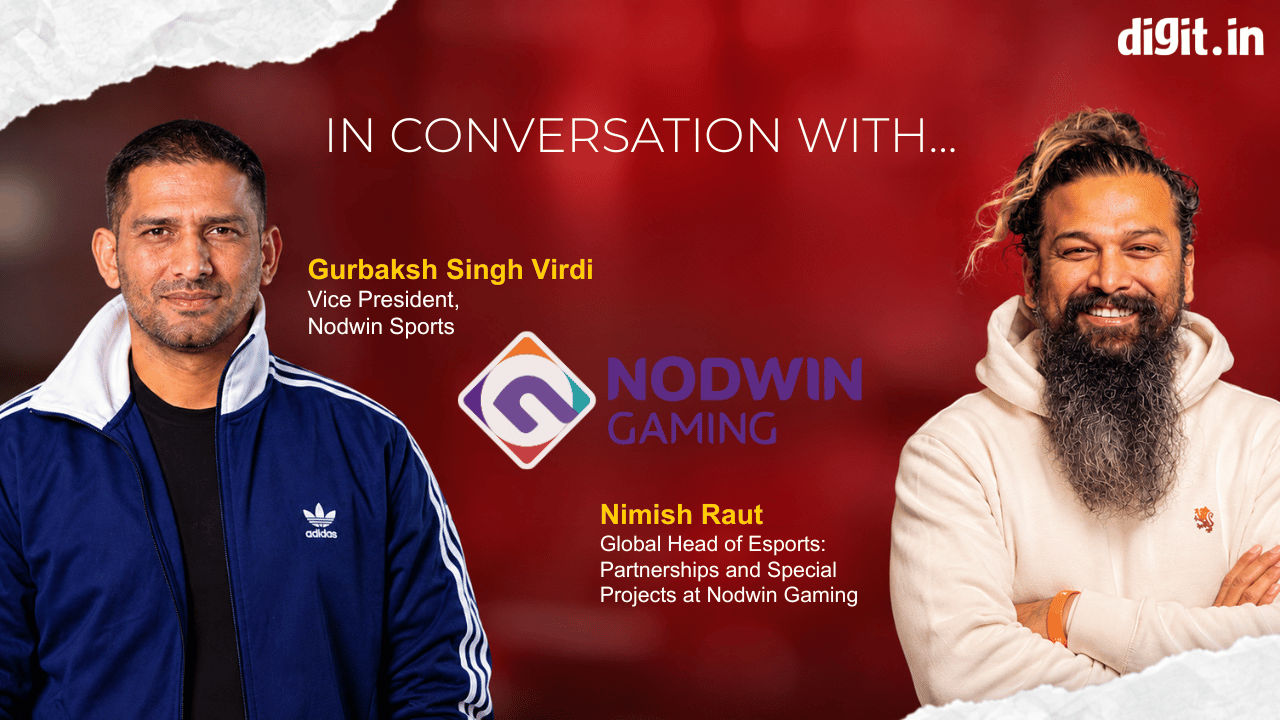
To get a better understanding of the Google Play Arena and the debut of MS Dhoni’s club Mahi Clutchers, we spoke to Nimish Raut, Global Head of Esports: Partnerships and Special Projects at Nodwin Gaming, and Gurbaksh Singh Virdi, Vice President, Nodwin Sports. They shared their thoughts on the tournament’s long-term goals, MS Dhoni’s connection with gaming, how traditional sports and esports are coming together, the role of AI in managing tournaments, and Nodwin Gaming’s plans to make competitive gaming a bigger entertainment experience.
From another tournament to India’s gaming festival
Gaming has always been close to Indians, whether it be cricket, football, basketball or any other sport. Still, in the past few years, mobile gaming has emerged as one of India's biggest opportunities. When we talk about the global esports landscape, India has made its mark, with Indian esports players inspiring a new generation of talent. Recognising the growing gaming community, Nodwin Gaming, in partnership with Google Play, has conceptualised a multi-title esports tournament, Google Play Arena, which aims to bring different gaming communities together under one roof.
While speaking with Digit about the idea behind Google Play Arena, Nimish Raut, Global Head of Esports: Partnerships & Special Projects at Nodwin Gaming, said the initiative was inspired by the growth of esports internationally. He cited the Esports World Cup (EWC), where Indian organisations and players compete across multiple titles, as an example of the opportunities available to the country.
He further emphasised that mobile gaming presents India with an opportunity to establish its own identity in the global esports ecosystem, with Indian talent making its mark across titles such as BGMI, Free Fire, chess, Mobile Legends: Bang Bang and Honour of Kings.
Nimish also said that choosing the right partner was just as important when it came to the Google Play Arena. And when talking about Google Play as the partner, he pointed out that it was a natural choice because of its strong role in mobile gaming. As Nimish explained, Google Play and the Play Store are key platforms for distributing mobile games.
He told Digit that the first edition brings together six major clubs and six mobile gaming titles. However, the long-term vision goes beyond the competition. Nimish said the bigger aim of the initiative is to create 'the biggest celebration at the end of the year for all gamers to come together irrespective of which title and which mobile game you play.'
Nimish also said that the initiative could encourage mainstream sports franchises and investors to explore gaming as a structured business opportunity, similar to traditional franchise-based sports leagues.
MS Dhoni isn’t just here for the fan following
Celebrity endorsements are not new to the world of esports. But Nodwin is of the view that it only makes sense to bring in any sports celebrity to the realm of gaming when there is a real link between the two. This was one of the main considerations which led to the involvement of Mahendra Singh Dhoni in the Google Play Arena universe.
According to Nimish, it was important that they chose someone who knew his way around gaming and not anyone who had just come on board for the sake of being there. In addition to that, Nimish also highlighted that MSD has always been fond of mobile gaming. Not only that, but he also pointed out that Dhoni has played PUBG Mobile earlier and continues to play BGMI.
Gurbaksh echoed the same sentiment as he pointed towards the importance of authenticity and credibility to the initiative. He believes Dhoni brings genuine value to the ecosystem and makes the crossover between sports and esports more meaningful. Explaining why Dhoni was the right fit, Gurbaksh said, ‘The main big idea behind Dhoni and esports is the similarities. One thing that we spoke about was authenticity. There are many athletes and people within different genres, comedy, music, but someone who really adds value to the overall ecosystem, which is Mahendra Singh Dhoni, is a perfect fit. The larger idea is to bring authenticity and credibility into the sport and complement each other in that sense.’
Asked about the possibility of seeing more sports or entertainment figures coming into this initiative, Nimish informed that Nodwin is ready to work with athletes, entertainers and creators who are engaged with video games. In this context, some names like Sunil Chhetri, Tanmay Bhat and Samay Raina were mentioned by Nimish.
Gurbaksh also talked about the importance of such collaborations in bringing new things to the audiences, referring to the increased intersection of mainstream sports and video games. Speaking of examples from around the globe, he informed, 'Historically, we have seen a lot of athletes and celebrities from all around the world, and I think the fans are consuming fresh content. That's exactly where the crossover is. From Neymar to Usain Bolt to David Beckham, we've seen this in the world of esports and gaming. It just brings in newness, and also gives fans something new to consume.'
However, Nimish made it clear that the fundamental truth is that the connection has to be authentic. As Nimish put it, 'If there is no love for the video game and playing it, then this is not going to be an authentic partnership.'
Esports wants its own version of the IPL moment
Nimish sees the inaugural edition of Google Play Arena as the first step towards reducing the gap between amateur and professional gaming. He believes the platform could create a more structured pathway for amateur gamers to enter professional esports.
According to him, amateur players are no longer playing just for personal recognition or prize money. Their performance can also affect their club’s overall ranking. He also added that the current system encourages professional players to share their knowledge and experience with young talent. Clubs are motivated to involve coaches, offer training and give amateur players a chance to learn and play alongside experienced professionals.
He further told Digit that Nodwin is also looking at expanding the number of participating games. While the first edition features six titles, the aim is to potentially increase that number to eight or ten in subsequent editions.
Not only that, but Nimish also added that Nodwin is exploring possibilities of connecting Google Play Arena winners with international competitions such as the Esports World Cup and the Esports Nations Cup.
AI is helping behind the scenes, not calling the shots
We also asked Nimish about how Nodwin is using AI to maintain the integrity of tournaments and increase operational efficiency because of the increased relevance of technology in esports. To this, Nimish responded that the company is currently employing AI in several backend processes with the sole aim of operational efficiency, including advertisements and promotions, managing leagues, registering players, and digital deliverables.
Apart from all this, Nimish also added that AI helps the team keep track of the performance of the campaigns, measure the audience reach, check on KPIs, and monitor promotions. However, this does not imply that the use of AI for judging the performance of players and detecting foul play is easy.
According to Nimish, it will involve collaborating with the game publishers and other stakeholders. While Nimish agrees that AI could help in remotely monitoring the integrity of the competition in the future, the technology is not yet up to it.
Expensive smartphones: A problem or a sign of a smarter gaming audience?
However, the increasing price of smartphones is a worry for many individuals, particularly the younger generation who may not have the financial backing of an existing esports club. Nimish says that there are some pros and cons to this trend. He noted that ‘smartphone manufacturers are increasingly looking at building phones with better hardware because the cost of components is going up.’
It is possible that even entry-level smartphones would have better hardware and be able to play mainstream mobile games easily. Most importantly, the gaming industry has altered the way young consumers think about smartphones. Features like processor, RAM, refresh rate of displays, and chipset are some of the factors that determine the purchase of a smartphone.
Nimish says that this increased technical understanding of young consumers has made them more conscious about their purchases. When asked for recommendations of smartphones in different price ranges, Nimish recommended iQOO and Infinix below Rs 30,000, OnePlus below Rs 70,000, and Samsung Ultra series in the premium range.
The next five years may bring more than just bigger tournaments
Looking ahead, Nimish expects gaming and esports to attract greater attention from brands, government institutions and mainstream sporting organisations. He also sees potential for state-level esports championships, with government bodies increasingly recognising gaming as a way to reach younger audiences.
But perhaps the most important change could happen at the household level. For years, gaming has struggled with the perception that it is simply a recreational activity rather than a viable career option. Nimish believes this attitude is gradually changing.
He pointed out that the gaming industry offers opportunities beyond becoming a professional esports player. Content creation, influencer management, sales, marketing and league operations are all potential career paths. Greater parental acceptance could therefore play an important role in expanding the industry’s talent pool.
Different arenas, same rulebook: Hard work wins
Despite the differences between traditional sports and esports, Nimish believes the two share one fundamental quality, which is discipline. The strategy, teamwork, competition and audience engagement may look different, but reaching the top requires consistent effort in both fields. As he summed it up, ‘there is no substitute for hard work.’
Gurbaksh also believes that bringing mainstream sports personalities into esports helps create new experiences for audiences. He pointed towards the growing crossover between the two worlds, citing global athletes such as Neymar, Usain Bolt and David Beckham, who have been associated with esports and gaming. According to him, such collaborations introduce freshness and give fans something new to consume.
Google Play Arena is attempting to build on that common ground by bringing gaming clubs, professional players, amateur talent and mainstream sports personalities into the same ecosystem. Whether it eventually becomes the large-scale gaming festival Nodwin envisions will depend on how the platform evolves over the coming editions. But its first step is clear: making Indian mobile esports bigger than individual games, tournaments and teams, and giving the entire ecosystem a common stage.

Bhaskar Sharma Bhaskar is a Senior Copy Editor at Digit India who keeps a close watch on everything shaping the world of technology from smartphones and home appliances to AI, government tech initiatives, digital safety, and the latest industry developments. Whether it's breaking news, in-depth features, hands-on reviews, practical how-to guides, or exclusive scoops, he translates complex tech into stories that are easy to understand and worth reading. His work has been featured in iGeeksBlog, GuidingTech, and other leading publications. Before joining Digit India, he served as an assistant editor at TechBloat. A B.Tech graduate and full-time tech journalist, he is driven by just one goal, which is to help readers stay informed, stay secure, and stay ahead in an ever-changing digital world.
View full profile