
Meta Ray-Ban Gen 3 vs Gen 2: Price, features and upgrades compared
 Follow Us
Meta Ray-Ban Gen 3 adds slow-motion and hyperlapse video recording, along with a six-microphone array.
Gen 3 offers up to nine hours of battery life and adjustable temple tips for a better fit.
Ray-Ban Meta Gen 2 remains a more affordable option for buyers who want core smart-glasses features.
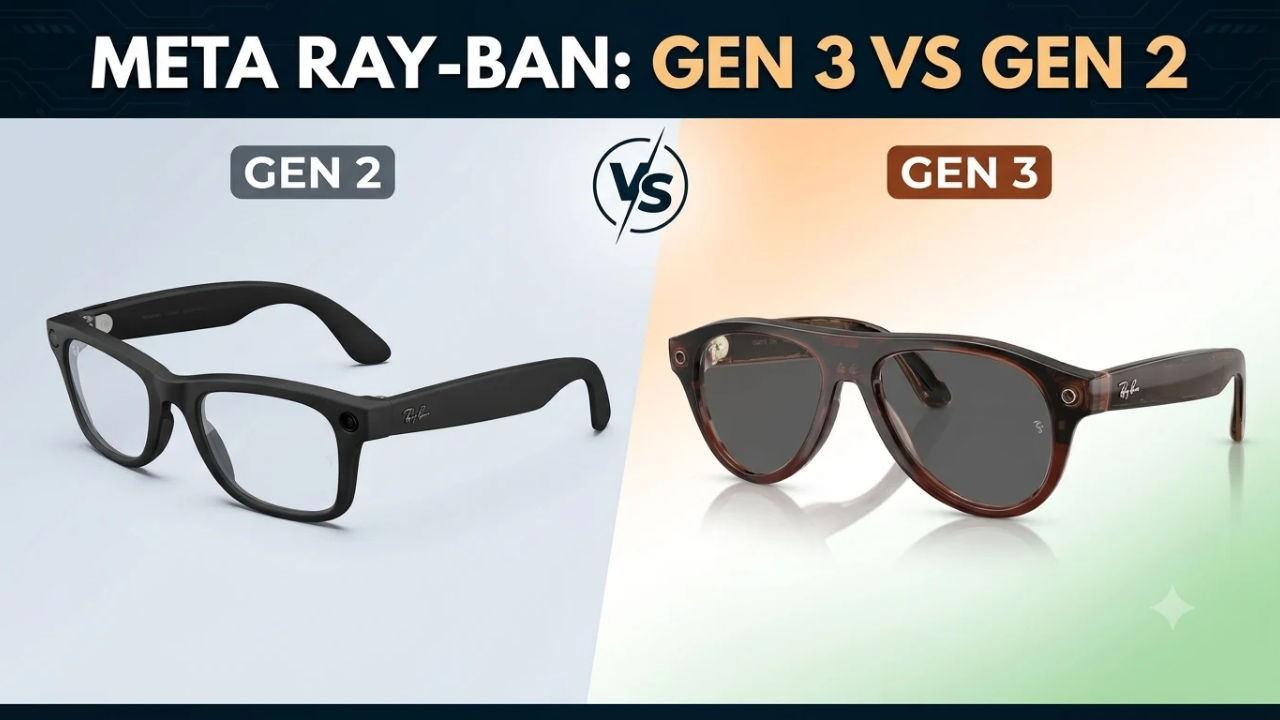

Meta’s Ray-Ban smart glasses combine a camera, open-ear speakers and AI features in a conventional eyewear design. The Ray-Ban Meta Gen 3 builds on the Gen 2 with hardware changes that include additional microphones, new physical controls, adjustable temple tips and longer claimed battery life. However, both generations offer core features such as hands-free photography, video recording, audio playback and Meta AI integration. Now that the Ray-Ban Meta Gen 3 is available in India, should you consider the Gen 2 or spend some extra bucks.
 Survey
Meta Ray-Ban Gen 3 vs Gen 2: Price in India
The Ray-Ban Meta Gen 2 has been listed in India at prices starting around Rs 39,900 (around Rs 32,000 after discount), while Gen 3 listings start at approximately Rs 44,300. The final price depends on the frame design, lens type and configuration, so these starting prices may not represent directly comparable variants.
And if you want to know what upgrades you are getting with increased price, scroll down and read.
Camera and video recording
Both generations feature a 12-megapixel ultra-wide camera for capturing photographs and videos from the wearer’s perspective. The glasses can be useful for recording travel clips, everyday moments and social media content without holding a smartphone.
The Gen 2 supports video recording at up to 3K resolution at 30 frames per second. The Gen 3 retains 3K recording and adds more capture options, including slow-motion and hyperlapse modes. It also has a smaller camera and recording indicator opening, which Meta says is 36% smaller than on the previous generation.
These changes make the Gen 3 more appealing to users who regularly record videos. However, resolution alone does not determine image quality, which also depends on lighting, stabilisation and image processing.
Audio and physical controls
The Gen 2 uses five microphones, while the Gen 3 upgrades to a six-microphone array. The newer hardware is designed to improve voice capture and reduce wind and background noise during calls and recordings.
Both models have open-ear speakers built into their arms, allowing users to listen to music, take calls and hear responses from Meta AI without wearing conventional headphones.
The Gen 3 also adds a dedicated Action Button alongside the capture button and touch controls. It provides another way to access supported shortcuts without relying entirely on voice commands.
The additional microphone and button can be useful for people who frequently take calls outdoors or use the glasses to record content. However, actual noise reduction will depend on the environment and software processing.
Battery life and charging case
Meta rates the Gen 2 for up to eight hours of use on a single charge, with its charging case providing up to another 48 hours of power. The Gen 3 increases the claimed standalone battery life to nine hours, while its case offers up to 50 additional hours.
This gives the newer model an extra hour of standalone use and two additional hours of reserve power from the case. However, the improvement is relatively modest.
Actual battery life will depend on camera use, audio playback, calls and interactions with Meta AI. Frequent video recording may drain the battery faster than occasional photography.
Both generations come with a charging case, allowing users to recharge the glasses when away from a power outlet. Buyers should check the official specifications for their chosen variant rather than assume that advertised battery life will match their usage.
READ: Samsung Galaxy Watch 9 vs Apple Watch Series 12: Price, features and everything compared
Design and fit
Both generations retain the familiar Ray-Ban aesthetic, but the available frame styles differ. Gen 2 includes designs such as Wayfarer, Headliner and Skyler, while Gen 3 adds styles such as Aviator and Zena alongside Wayfarer variants.
The Gen 3 also introduces adjustable temple tips that can be professionally modified to improve the fit. This may benefit users who find standard frames uncomfortable or need a more secure fit during movement.
The Gen 2 uses a conventional frame design, which may still suit many users. Comfort ultimately depends on face shape, frame dimensions and personal preference, making it worth trying the glasses on where possible.
Both generations have an IPX4 water-resistance rating, meaning they can withstand splashes but are not designed for swimming or submersion.
Meta AI and everyday features
Both generations support Meta AI alongside hands-free photography, video recording, audio playback and calls. The availability of individual AI features can depend on software updates, language, the connected smartphone and regional support.
Meta Ray-Ban Gen 3 vs Gen 2: Which one should you buy?
The Ray-Ban Meta Gen 3 offers additional recording options, a six-microphone array, a dedicated Action Button, adjustable temple tips and longer claimed battery life. These upgrades make it a better fit for people who expect to use their glasses regularly for recording and calls.
The Gen 2 remains a practical alternative for buyers who want the core smart-glasses experience at a lower starting price. If your primary uses are occasional photography, listening to music and interacting with Meta AI, the older model may offer better value.


