

Deepinder Goyal’s Temple wearable pre-orders open November 1: What to know before buying
 Follow Us
Temple pre-orders open November 1, with delivery expected within three months.
The wearable aims to track brain blood flow using special sensors.
Temple could cost Rs 80,000 to Rs 1 lakh, though official pricing is yet to be announced.
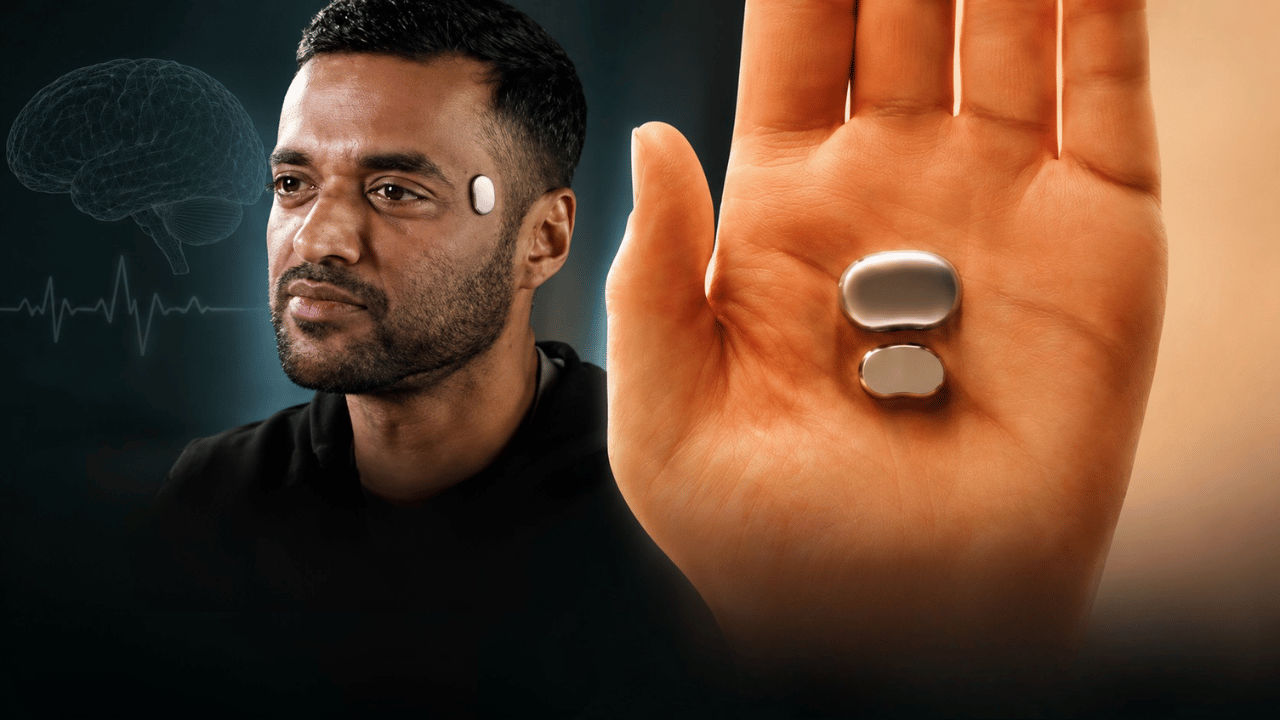

Zomato founder Deepinder Goyal’s experimental wearable, Temple, is moving closer to its consumer launch. Pre-orders for the first batch will open on November 1, with each unit being made by hand and delivered within three months of purchase. Announcing the timeline on X, Goyal said the company plans to scale production gradually, prioritising quality control and customer experience over rapid expansion. He described this as Temple’s ‘grow slow’ approach.
 Survey
The wearable will be available in six colours, including three limited-edition options: Real Jade, Deep Blue and Purple Funk. However, Temple has yet to announce its official price, the number of units in the first batch or the exact delivery schedule. Based on the three-month timeline, customers ordering in November can receive their devices in early 2027.
Temple aims to track brain blood flow, not just everyday activity
Most consumer wearables focus on familiar metrics such as heart rate, sleep, steps and workout performance. Temple takes a different approach, using sensors positioned near the temple to monitor changes associated with cerebral blood flow.
Goyal has said the device uses photoplethysmography (PPG), a light-based sensing technique also found in smartwatches. While conventional PPG systems commonly estimate heart rate and other cardiovascular metrics, Temple’s BrainFlow system aims to derive insights from signals associated with blood flow in the brain.
The main aim seems to be understanding how the body responds to exercise, rest, changes in posture and other conditions. Temple has also discussed a proprietary metric called Entropy, although its interpretation and practical usefulness will depend on further validation.
Also read: Microsoft says Chinese hacking group attacked over 100 organisations using agentic AI, here is how
The science needs independent scrutiny

Temple’s usefulness depends on more than its ability to capture physiological signals. The key question is how reliably those signals reflect changes in the brain and what conclusions can be drawn from them.
Goyal has shared preliminary research comparing Temple’s readings with established techniques. A study involving 23 healthy adults reportedly compared BrainFlow measurements with transcranial Doppler, which measures blood-flow velocity in a major brain artery.
Another study involving 60 participants reportedly compared Temple’s readings with time-domain near-infrared spectroscopy. The company reported correlations ranging from 0.84 to 0.91 across three physiological tests. These findings were presented in a preprint submitted for peer review, rather than as definitive clinical validation.
Independent research will be important in establishing how the device performs in everyday conditions. Measurements taken near the skin can be influenced by superficial blood circulation, movement and other factors.
Temple can cost as much as a premium smartwatch and more
Temple is unlikely to compete directly with affordable fitness bands. Goyal has indicated that the device could cost around US$1,000, with reports suggesting a price in the range of Rs 80,000 to Rs 1 lakh.
The final India price has not been confirmed, so these figures should be treated as estimates rather than official pricing. At that level, Temple would cost substantially more than mainstream smartwatches and smart rings.
Interestingly, Goyal has also discussed software access and the supply of adhesive Grips, the patches used to attach the device to the skin. The final pricing and subscription terms should be checked when pre-orders open.
Also read: EA to lay off 400 employees, shut down studio behind Dragon Ace
It attaches to the skin using adhesive Grips
Temple does not use a conventional watch strap or ring. Instead, it sits on the side of the head and attaches to the skin using specially designed adhesive patches called Grips. Goyal has said the device is intended for use during everyday activities and workouts, and that it can be worn with glasses. Comfort and fit, however, may vary depending on facial structure and eyewear.
The company has also discussed battery life of up to seven days. Its compact design can make it less intrusive than earlier prototypes, but wearing a device on the side of the head remains a different proposition from using a wristwatch or ring.
Made-to-order production can mean a longer wait
Temple has been in development for months. In May, Goyal said the first 100 devices were ready to ship to selected early users, including athletes, scientists, doctors, founders and creators.
By August, he had revealed a smaller version of the hardware and said the limited launch edition would ship before the end of 2026. However, claims about its size and capabilities have not been accompanied by a complete set of public hardware specifications or performance data.
The November 1 pre-order date marks a more concrete step towards wider availability, but the company’s made-to-order model means customers should not expect immediate delivery. Goyal says each unit will be hand-made and delivered within three months of purchase.
If you ask me, Temple’s proposition will be different, specifically in a country like India. It will be measuring physiological signals and then translating them into useful everyday information, depending on the quality of its measurements, the clarity of its software and the evidence supporting its claims. Whether the audience will accept it or not depends on the initial impressions of the device.


