
Oppo Find X9 Pro First Impressions: Bigger battery, smarter cameras, better build
 Follow Us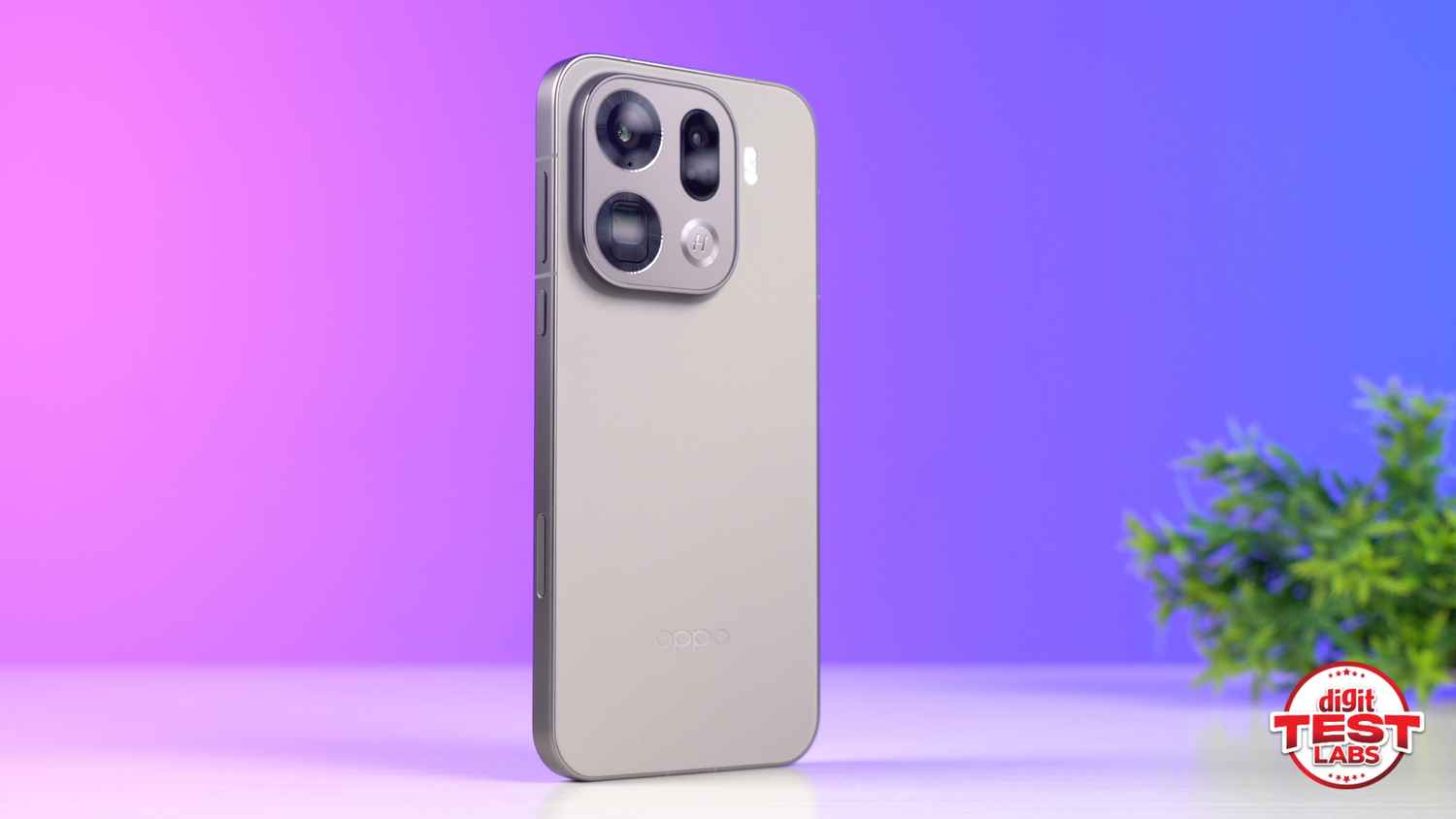

Oppo’s new flagship, the Find X9 Pro, continues the company’s steady approach to design and hardware maturity. This year’s model focuses on precision and consistency rather than overhauling what already worked in previous generations.
 Survey
The Find X8 introduced Oppo’s triple-prism lens setup, and that concept continues here in a more refined structure. The Find X9 Pro is thinner at 8.25 mm and weighs 224 grams, yet houses a 7,500 mAh battery, the largest in the Find X series so far. The battery uses Oppo’s third-generation silicon-carbon technology, which the company claims retains 80 percent health after five years. It supports 80W SuperVOOC wired charging, 50W AirVOOC wireless, and 10W reverse charging.
Design and Build
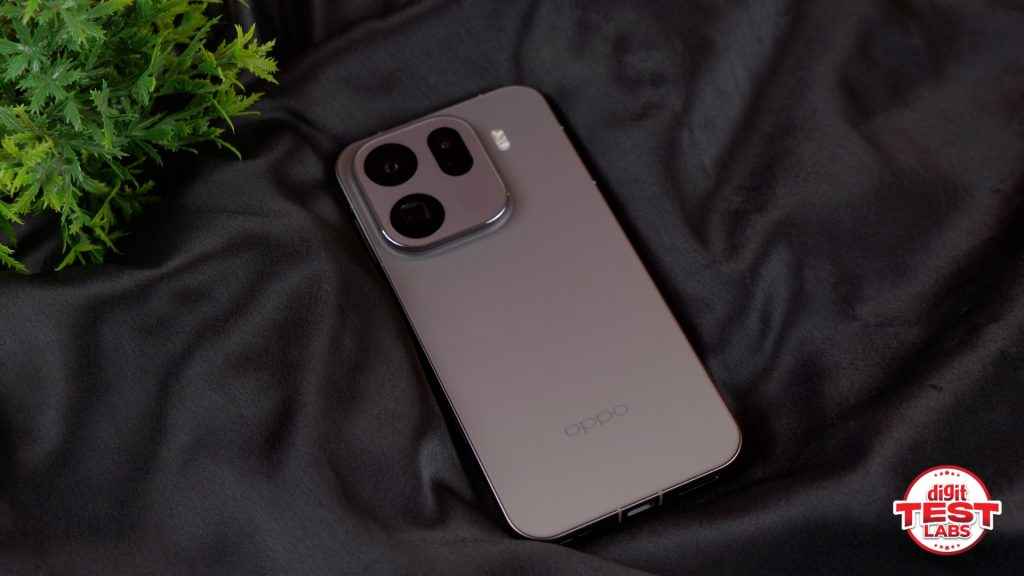
The Find X9 Pro has a simpler, more symmetrical design language compared to the X8. The Titanium Charcoal variant has a matte finish with a muted tone, while Silk White offers a softer, pearlescent texture. Both finishes resist fingerprints and the overall look and feel is quite premium.
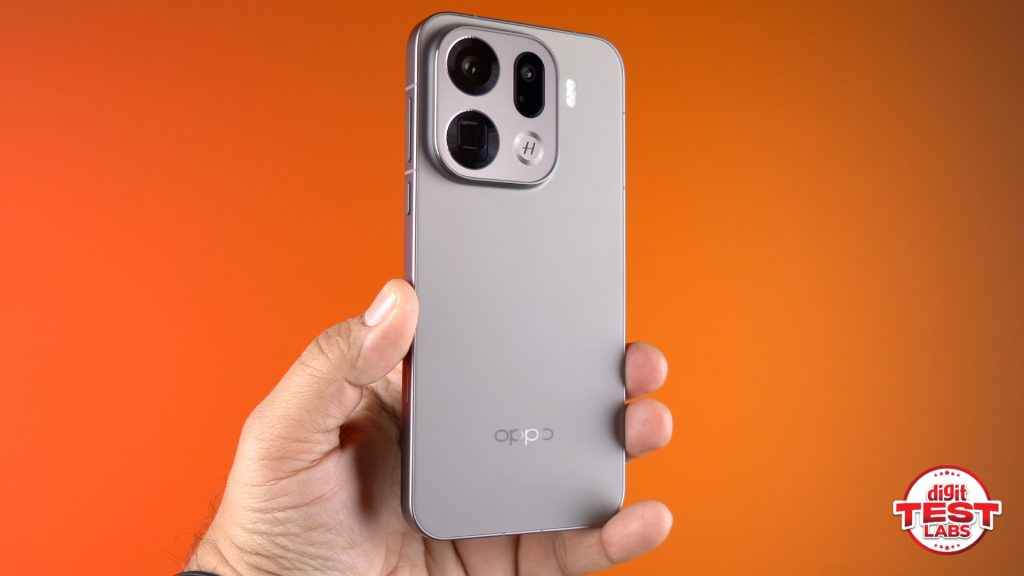
The phone includes two new physical controls. A Snap Key on the left side is tied to AI Mind Space by default but can be customised for common shortcuts such as screenshots, flashlight, or translation. On the right side, a Quick Button provides camera access with double-tap to launch, press to shoot, and swipe to zoom. These minor additions improve day-to-day usability without altering the overall layout.

The device has IP66, IP68, and IP69 certifications, with SGS five-star drop resistance for durability.
Display
The front is dominated by a 6.78-inch AMOLED display with 1.15 mm bezels on all sides, the thinnest Oppo has produced to date. The panel supports Dolby Vision, HDR10+, and HDR Vivid, with a rated peak brightness of 3,600 nits.

At lower brightness levels, the display can dim down to 1 nit, using 2,160 Hz PWM dimming to reduce flicker during night use. It also features a 3D ultrasonic fingerprint sensor, which Oppo says is 35 percent faster and 33 percent more reliable than before, functioning even with slightly wet fingers.
The screen is protected by Corning Gorilla Glass Victus 2 and includes TÜV Rheinland Intelligent Eye Care 5.0 certification.
Cameras
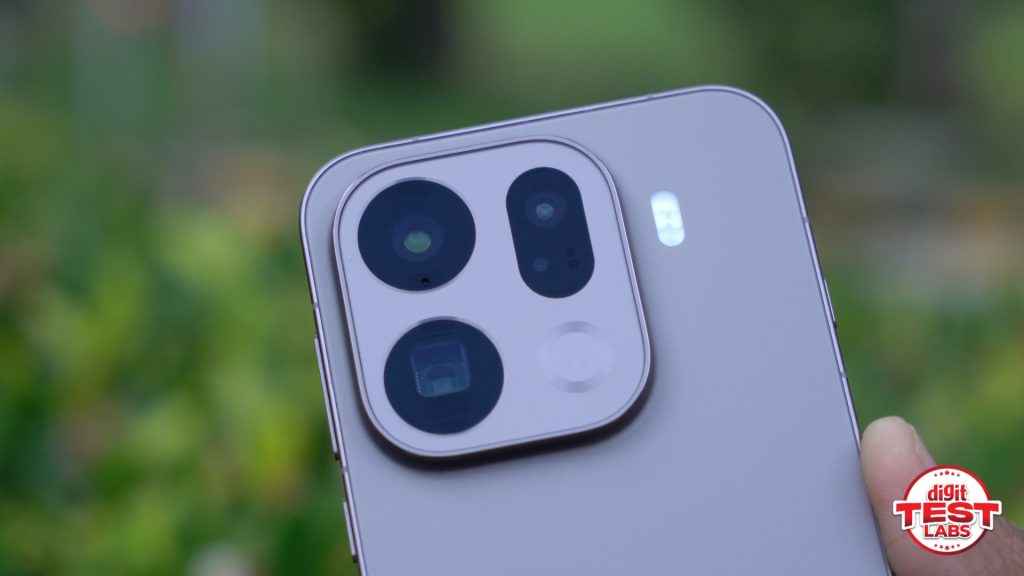
The Find X9 Pro’s main camera array combines three high-resolution sensors and one colour sensor:
- Main camera: 50 MP Sony LYT-828 sensor, 1/1.28”, f/1.5, OIS
- Ultra-wide camera: 50 MP 5KJN5, 1/2.75”, f/2.0, autofocus, 3.5 cm macro
- Telephoto camera: 200 MP S5KHP5, 1/1.56”, f/2.1 periscope with OIS
- True Colour Camera: 21 mm, 9-channel multispectral, f/2.4
- Front camera: 50 MP, f/2.0, autofocus
The 200 MP telephoto lens uses a floating focus design, allowing it to capture macro shots from 10 cm away. Oppo claims it delivers 13.2× lossless zoom, supported by optical and computational enhancement. Early use shows strong detail retention at medium zoom levels, though we’ll be testing out the cameras in different situations for our full review.
The Sony LYT-828 sensor supports real-time triple exposure, improving highlight and shadow detail. Oppo’s True Colour Camera assists in maintaining consistent colour temperature between lenses. All of this runs through the LUMO Image Engine, which manages HDR processing, denoising, and adaptive resolution output.
The images provide higher detail and texture and in low light, the system automatically adjusts resolution to control noise and exposure, instead of over-exposing the frame.
The video setup offers 4K Motion Photo, LOG recording with ACES certification, and AI Sound Focus, which enhances speech clarity in noisy environments. In addition, Hasselblad modes such as Master Mode, XPAN, and Portrait Mode are available for those who like to shoot manually or in wider cinematic frames.
Performance and Software
The Find X9 Pro runs on the MediaTek Dimensity 9500, manufactured on the TSMC 3 nm process, paired with up to 16GB LPDDR5X RAM and 512GB UFS 4.1 storage. It operates on ColorOS 16, based on Android 16, with a commitment of five OS updates and six years of security patches.

Oppo’s Trinity Engine manages workload distribution between the CPU, GPU, and NPU, aiming for consistent performance and better power efficiency. The large 36,000 mm² vapor chamber helps maintain stable thermals during extended workloads.
Early impressions indicate fluid day-to-day performance, though formal benchmarks and gaming results will be included in the detailed review which drops closer to the India launch.
Connectivity
Connectivity options include Wi-Fi 7, Bluetooth 6.0, USB 3.2 Gen 1, dual SIM, NFC, and GPS with multi-band support. The phone also integrates AI LinkBoost, an in-house RF system with a 360-degree antenna design that improves signal retention in low-reception areas.
Early Thoughts
The Find X9 Pro focuses on technical refinement, improved materials, long-term battery health, better imaging hardware, and practical usability. Oppo’s changes are incremental rather than dramatic, but they collectively add up to a more capable and consistent flagship experience.
A detailed review covering sustained performance, battery endurance, and camera comparisons will follow closer to the India launch. For now, the Find X9 Pro represents Oppo’s most technically complete Find series phone so far.


