
Why memory prices are rising in 2026 and why it affects every device you buy
 Follow Us

If you’ve noticed that your next smartphone, laptop, or PC upgrade suddenly costs noticeably more than it did a year ago, you’re seeing the effects of the 2026 memory supply shortage play out in real time. This isn’t a repeat of the pandemic-era chip crunch, where factories shut down and logistics broke. We are not out of chips in general. We are out of the right chips. Specifically, we are running out of the kind of memory that everyday devices rely on. The world is producing memory chips, but a growing share of that output is being diverted toward artificial intelligence infrastructure that consumes memory at a scale consumer electronics never did.
 Survey
What remains for consumer electronics is no longer enough to meet demand at historical price levels. Consumers planning a PC build or phone upgrade are staring at inflated prices and downgraded specs. Investors are watching the “Big Three” memory makers post record margins. IT decision makers are trying to time server refreshes in a market where availability matters more than discounts. This is what happens when memory stops being a commodity and starts behaving like oil during a geopolitical crisis.
Why the 2026 Memory Supply Shortage Hits Different

The first reason this memory supply shortage feels harsher than past cycles is what insiders have started calling the AI tax. High Bandwidth Memory, or HBM, has become the single most valuable form of silicon in the industry. Training large language models and running inference at scale demands enormous parallel throughput, something conventional DDR4 or DDR5 simply cannot provide. Every HBM stack requires advanced packaging, tighter yields, and far more cleanroom time. As a result, when fabs increase HBM output, they necessarily reduce the volume of standard DRAM and NAND flash available for consumer devices. This trade-off is one of the primary drivers of the current memory supply shortage.
That leads directly to the zero-sum game now defining the memory market. Companies like Samsung Electronics, SK Hynix, and Micron Technology have finite wafer capacity. Allocating those wafers to an HBM stack for an Nvidia accelerator means denying them to a consumer DDR5 module or a laptop SSD. With hyperscale customers willing to sign open-ended contracts at almost any price, the memory supply shortage becomes inevitable for everyone else.
Another factor shaping the 2026 memory supply shortage is the industry’s reluctance to expand capacity aggressively. The memory sector experienced a sharp downturn in 2022 and 2023 after a period of overexpansion.
New fabs take years to come online, cost billions, and risk becoming stranded assets if AI demand cools. The result is a cautious industry facing an aggressive demand curve, which is the perfect recipe for prolonged scarcity.
Brand Impact: Winners, Losers, and the Survival of the Richest
| Brand Category | Key Players | Impact Level | What’s Happening |
|---|---|---|---|
| Memory Manufacturers | Samsung, SK Hynix, Micron | High (Positive) | Record margins as production shifts toward HBM and enterprise-grade DRAM |
| Premium Device Makers | Apple, Samsung (Mobile) | Moderate | Long-term contracts soften the blow, but RAM upgrades stall |
| PC & Laptop OEMs | Dell, HP, Lenovo, ASUS | High (Negative) | 15–20% price increases driven by higher memory BOM costs |
| Budget & Mid-Range Brands | Xiaomi, Realme, Transsion | Critical | Thin margins force price hikes or downgraded RAM configurations |
| AI Infrastructure Providers | Nvidia, Microsoft, Google, Amazon | Priority Access | Securing future supply through long-term, high-value contracts |
The memory supply shortage does not affect all companies equally. Its impact depends on access to capital, long-term supply agreements, and bargaining power within the supply chain.
Memory manufacturers themselves are the clear winners. Samsung, SK Hynix, and Micron are posting record margins by prioritising AI-focused memory. DRAM contract prices rose sharply through 2025, with year-on-year increases exceeding 170 percent in some categories. From a financial perspective, the memory supply shortage has strengthened their pricing power and improved profitability.
Premium device makers sit in a more protected middle ground. Companies like Apple and Samsung’s mobile division have long-term supply agreements and the balance sheets to secure memory 12 to 24 months in advance. They still feel the memory supply shortage, but they absorb it quietly through frozen RAM upgrades and slower price erosion rather than sudden shocks.
PC and laptop OEMs are far more exposed. Brands such as Dell, HP, Lenovo, and ASUS have already signalled 15 to 20 percent price increases. In their bill of materials, memory is too large a component to hide. The memory supply shortage shows up directly on the price tag.
The most vulnerable players are budget and mid-range brands operating on razor-thin margins. Companies like Xiaomi, Realme, and Transsion cannot easily absorb rising costs. For them, the memory supply shortage forces uncomfortable choices: raise prices in price-sensitive markets or quietly cut specifications.
Meanwhile, AI infrastructure players sit at the front of the line. Companies like Nvidia, Microsoft, Google, Meta, and Amazon are securing large portions of future memory output through long-term agreements. Their purchasing power allows them to outbid other customers, ensuring supply continuity even as shortages persist elsewhere in the market.
Top Categories Facing the Steepest Price Hikes
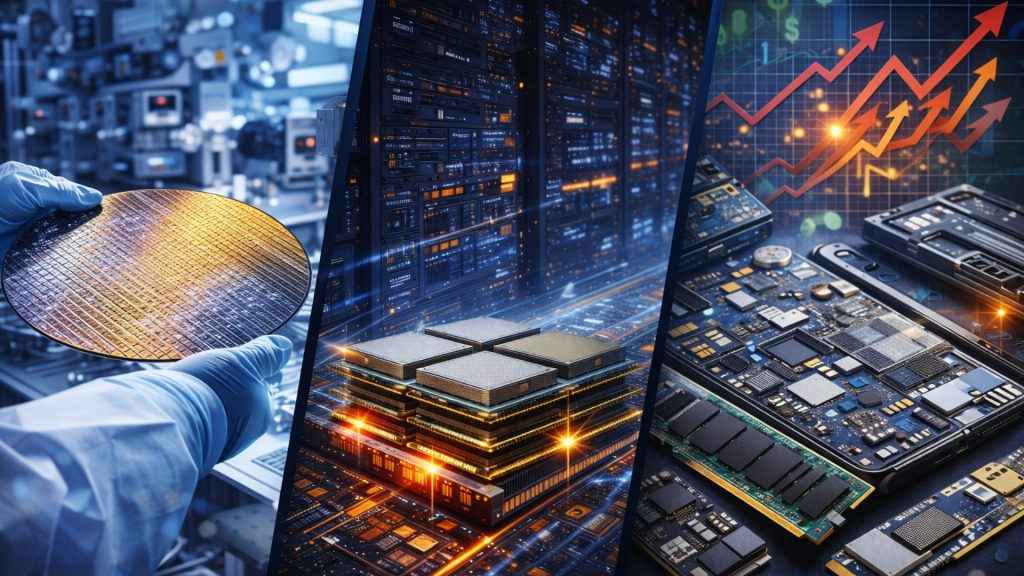
The memory supply shortage does not hit all products equally. Some categories are absorbing far more pressure than others.
High-performance DDR5 memory for gaming PCs is already showing signs of speculative behaviour. With fabs prioritising HBM, consumer DDR5 output has tightened. Enthusiasts are fear-buying kits, and scalpers have returned to a market that once felt boring. The memory supply shortage here feeds on psychology as much as supply.
Enterprise-grade NVMe SSDs are also under significant pressure. NAND flash prices have surged as manufacturers focus on high-density drives destined for AI training clusters. For data centres and professional workstations, the memory supply shortage means longer lead times and sharply higher procurement costs.
Mid-range smartphones are quietly changing too. To cope with the memory supply shortage, brands are freezing RAM configurations. Where 8 or 12 GB once became standard, 4 or 6 GB could reappear as a cost-control measure. Consumers may not notice immediately, but the slowdown in spec progression is real.
Graphics cards are feeling the squeeze due to VRAM availability. Rumours of mid-tier GPUs shipping with reduced memory are no longer far-fetched. When VRAM competes with AI accelerators for allocation, the memory supply shortage reshapes GPU roadmaps.
AI-powered PCs face a particularly awkward collision. Microsoft’s Copilot+ guidelines require at least 16 GB of RAM, but the memory supply shortage makes that baseline expensive. Entry-level AI PCs are becoming premium products by default, undermining the very narrative they were meant to support.
The Crucial Moment: When Consumer Memory Lost Its Place
One of the clearest signals of how the memory supply shortage is reshaping priorities came from Micron’s decision to step back from the Crucial consumer memory business. For years, Crucial RAM represented a reliable, accessible option for students, small businesses, and PC enthusiasts. Its exit was not driven by declining demand for consumer RAM, but by the opportunity cost of continuing to serve that market. AI-focused memory products offer higher margins, longer contracts and strategic importance to hyperscale customers. In comparison, consumer memory involves marketing costs, retail distribution and comparatively lower returns.
Every DDR5 kit sold to a student is a missed opportunity to ship HBM to a data centre. In a world defined by a memory supply shortage, that trade-off no longer makes sense for manufacturers. The result is a consumer market with fewer trusted options and greater volatility.
Read More: Crucial RAM is dead, blame it on AI: Why Micron is shifting its memory priorities
The Secondary Market Comes Back to Life
One overlooked effect of the memory supply shortage is the revival of the secondary market. Refurbished SSDs, recycled server RAM, and pulled components are flowing through grey channels at scale. Retailers are issuing broker-style quotes that expire daily. In some regions, memory is being treated less like a component and more like a tradable asset with pricing that fluctuates daily.
This secondary ecosystem exists because the memory supply shortage is persistent rather than transient. Buyers are sourcing differently, extending replacement cycles, and accepting refurbished hardware as a practical compromise.
The 2026–2027 Outlook: When Does the Memory Supply Shortage End?
Relief is coming, but not soon. Samsung and SK Hynix have announced multi-billion-dollar fab expansions, yet most of that capacity will not materialise until late 2027 or beyond. Even then, a large portion is earmarked for advanced memory rather than consumer-grade products. The memory supply shortage is expected to linger well into 2027, according to multiple industry forecasts.
There is also the AI bubble variable. If AI investment slows or consolidates, some pressure could ease. But even a cooling AI market would not instantly ease some constraints, but it would not immediately resolve the memory supply shortage due to long production lead times and ongoing strategic reallocation.
For consumers, the advice is unglamorous but practical. If you need memory, buy earlier rather than later. Waiting for a dramatic rebound may mean waiting through another year of elevated prices.
A New Normal for Memory
What makes this moment unsettling is that the memory supply shortage does not feel like a temporary disruption. Memory is no longer primarily optimised for personal devices. It is increasingly designed, priced, and allocated around the needs of large-scale AI systems.
For decades, cheap and abundant memory enabled rapid innovation in personal computing. The 2026 memory supply shortage signals the end of that era, at least for now. Technology will continue to advance, but it will do so under tighter constraints, higher costs, and sharper trade-offs.
The irony is hard to miss. We built AI systems to make technology more accessible and powerful. In the process, we created a memory supply shortage that makes the technology we already rely on more expensive and harder to upgrade. As AI continues to shape hardware requirements, memory will remain one of the most contested and strategically important resources in the technology stack.
Frequently Asked Questions (FAQs)
- Why is there a memory supply shortage in 2026?
AI data centres are consuming a growing share of global memory output. Manufacturers are prioritising high-margin HBM and enterprise DRAM, leaving less supply for consumer devices.
- Which devices are most affected?
PCs, laptops, smartphones, GPUs, and enterprise storage systems. Products that need higher RAM capacities are seeing the biggest impact.
- Why can’t memory makers increase production quickly?
New fabrication plants take years to build and cost billions. After the 2022–2023 downturn, manufacturers are expanding cautiously.
- Will memory prices fall in 2026?
Prices are expected to remain elevated through 2026 and likely into 2027, according to industry forecasts.
- Why are budget devices hit harder than premium ones?
Budget brands operate on thin margins and cannot absorb higher memory costs. Premium brands use long-term supply contracts to soften the impact.
- How is AI changing the memory market long-term?
AI systems use far more memory per machine than consumer devices, shifting production priorities toward enterprise and data-centre demand.
- Should consumers buy now or wait?
If an upgrade is planned, buying earlier may avoid further price increases. Waiting for a major price drop carries risk.
Also Read: AI boom is causing RAM and SSD supply shortage, will keep prices high for a decade


