

Stack Overflow is dying: Blame it on ChatGPT and AI coding tools
 Follow Us
Stack Overflow traffic collapse explained as developers shift to ChatGPT
How AI coding assistants replaced Stack Overflow for developers
ChatGPT vs Stack Overflow: Why programmers stopped asking questions
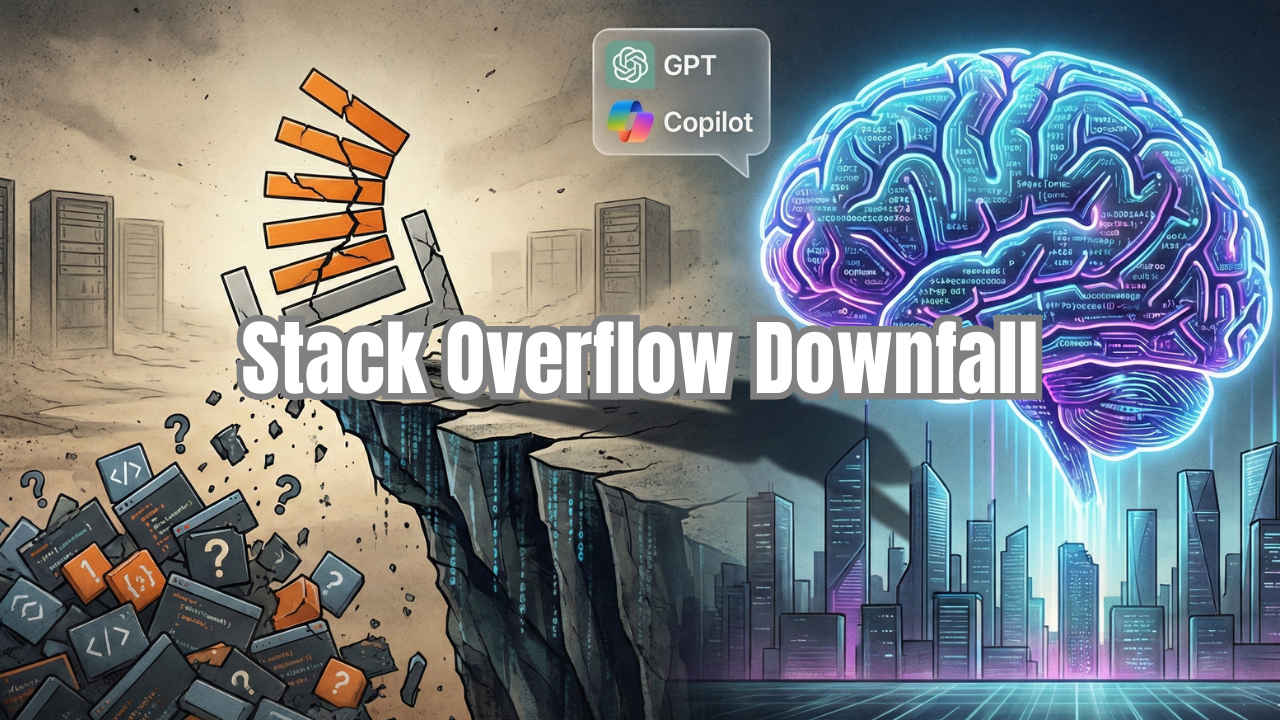

For nearly two decades, the ritual was sacred. You hit a coding wall, you Googled the error message, and you clicked the first link: Stack Overflow. You scrolled past the question, found the green checkmark, copied the code, and moved on. It was the heartbeat of modern software development.
 Survey
But according to recent data highlighted by tech commentator Varun Mayya, that heartbeat has flatlined.
Last month, Stack Overflow recorded just 3,862 questions. To put that in perspective, that is roughly the same volume the site saw during its launch month in 2008. At its peak around 2014, the platform was fielding over 200,000 questions a month. In strictly numerical terms, 18 years of community growth have been erased. The graph doesn’t just show a decline; it shows a cliff.
Also read: Satya Nadella on AI in 2026: We will evolve from models to systems
The Two-Stage Death
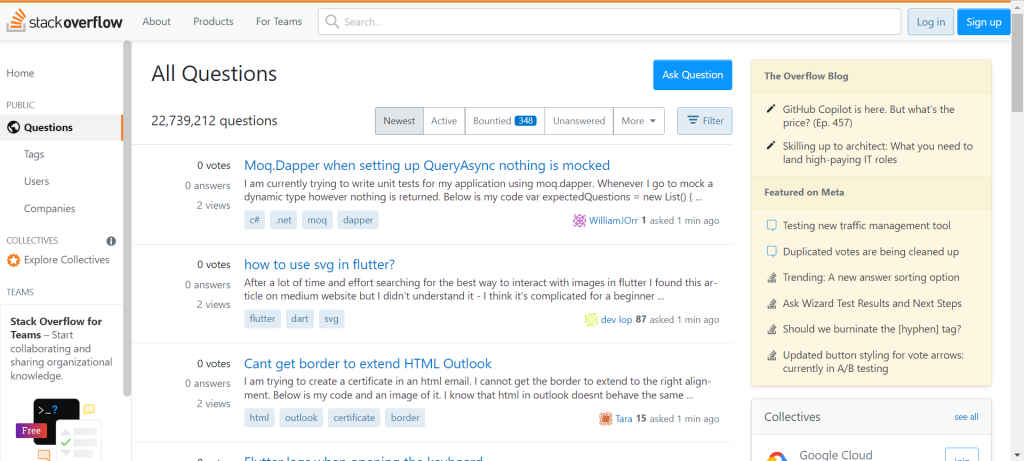
While it is easy to point the finger solely at ChatGPT, the decline actually began years ago. Post-2016, Stack Overflow began to suffer from its own success. The community became notorious for its hostility toward beginners, downvoting valid questions, aggressively marking posts as “duplicates,” and creating an environment where junior developers felt afraid to ask for help. This drove users toward friendlier silos like Reddit’s r/learnprogramming or closed Discord servers.
Also read: Chalk explained: Award-winning visual LLM for easy learning, how it works
But if community toxicity was a slow bleed, Generative AI was the guillotine. When ChatGPT, GitHub Copilot, and Cursor arrived, they offered something Stack Overflow never could: a personalized, judgment-free answer in seconds. Why spend twenty minutes searching for a thread similar to your problem when an LLM can fix your specific code instantly? The value proposition of the “search-and-adapt” model evaporated overnight.
There is a poetic, albeit dark, irony to this collapse. The very AI models that are destroying Stack Overflow were built on top of it. LLMs learned to code by ingesting the millions of high-quality, human-curated answers that Stack Overflow users spent years creating. The AI stood on the shoulders of this giant community, learned everything it knew, and then rendered the community obsolete. It is the ultimate example of the “Ouroboros” effect in tech, the snake eating its own tail.
The Museum of Code
The danger now isn’t just for the website, but for the future of coding knowledge. Stack Overflow wasn’t just a help desk; it was a living archive of new problems. If everyone stops posting questions because AI solves them privately, the public “knowledge stream” dries up.
We are left with a paradox: AI has democratized coding assistance by killing the very source of its intelligence. Stack Overflow is unlikely to disappear completely, but its role has fundamentally shifted. It is no longer the town square of development. It is becoming a museum – a static library of the pre-AI web, visited only by the machines that replaced it.
Also read: CES 2026: Top 5 amazing gaming gear you will want to buy


