
Samsonite smart suitcase: How good is its tracking tech?
 Follow Us

It’s a uniquely terrifying feeling knowing that your suitcase hasn’t arrived on the baggage carousel after being in operation for 15 minutes. Having been on the receiving end of this experience many times before, I was more than a little intrigued when a Samsonite Zipprix FT with an in-built tracker branded Waypoint landed on my desk. So, I bypassed the fabric, the wheels and jumped straight to the chip.
 Survey
Also read: Claude Opus 5 vs Sonnet 5: 3 ways Opus is worth the upgrade
The suitcase, by the way, is great. It’s made out of hard shell material, has nice zippers and rolls just like any good suitcase would. But while the suitcase may be good, it is by no means the most interesting part of the whole story. The actual reason for the curiosity lies in the fact that Samsonite didn’t just add an accessory to the suitcase in the form of the AirTag-shaped Waypoint tracker. The tracker was made an integral part of the luggage itself.
Setting up
Here is where I feel the need to take a breath because I learned a lot about how this gadget really works from its setup. Waypoint uses an easily replaceable CR2032 coin battery – the one that you usually see in things like scales or keys. Nothing special about the charging – no proprietary connector, no wait time to charge, no dead tracker after three years because it uses non-replaceable battery that is soldered into it. You open the compartment and insert the battery. It seemed to be more useful to me than I thought it would be, primarily because two of my AirTags died over the years and it was not necessary.
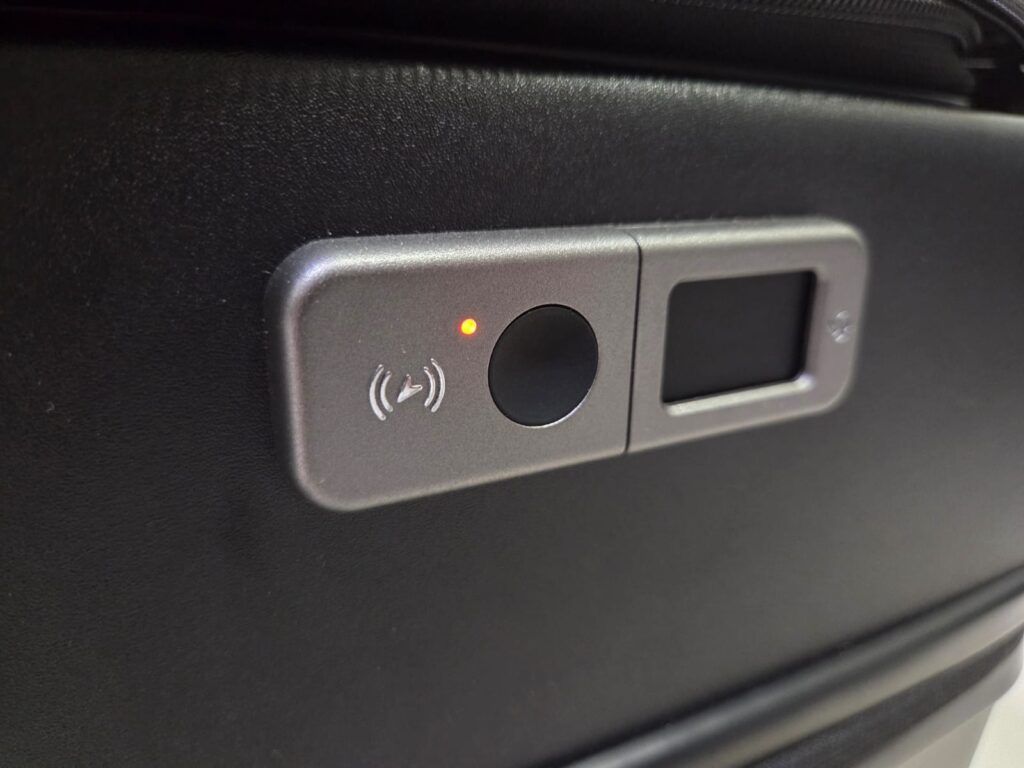
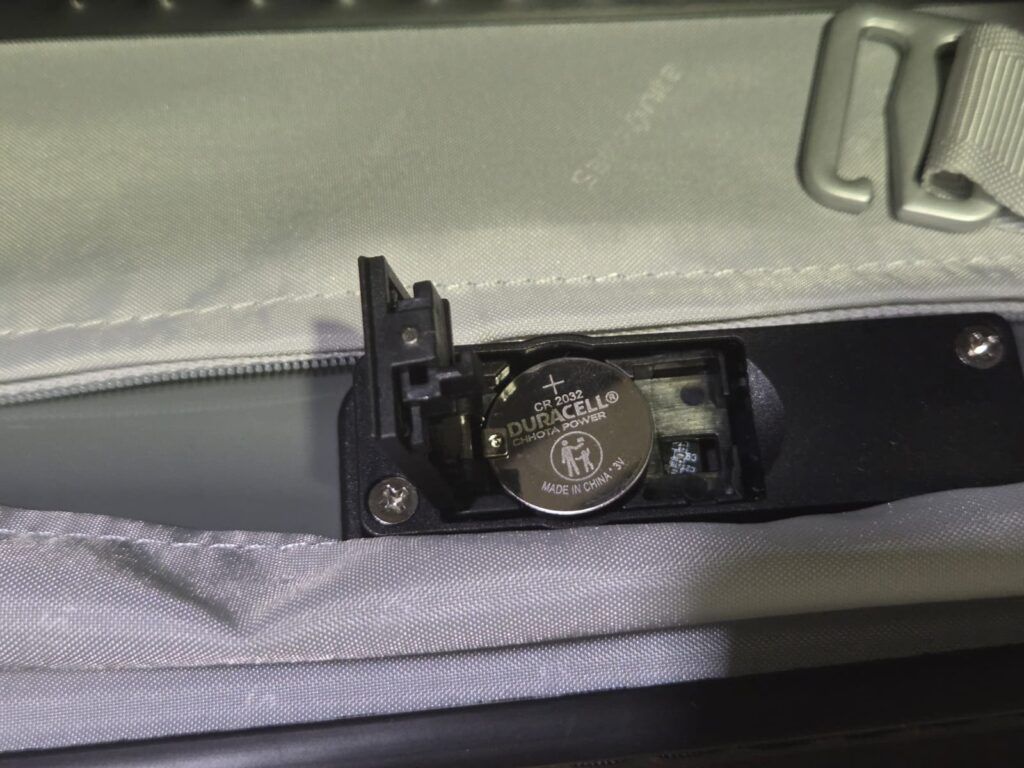
According to the instructions, I have to press the button on the gadget for five seconds to initiate the pairing mode. I never actually had to do that. As soon as I put the battery in, the phone immediately started to ask whether I want to pair it. That’s a small thing, but it’s the kind of small thing that tells you someone thought about the moment a real person is fumbling with a suitcase in their living room, not just the moment an engineer is testing firmware in a lab.
Also read: From PDF to Course in minutes: Workday’s new AI learning engine explained
Day to day, the button does two more jobs. Walk close enough to the case and your phone reconnects to it automatically, no app-opening required. And if you’re standing in a crowded arrivals hall trying to figure out which identical black case is actually yours, you can trigger it to play a sound, a bright little chirp that cuts through the noise of a baggage hall in a way that squinting at luggage tags never will.
How the tracking works
Okay, here’s the part I actually wanted to dig into. Waypoint isn’t a GPS tracker. There’s no satellite chip in there, no SIM card, nothing pinging a cell tower every few minutes and draining a battery in the process. What it has instead is a Bluetooth Low Energy radio, specifically BLE 6.0, hooked up to a small ceramic antenna, quietly broadcasting an encrypted signal outward at almost no power cost. That’s the whole trick behind the CR2032 lasting as long as it does.
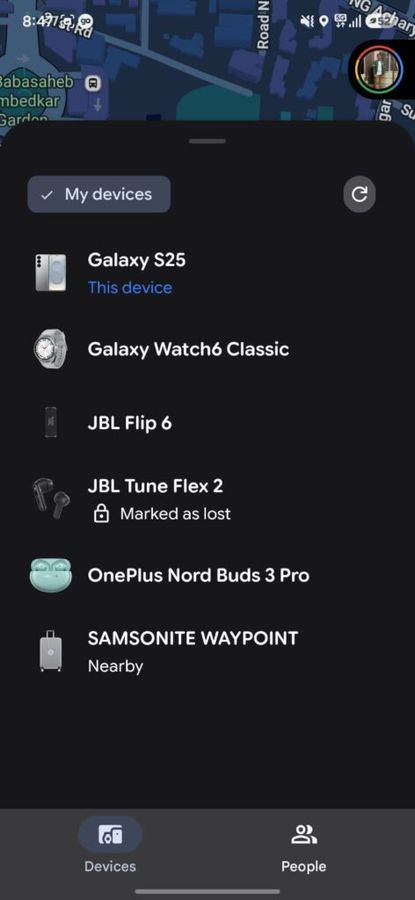
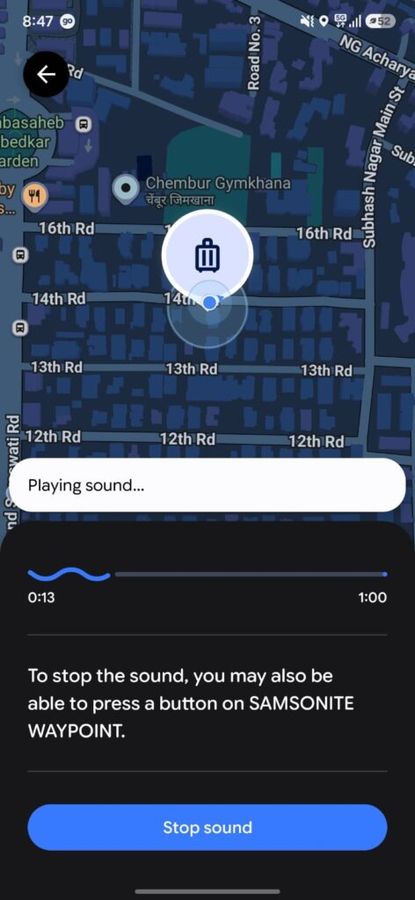
The broadcast by itself becomes meaningless after only dozens of meters. But what makes this broadcast work is the network it broadcasts to. Both Find My of Apple and Find Hub of Google have essentially made every smartphone with their operating systems an anonymous relay node. And so when your suitcase gets lost somewhere in an airport and is no longer within reach of your phone, it is not broadcasting in vain. Another person’s phone picks it up in the background and sends another encrypted message about its location to the cloud without them even being aware of that. The next time you turn your phone on, it shows a point on the map somewhere. Neither the stranger, nor Samsonite, nor anyone else in theory, except you, can decrypt it and find out where that message is coming from. The difference from putting an unopened envelope with a note in it to hundreds of thousands of people hoping one day one will put it in your mailbox is that your note will be unreadable to all of them.
The reason this matters more than it sounds is scale. An AirTag only has this superpower near iPhones. A SmartTag leans hard on Samsung’s own Galaxy install base. Waypoint straddles both networks at once, so in a mixed crowd like an airport departure lounge, where Android and iOS users are more or less evenly split, it has a bigger pool of anonymous relay phones to fall back on than either rival tag does alone.
Suitcase vs the tags
It is time to lay out some facts on the table. An AirTag will cost you Rs 3,790 while a Galaxy SmartTag2 is worth Rs 2,999. If you already have a suitcase that you enjoy using, then getting a separate tracker and attaching it to one of the inner pockets will be a more sensible thing from a money perspective.
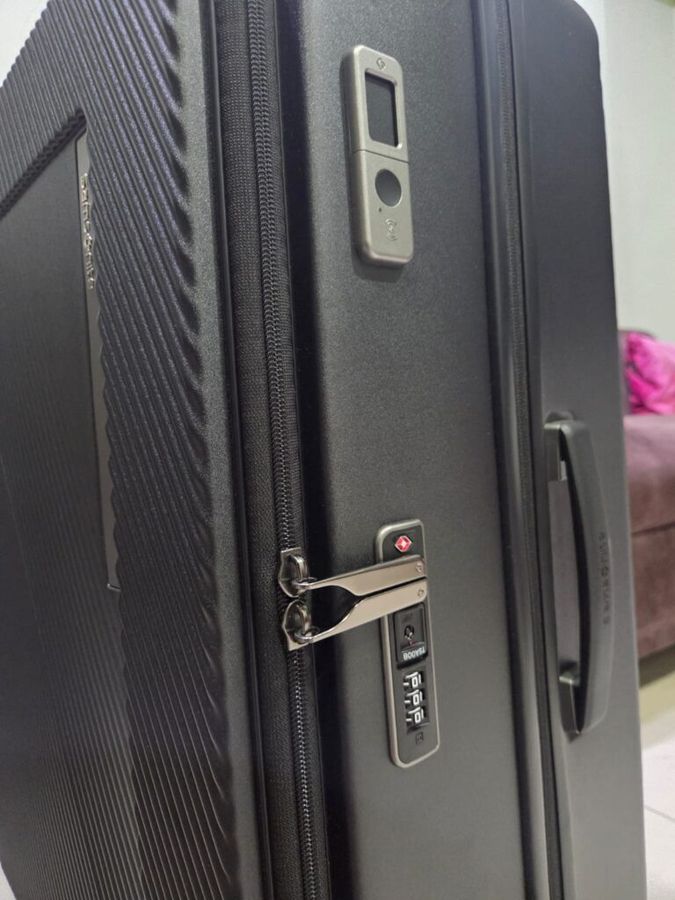
However, Waypoint will prove useful in case you were planning to purchase a suitcase. The Waypoint-enabled Zipprix FT line starts at Rs 16,500 and goes up to Rs 20,100, depending on the size. In any case, the manufacturer does not break down the price into two parts – the actual suitcase and the tracking system. However, even assuming that there is around two thousands of rupees of Waypoint premium included in the price of the suitcase, it will be quite similar to simply purchasing an additional tag but without forgetting about it at home, without it falling from a pocket and without needing a special place on your key ring. However, in case you are not planning to purchase new luggage, do not let that be an excuse.
Verdict
Certainly, with a small asterisk attached. Waypoint isn’t developing a revolutionary tracking technology, but rather using an identical crowdsourced Bluetooth solution developed by Apple and opened up by Google. The clever move made by Samsonite is in the development of the boring and mundane aspect – making sure that the tracker will survive on a coin cell for a long time, making the process of pairing seem almost magical, and incorporating it right into the case without requiring anything else to be bought, charged, and lost. That’s not a new tracking technology. It’s just sensible engineering paired with existing technology, and after a couple of weeks not even once having to wonder about my suitcase, I’m tempted to say it’s worth something.
Also read: I thought NotebookLM was just for research, then I discovered these 5 uses


