

KENT’s Mahesh Gupta on battery costs and India’s energy opportunity
 Follow Us
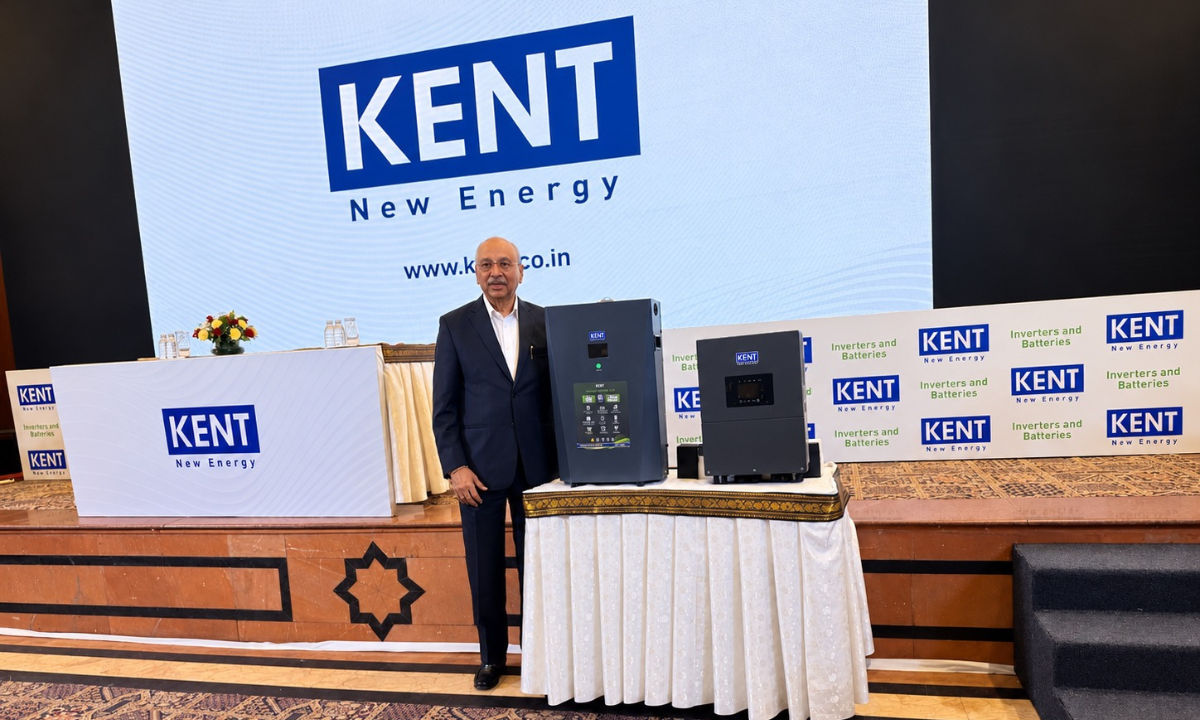

KENT RO Systems is expanding into the energy storage market with lithium batteries, solar hybrid inverters and an AI-powered energy management system. The company has invested Rs 250 crore in its Noida manufacturing facility and plans to put in another Rs 50 crore over the next six months. However, high battery costs and dependence on imported components remain challenges for the industry.
 Survey
In an interaction with Digit, Mahesh Gupta, Chairman and Managing Director of KENT RO Systems, discussed the challenges of making energy storage affordable, the company’s technology and its plans for the new business. He also explained how battery storage could improve the economics of rooftop solar and why KENT is targeting new buyers rather than existing inverter owners.
Imported components remain a hurdle for battery prices
Solar panels generate electricity during the day, but households also need power after sunset. Batteries can store surplus solar energy for later use, reducing dependence on grid electricity. They are particularly useful in areas where power supply is unreliable or restrictions on exporting surplus electricity affect the economics of rooftop solar.
Gupta believes the biggest challenge for the industry is affordability. As he put it, “The challenge is the price. At the moment, batteries and inverters are still very expensive.”
Although battery products are being manufactured in India, cells and other critical components are still imported. International supply-demand imbalances and rising chip prices can affect component availability and make product pricing difficult to maintain.
Gupta believes domestic battery-cell manufacturing will take time to develop because companies first need sufficient demand to justify the investment. Drawing a comparison with solar manufacturing, he noted that silicon crystals are still imported despite the growth of domestic production.
“It’s a slow and steady process, but I think the beginning has been made,” he said, referring to the development of India’s domestic manufacturing ecosystem. He also highlighted the investment required to establish battery recycling infrastructure.
Gupta believes government subsidies for battery storage could encourage adoption. Hybrid inverters and storage systems could help households use more of the solar electricity they generate, particularly in states where feeding surplus power back into the grid is restricted.
KENT’s batteries come with a 10-year warranty
KENT’s solar storage range includes lithium batteries with capacities of 5.1 kWh, 11.8 kWh and 16 kWh. They are rated for more than 6,000 charge cycles and come with a 10-year warranty. The accompanying hybrid inverters are available in single-phase 3 kW, 5 kW and 6 kW variants, and three-phase 10 kW, 12 kW and 15 kW models.
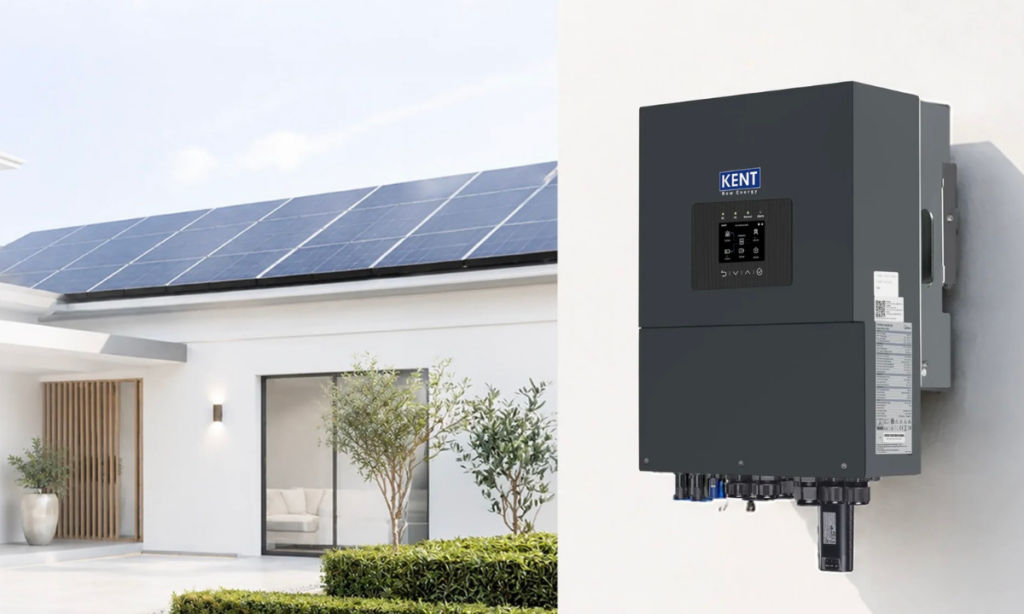
For households with existing inverters, KENT also offers 12V and 24V lithium batteries with capacities ranging from 1.28 kWh to 3.84 kWh. The 12V model starts at Rs 22,000. The company estimates savings of Rs 30,000 to Rs 1 lakh over 10 years compared with lead-acid batteries, although actual savings will depend on usage and replacement costs.
Explaining the rationale behind the 10-year warranty, Gupta said, “We are offering a 10-year warranty because we have engineered our batteries to last for 15 years. We are using cells rated for 6,000 cycles and a battery management system that uses a different technology altogether.”
He added that manufacturing battery cells domestically could be the next step as demand grows. “First and foremost, we need to create demand for batteries,” he said.
AI features allow remote monitoring and control
KENT’s hybrid inverters come with a 4G data logger and a five-year data pack. Through the company’s mobile app, installers can monitor inverter performance and change settings remotely. This could be useful in rural areas where arranging an on-site service visit can be difficult.
The AI-powered energy management system is designed to help users optimise electricity consumption according to their priorities, whether that means preserving battery backup or reducing dependence on grid power. The app also displays solar generation, electricity consumption and estimated savings.
The inverter operating system supports voice commands in 16 Indian languages. KENT has filed a patent related to its technology.
Explaining how the company plans to differentiate itself, Gupta said, “We have built our own software solution that keeps every inverter online. The inverter’s data is sent to our servers.”
He also highlighted the voice assistant, which allows technicians to use natural language to change settings. The company says its connected system can help technicians monitor and maintain installations remotely.
Gupta sees hybrid inverters as a potential alternative to diesel generators. Multiple units can be connected in parallel to meet higher power requirements. With suitable battery storage, these systems can run air conditioners during power cuts without diesel consumption, engine noise or local exhaust emissions.
KENT invests Rs 300 crore in its energy business
KENT has committed Rs 250 crore towards plant, machinery and buildings at its manufacturing facility in Sector 159, Noida. Another Rs 50 crore is planned over the next six months, with working capital accounted for separately.
The facility has an installed annual capacity of 3.5 GWh, which the company plans to increase to 10 GWh. KENT sources battery cells from manufacturers including EVE and REPT. Its products will be sold through dealers, retail stores, online channels and system integrators.
Gupta said the company’s decision to enter the energy sector was driven by its focus on energy efficiency rather than valuation. “Whatever savings we make, we invest in our future projects,” he said.
He acknowledged that KENT was entering the energy sector later than some competitors but said the company was bringing a solution to a gap in the market: storing solar power for use when generation falls.
KENT is therefore focusing on new buyers rather than persuading existing inverter owners to replace equipment that is still working.
KENT targets Rs 750 crore in revenue in the following year
Gupta said KENT is targeting Rs 500 crore in revenue in the next financial year, followed by around Rs 750 crore in the subsequent year.
India’s rooftop solar market offers room for expansion. According to Mercom India Research, the country installed 2.7 GW of rooftop solar capacity in the first quarter of 2026, with residential installations accounting for 82%. The government’s PM Surya Ghar scheme aims to expand residential rooftop solar adoption.
Gupta also pointed to the potential for larger installations in homes and farmhouses, where solar systems of 20–30 kW could help meet substantial electricity requirements. He estimated that solar-plus-storage systems could pay for themselves in three to four years, depending on the installation and electricity consumption.
For KENT, the opportunity will depend on whether it can make energy storage affordable enough for households. Imported component costs, battery longevity and the availability of reliable after-sales support will all influence adoption.


