

China AI Bubble Burst explained: What caused the $480 billion stock crash
 Follow Us
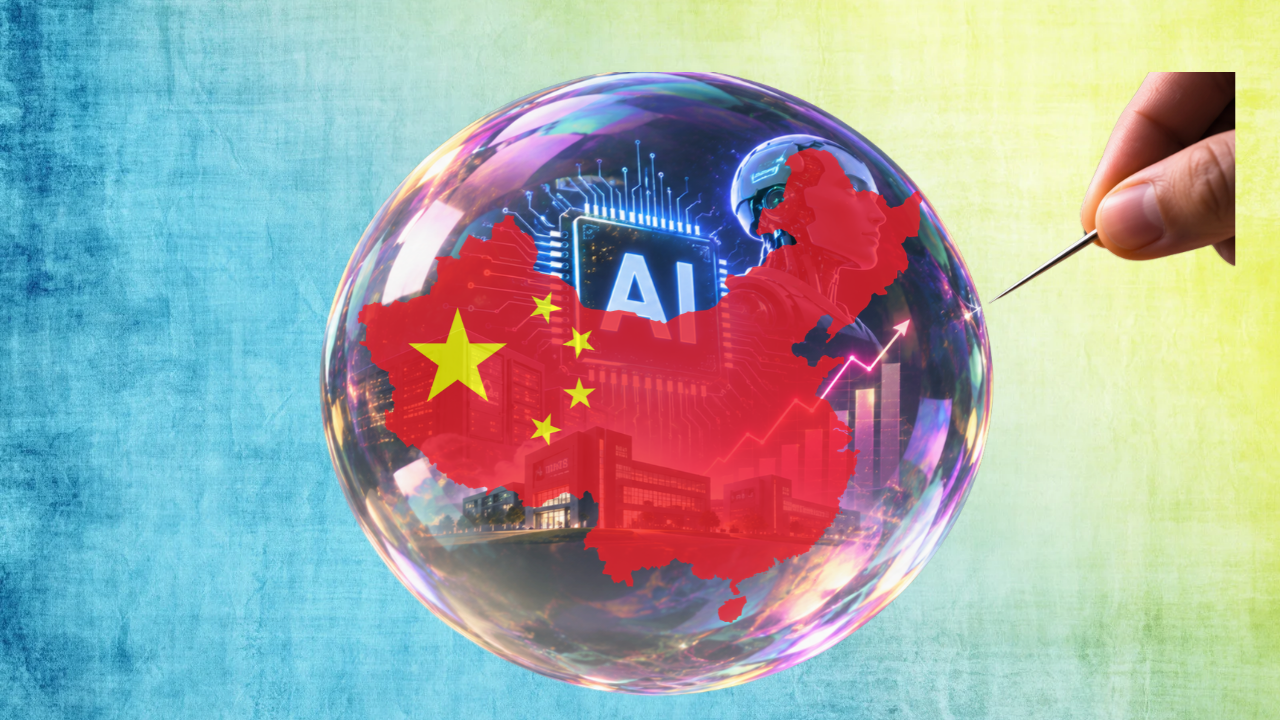

We have seen many CEOs, world leaders, AI pundits and even our neighbours talk about the AI bubble and when and how it will eventually burst. Well, the AI bubble in China has burst and it did not take very long. The STAR50, the index filled with Chinese AI and semiconductor leaders, has seen about a 40% fall in less than four months. That is about $480 billion completely lost. The wider CSI300 index is down by about 20 percent from the peak seen in June. There was no one trigger. Extremely high prices, concerns about demand for AI technology, export controls, and the possibility of bans on data center equipment made things too much to take, and the buyers disappeared. The semiconductor companies, the robots, and both Chinese model laboratories were affected.
 Survey
Also read: OpenAI claims AI solved decades old science and math problems: What we know
Why a 40 percent drop matters
STAR50 is an index tracking a technology-heavy stock exchange in Shanghai, and the recent fall has brought the two-year bull run in this exchange to a halt as expectations of stimulus led to a rally of Chinese stocks. ChiNext is another index with a high concentration of hardware companies and it has lost 36 percent since the peak, according to Bloomberg Intelligence analysts. The Nasdaq, on the other hand, is trading at levels 6 percent lower than its all-time high mark. This is a scratch compared to the broken arm of China.
As per Goldman Sachs estimates, the reason for the widespread losses is because AI stocks have accounted for 42 percent of China’s market value and 57 percent of its trading volumes between mainland A-shares and Hong Kong H-shares. The retail investors form a large portion of this market, which means the losses were suffered by the common man, whom Beijing was trying to lure into the markets for funding its AI agenda.
Which Chinese companies got hit
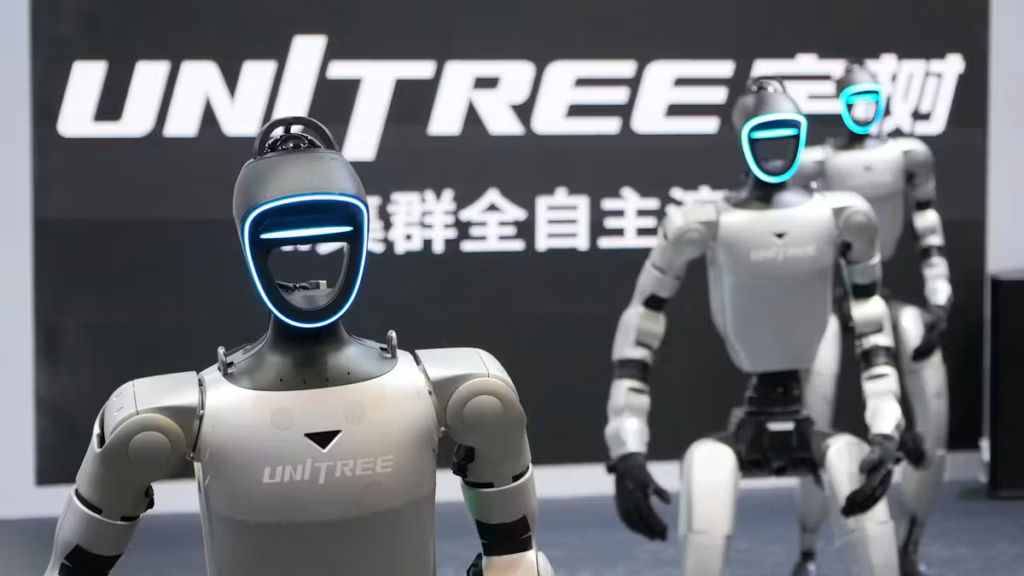
Let’s start with hardware. The robot maker Unitree, whose share listing was 8,000 times oversubscribed by retail investors, is down 50% since it started trading in August. The chipmakers MetaX Integrated Circuits and Moore Threads, which skyrocketed 700 percent and 400 percent in the wake of their listings last year, respectively, are also down 50% since July. CXMT, a chipmaker, has fallen by more than 25 percent in the last month. Zhongji Innolight and Eoptolink, producers of optical components, are off some 60 percent from their June/July peaks as Washington is now considering banning them from supplying optical components to US data centers.
Model labs haven’t done any better. MiniMax and Zhipu, also known as Z.AI, are the two Chinese-only players that are listed, and Bloomberg states they have shed a total of $150 billion from their highs. MiniMax fell below its IPO price on October 22, wiping away a 650 percent return from its March peak. Z.AI is off 81 percent from its June high. Zhipu was once priced at around 150 times annualized revenues and MiniMax at around 40 times, as per 36Kr’s analysis from early October. Such valuations allow no margin of error.
What triggered the crash
Reuters notes there was no obvious selling trigger. Traders pointed to high prices, tax bills and the threat of the US or other countries banning Chinese equipment from data centres. Valuations did the rest. The STAR50 still trades near 100 times trailing earnings, down from a peak close to 250, while the Nasdaq 100 sits around 30.
Also read: GPT-6.1 Terra explained: What OpenAI’s newest computer use model can do
Foreign money headed for the exits too. Bloomberg Intelligence analysts say the global AI hardware selloff hit China’s A-shares hardest after foreign investors piled into the sector in the second quarter. Outflows through the Hong Kong trading link reached an estimated 90 billion yuan, or $13.5 billion, in the third quarter, the biggest in a year.
Beijing wanted a slow, steady bull market. It cracked down on leverage and high-frequency trading, and state-backed investors sold into rallies to cap gains. Retail enthusiasm ran straight past all of it. Just think about it, a government that wanted calm got a stampede. Fund manager Dong Baozhen told Reuters the rally turned into a speculative frenzy and “now we see the bubble bursting.”
How the bubble got built
The signs were present. Zhipu and MiniMax were both listed on the Hong Kong stock exchange in January. In late February, a column by Reuters Breakingviews highlighted the value of the two companies, noting that they had an overall valuation of $63 billion, having seen their shares rise by well over four times; comparing it to companies like Nio which saw similar valuations but subsequently crashed into price wars.
The open weights were involved in the process, but rather as accelerators than as sparks. The open-source V4 preview of DeepSeek in April shaved 9 percent off both stocks in just one session as a free alternative that compares to yours would be a horror for anyone who charges for his model. Zhipu’s own GLM-5 had been the most powerful open-source model according to Artificial Analysis in February, so the industry was running in the direction of going for free. In July, Moonshot AI released its open-source Kimi K3, which boasts performance that compares to leading US models, and US stocks shivered again.
Still, these labs do make money. Zhipu claimed that in the first quarter the company increased API prices by 83 percent amid 400 percent growth in call volume. The problem was the multipliers. As soon as rivals start giving models away, pricing power gets lost, and cash burn becomes a factor. While Alibaba, ByteDance and Tencent can finance the losses in their models out of other businesses, Zhipu and MiniMax do not have such an option. Also, MiniMax relied heavily on consumer apps for 67 percent of its revenues in 2025.
Chinese hedge funds saw it coming. In June, Wealspring Asset called AI a “super bubble” and warned that the hottest Chinese AI infrastructure stocks could crash more than 80 percent, likening the buying to China’s 2015 frenzy. Shanghai Banxia Investment said the trigger for a burst had already appeared. Early, yes, but right.
Chinese data centres feel the squeeze
Data centre angle depends on demand and politics. Even reports going back to March 2025 noted that most of the newly built Chinese AI data centres were lying idle due to weak demand and DeepSeek’s changes to the amount of compute power required by models. But the new risk is from potential export bans. Innolight and Eoptolink manufacture optical components used in data centres, and their plunge reflects the exposure of Chinese suppliers to the next move out of Washington.
Nvidia is the other side of that wall. In his testimony, Jensen Huang states that the export controls have driven Nvidia’s share of China’s AI data centre chip market down from a monopoly position to nearly zero, while TipRanks, citing IDC, says the number of its shipped accelerators to China fell 44 percent to 678,000 in the first half of the year. Huawei fills that hole. China’s spend on compute is estimated by one estimate cited from Business Engineer newsletter at around $80 billion out of a total of $1 trillion globally in 2023, and such construction requires open equity markets.
What it says about global AI
The Chinese crash is only one side of the story. As per reports, the Nasdaq saw its worst week since June amid fears of financing the AI infrastructure. A Reuters Morning Bid on October 13 linked the massive rout in AI-related shares to the news of how China is rapidly catching up on the technology front. The Nasdaq’s tech index dropped 4.4 percent to close at $212.21 on October 22 due to the fear of AI expenses and cost of capital for chips.
The expenditure on AI is immense. According to forecasts by the companies, Google parent company’s capex is expected to be around $180 billion to $190 billion in 2026, while Microsoft is estimated to spend around $190 billion. Meanwhile, Meta Platforms is likely to incur costs between $125 billion and $145 billion, and Amazon’s expense could hit $200 billion. Meta’s most recent filing mentions about $454.5 billion in non-cancelable commitments, as per FourWeekMBA.
Everything is not breaking apart. The memory prices remained unfazed by the sentiment towards equities. According to TrendForce, traditional DRAM contract prices are projected to increase by 10 percent to 15 percent in the fourth quarter due to consumption by AI servers and despite the progress made by CXMT in DRAM, and Chinese labs continue to ship. DeepSeek and MiniMax have been registered for open-sourced release and overseas deployment, according to a report from CCTV-affiliated WeChat account.
Analysts spot the opportunity. Goldman Sachs still holds Innolight and CXMT in its list of recommendations of Chinese AI stocks while BNP Paribas strategist William Bratton sees buying opportunities for cautious investors. The Indian investors have remained more peaceful as the local market has limited pure AI plays while IT services stock faces some AI concerns.
What to watch next
Other pressure points are scheduled to come soon as well. As many as 178 million shares of Z.AI and 25 million shares of MiniMax that were purchased by pre-IPO shareholders will be tradable in January. IPOs of DeepSeek and Moonshot may drain money from both publicly traded laboratories. According to Leonid Mironov of Gavekal, a prolonged slump of tech stocks will make it very difficult for China to achieve its AI aspirations. The P/E ratio of the STAR50 stands at 100 at the moment, and Wang Zhuo of the fund manager expects that all Chinese chip and AI makers will engage in a price war eventually.
Also read: Jeff Bezos says ‘AI bubble’ is real, benefits to humanity will be ‘gigantic’


