

AI won’t make you smarter, it will expose you: Raj Shamani’s 5 big takeaways from India AI Impact Summit 2026
 Follow Us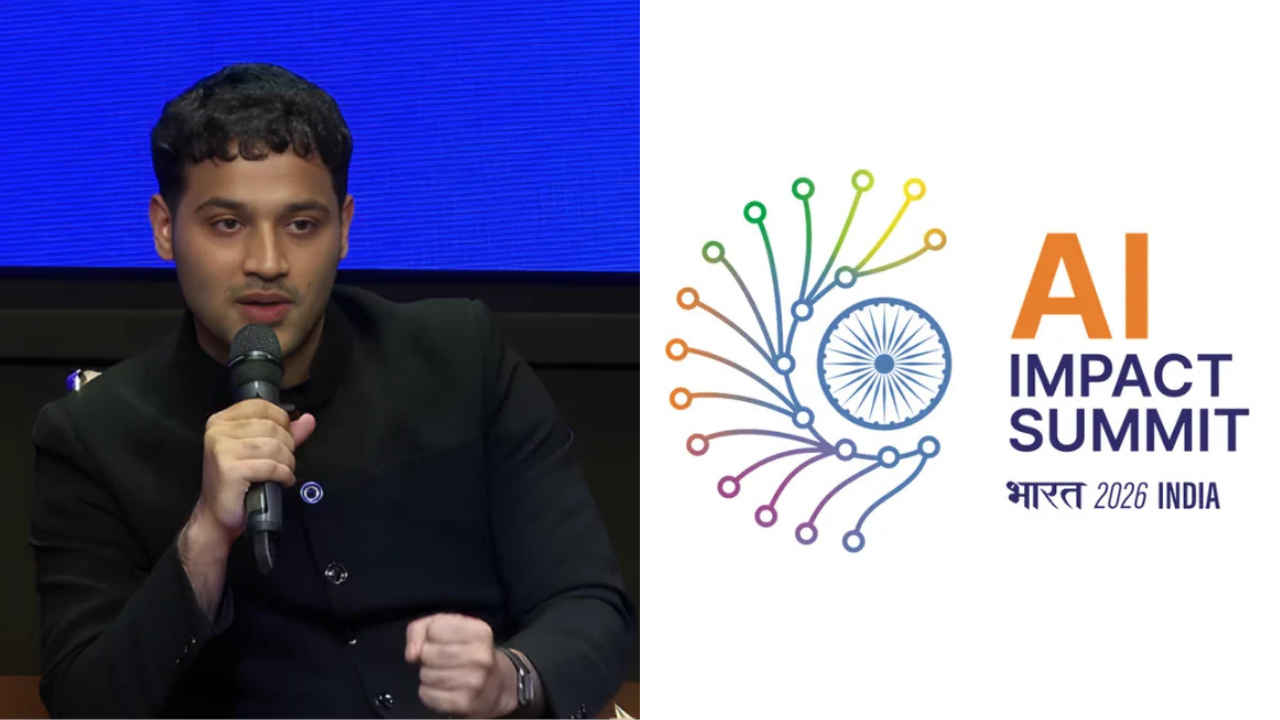

The India AI Impact Summit 2026 is going on in full swing and global AI builders, startup founders and policymakers are sharing some important insights. But the event isn’t just about the who’s who of the tech world. In 2026, AI is something that is being used across industries and professions. This is exactly what’s being represented at the India AI Impact Summit as well through some sessions by content creators, podcasters and storytellers. Popular podcaster and entrepreneur Raj Shamani also took the stage to share his perspective on how AI is shaping the way he works and thinks.
While speaking at the summit, he made it clear that the AI conversation is no longer about whether to use it. It is about how you use it, how often you use it and whether you let it sharpen your thinking or replace it. Here are five key takeaways from his session.
 Survey
Also read: India AI Impact Summit 2026 kicks off: What global tech leaders are saying
1. AI does not make you smarter or dumber, it exposes you
A common concern around AI is how it can make you smarter, or dumber. But Shamani’s opinion differs. He believes AI does not reduce or amplify intelligence; it reveals it.
According to him, those who already think strategically will use AI to think even more deeply. They will challenge outputs, refine prompts and push ideas further. Those who relied on shortcuts earlier will simply copy faster. The difference lies in intent and discipline, not in the technology itself.
This is where he introduced the idea of cognitive endurance. From his interactions with top performers across fields, he sees one shared trait. The ability to sit with a problem for a long time without distraction. Whether it is an athlete shaving milliseconds or a founder refining a product, sustained focus defines outcomes. AI can accelerate exploration, but it cannot replace the stamina required to solve hard problems. In fact, he suggests using AI to train judgement and thinking rather than outsourcing it completely.
2. AI is not a tool, it is a teammate
Shamani also made it clear that when it comes to AI, the biggest shift is psychological. Earlier, people used AI to only get answers. Now, he said that he treats it like a participant in his life. From researching guests before meetings to reviewing legal documents and spotting loopholes, AI has become part of his workflow. He even uses it to challenge business ideas by asking models to argue why something will fail. That habit, he said, has sharpened his thinking dramatically.
He also dismissed the idea that AI reduces work. In his experience, it expands ambition. When repetitive tasks get automated, teams attempt bigger goals. His own company moved from handling a handful of projects to managing many more because AI removed friction. Instead of shrinking teams, he said AI can push organisations to think larger and move faster.
He also mentioned a generational divide. Gen Z, according to him, has an advantage because they see AI as a friend, not a threat. There is no ego, no fear of replacement. That comfort level allows faster adoption and experimentation. In his view, those who embrace AI without insecurity will move ahead.
3. Solo unicorns and India’s second order advantage
One of the boldest predictions from the session was the rise of solo unicorns. Shamani believes we are close to seeing one person build a billion dollar company powered largely by AI systems and automation. The logic is simple. If design, operations and execution can be automated intelligently, scale no longer depends only on headcount.
He introduced the concept of second order beneficiaries to explain India’s opportunity. When a foundational technology emerges, the biggest winners are often those who build on top of it. Just as companies like Netflix benefited from widespread internet access, he believes Indian startups can become major beneficiaries of global AI infrastructure.
India, he argued, has a history of leapfrogging technology stages. From digital payments to internet adoption, the country has often skipped steps and moved straight to scale. He expects the same pattern with AI. While India may not build every foundational large language model, it can extract massive value by applying them creatively in daily life, business and governance. In his view, India could become the world’s largest second order beneficiary of AI innovation.
4. Values matter more as scale increases
When asked about the challenges of interviewing global leaders, Raj was candid about rejection and fear. Even today, he faces constant refusals. Growth, he said, does not eliminate struggle. It only changes the level at which it happens. But what stood out more was his emphasis on values.
He revealed that his team consciously avoids certain high view content categories even if they guarantee numbers. The decision is deliberate. Staying aligned with long term values is harder than chasing viral spikes. In an AI driven world where content can be generated at scale, that discipline becomes even more important.
He extended this thinking to ethics in AI. There must be strict boundaries around misuse, especially deepfakes and non consensual explicit content. Platforms should clearly label AI generated material so users can judge it carefully. However, he also warned against over regulating to the point of killing innovation. The balance between speed and safety will define the next decade.
5. At times, creativity comes from pressure
One of the most interesting parts of the session was his take on creativity. He does not see it as magic. He calls it helplessness. When you are constrained by time, responsibility or ambition, you are forced to think differently. That pressure creates original ideas.
He described a rigorous system behind his questions and interviews. Every year, he said that he deliberately learns a new skill and trains with AI tools daily. He also revealed that his team researches extensively and even has a role focused only on spotting errors in past conversations.
For young founders and creators in the audience, the message was practical. Use AI aggressively, but do not surrender judgement. Build endurance. Protect your values. And treat AI not as a replacement, but as a collaborator that pushes you to attempt things that once felt impossible.
Also read: I tried Lenovo’s glass-less 3D screen gaming laptop, here’s how it went


