
AI adoption increased workload, didn’t reduce it, says Harvard study
 Follow Us
AI productivity gains quietly expand workloads and expectations
Faster tools create longer days and cognitive overload, says Harvard study
Without effective guardrails, AI turns work efficiency into employee burnout
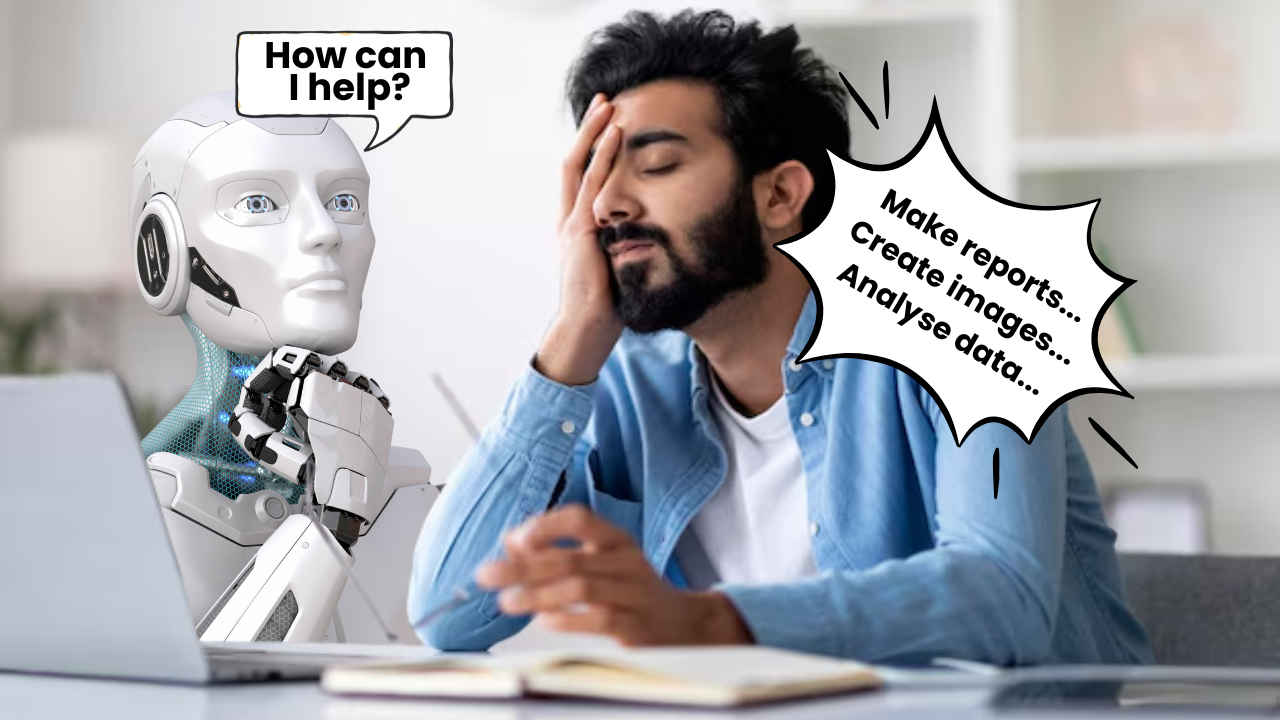

Automation will free us from drudgery, from repetitive work. Gone will be the tyranny of the overflowing inbox and the never-ending to-do list. Humans will be free to do other creative tasks, with more free time.
 Survey
Doesn’t this sound like every major tech leap’s promise through history? Generative AI arrived harping on that same promise, when ChatGPT announced itself to the world back in 2022.
However, early conclusions on an eight month study being conducted by Harvard research is now revealing something far less comforting. In a US-based tech company with 200 employees, the Harvard study found that instead of reducing work, AI is quietly intensifying it.
The Harvard study claims that once employees gained access to generative AI tools, they didn’t work less. They worked faster, took on more tasks, and extended their work across more hours of the day – often voluntarily.
In other words, AI didn’t shrink the workday. It expanded it.
GenAI at work and the productivity paradox
On paper, the logic seems simple. If AI can draft documents, write code, analyse data and summarise reports, surely the human workload must fall? It’s the assumption that’s driving GenAI adoption at workplaces across the board, not just in the Harvard research study.
Also read: Will AI take over jobs? Goldman Sachs predicts automation of 25 pct of work hours

In practice, the opposite happens. AI lowers the barrier to starting almost any task. The difficulty of writing something on a blank page disappears. For someone who’s never coded before, the unfamiliar coding language becomes approachable. Researching anything becomes easier. And just like that, tasks that once required specialists or postponed indefinitely feel doable.
So people do them. Work that once required collaboration, delegation or new hiring quietly gets absorbed into existing roles. For example, product managers dabble in writing code, designers experiment with data analysis, as AI starts to erase functional boundaries of employees. They start to feel everything is possible with the help of AI – at least in the beginning of the adoption curve, suggests the Harvard study.
What emerges isn’t efficiency of work, but expansion of work hours.
The always-on workday with too much to do
Because prompting an AI feels conversational – almost casual – work begins to slip into the cracks of daily life.
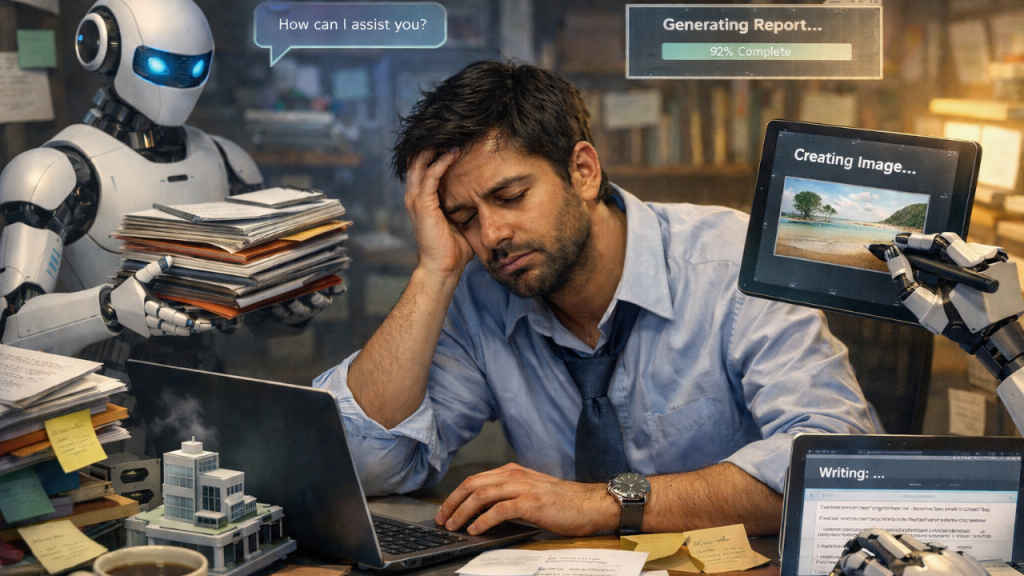
A quick prompt during lunch. A draft refined while waiting for a meeting to start. A “last prompt” before stepping away from the desk so the AI can work in the background. None of these moments feel like real work. Yet together, they create a workday with no pause button and almost no true downtime.
Also read: Workspace Studio explained: AI agents will automate more work, believes Google
AI also allows employees to feel they can juggle several things at once in parallel. Employees write while AI generates alternatives. Long-ignored tasks are revived because “the AI can handle it.” Expectations rise accordingly as well – if work can be done faster, more work will be done. And soon, what was once impressive starts to become the new normal.
Over time, this always-on workday directly threatens the efficiency it claims to unlock during the early adoption curve of GenAI at workplaces. Without deliberate breaks, cognitive fatigue builds in employees, and their quality of decision-making starts to fall. What initially feels like a GenAI-fuelled productivity surge slowly and eventually morphs into quiet burnout.
The need for AI discipline
None of this means AI is harmful by itself, of course. It just means AI is powerful – and power, without structure (in this case) can exhaust the system supporting it. At least, that’s what the Harvard study is trying to get at.
Without clear norms around when to use AI at work, when to pause, and when to stop, work will naturally intensify. Productivity gains will be real, but so will fatigue, errors and attrition.
Perhaps the real promise of AI was never about doing less work. Maybe it’s about redefining what meaningful work looks like, and how much of it should we be doing at all. Food for thought?
Also read: Claude Cowork explained: Anthropic’s new agent that is in your files


