
ROG Ally X vs Legion Go vs MSI Claw 8 AI+: Which handheld Windows gaming PC is the best in 2025?
 Follow Us
ROG Ally X vs Legion Go vs MSI Claw comparison
Best Windows handheld gaming PC in 2025 performance battery display
ROG Ally X or MSI Claw which handheld should you buy


The handheld gaming PC market has matured rapidly by late 2025. What started as a niche experimental category has solidified into a competitive sector where manufacturers are finally delivering on the promise of true portable PC gaming. The three primary contenders defining this generation are the updated ASUS ROG Ally X, the established Lenovo Legion Go, and the revitalized MSI Claw 8 AI+. While earlier models required significant compromises, these 2025 iterations offer distinct choices in power, efficiency, and design.
 Survey
Also read: Remembering Call of Duty co-creator Vince Zampella: The major games he created
Performance and Specifications

The internal hardware driving these devices has seen a major divergence this year. The ASUS ROG Ally X has evolved beyond its predecessors by adopting the new AMD Ryzen AI Z2 Extreme APU. This chip represents a significant generational leap over the older Z1 architecture. ASUS pairs this new processor with a substantial 24GB of LPDDR5X RAM and a 1TB SSD. This memory upgrade is critical because it allows for smoother texture allocation in modern titles that previously choked on 16GB systems.
MSI has taken a different route with the Claw 8 AI+. Moving away from its initial struggles, the new model utilizes Intel’s “Lunar Lake” Core Ultra 7 258V processor. This “Copilot+ PC” features Intel’s Arc 140V graphics and boasts a massive 32GB of LPDDR5X on-package memory. In terms of raw specification, MSI arguably holds the edge in memory capacity. Meanwhile, the Lenovo Legion Go continues to rely on the proven AMD Ryzen Z1 Extreme paired with 16GB of RAM. While it may not feature the newest silicon of its rivals, it remains a capable performer for those who prioritize screen size over bleeding-edge processing power.
Display and Design
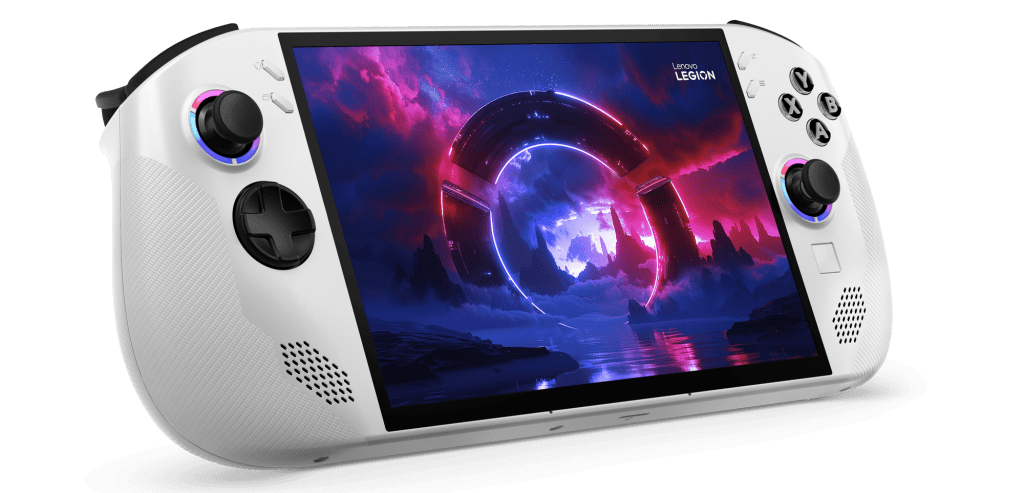
Display preferences in 2025 largely depend on how much portability you are willing to sacrifice. The ROG Ally X sticks to a 7-inch 1080p IPS panel with a 120Hz refresh rate and VRR support. It remains the most compact option and many reviewers cite its ergonomic updates as the most comfortable for prolonged play. Lenovo sits at the other end of the spectrum with a massive 8.8-inch QHD+ display running at 144Hz. While the screen is stunning for strategy games, it lacks VRR support which can make frame drops more noticeable.
Also read: Clair Obscur: Expedition 33’s disqualification shows the AI rule problem in games
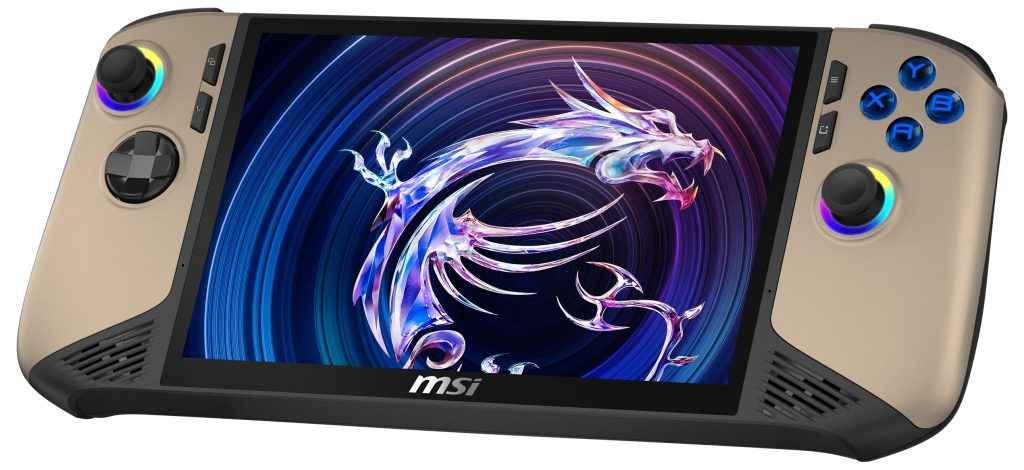
The MSI Claw 8 AI+ attempts to strike a perfect middle ground. It features an 8-inch 1920×1200 IPS display that supports 120Hz and VRR. This offers significantly more immersion than the Ally X without the heavy bulk of the Legion Go. While the Legion Go features detachable controllers that allow for table-top play, its weight often biases it toward being used with its kickstand rather than as a purely handheld device.
Battery Life and Verdict
Battery endurance has improved drastically across the board. Both the ASUS ROG Ally X and the MSI Claw 8 AI+ now feature massive 80Wh batteries. This is a game-changer for portability. The efficiency of Intel’s Lunar Lake chip allows the MSI Claw to compete aggressively on battery life and it may even edge out the competition in lighter workloads or media playback. The Legion Go trails behind in this metric with its smaller 49.2Wh battery, making it less suitable for long travel sessions without a power bank.
For most gamers in 2025, the ASUS ROG Ally X is likely the most balanced choice. It combines the newest AMD Z2 silicon with a mature software ecosystem and excellent VRR implementation. However, the MSI Claw 8 AI+ is a compelling alternative for enthusiasts who want the maximum 32GB of RAM and a slightly larger screen. The Lenovo Legion Go remains a specific choice for users who absolutely need the largest available display and are willing to trade battery life and VRR to get it.
Also read: Resident Evil to Assassin’s Creed: Why big game remakes are happening more


