
Clair Obscur: Expedition 33’s disqualification shows the AI rule problem in games
 Follow Us
Clair Obscur disqualification sparks debate over fair AI use rules
Indie Game Awards zero tolerance AI policy raises fairness questions
Where developers draw the line on AI assistance in games
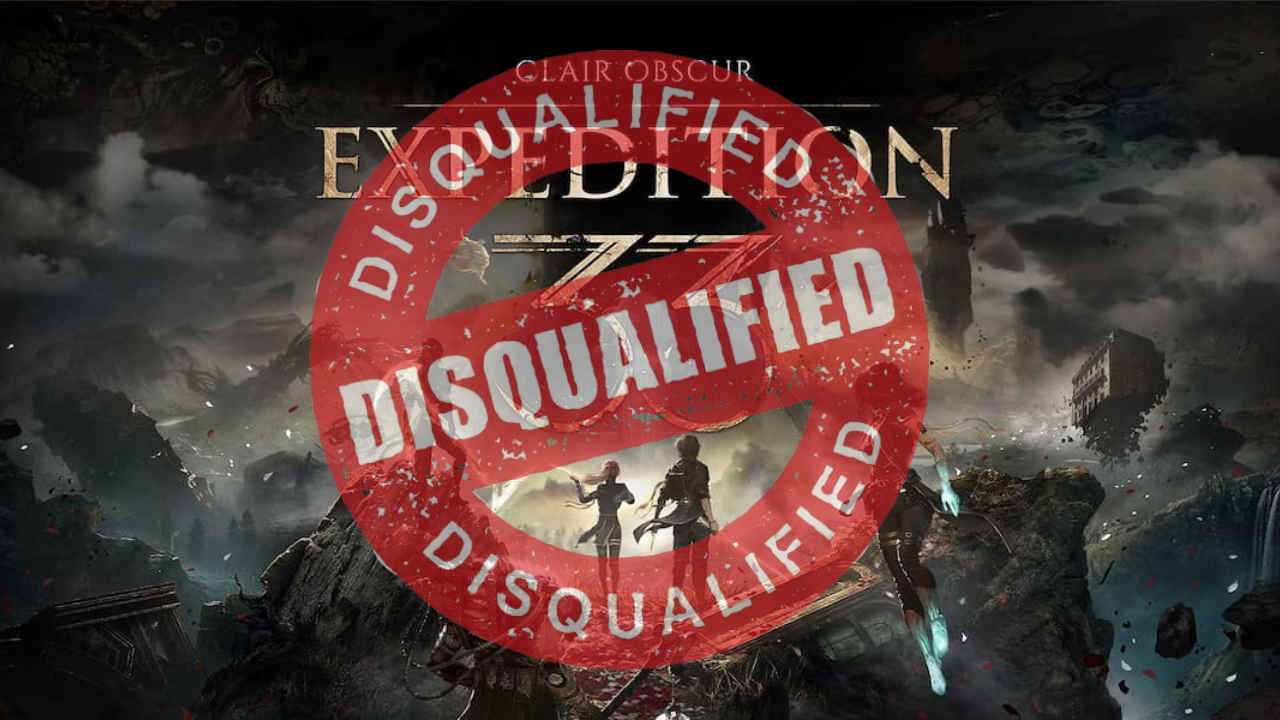

The indie games community rarely agrees on anything, but the disqualification of Clair Obscur: Expedition 33 from the Indie Game Awards has come close. What began as a widely celebrated awards sweep quickly evolved into a debate about artificial intelligence, transparency, and whether current rules reflect how games are actually made in 2025.
 Survey
The title had been praised for its visual identity and confident design, earning top honours including Game of the Year. That recognition was later revoked after organisers determined that the project violated the awards’ eligibility rules regarding generative AI. While the decision followed the letter of the guidelines, it raised an uncomfortable question: are those rules still fit for purpose in a modern development landscape?
Also read: Silent Hill 3 remake leaks: Launch timeline, gameplay and other details
The IGAs Nomination Committee is officially retracting Debut Game and Game of the Year, awarding both categories to new recipients. Additionally, we are retracting one of the Indie Vanguard recipients. Full details can be found in our FAQ under Game Eligibility: www.indiegameawards.gg/faq
— The Indie Game Awards (@indiegameawards.gg) December 21, 2025 at 12:15 AM
[image or embed]
Why the Game Was Disqualified
The Indie Game Awards’ reasoning is straightforward and, crucially, explicitly backed by its published guidelines. The competition operates under a zero tolerance policy: any use of generative AI at any point during development renders a game ineligible, regardless of scale, intent, or whether the content remains in the final build.
In the case of Clair Obscur, the developers later confirmed that generative AI elements were present in the launch version of the game and were patched out shortly after release. Although these assets did not remain in the version ultimately judged by players and critics, their existence at launch conflicted with the certification submitted during the awards process stating that no generative AI had been used.
Also read: Star Wars: Fate of the Old Republic revealed: 3 key details from the trailer
From the organisers’ perspective, this was not a subjective call. The rules make no distinction between placeholder content, early experimentation, or final artistic output. Once AI use was confirmed, disqualification became automatic, not discretionary.
Why the Line on Fair AI Use Still Feels Wrong
Even with the policy applied correctly, the discomfort around this decision has not gone away. That is because the rule itself treats all AI use as equal, without considering how or why it was used. There is a meaningful difference between AI generated final art and AI assisted elements that are temporary, replaced, or non expressive.
Modern game development routinely involves tools that automate, assist, or accelerate production. If awards bodies define fairness purely by tool usage rather than creative outcome, they risk punishing transparency while encouraging silence. Developers who experiment early, iterate openly, and then remove AI assisted elements end up worse off than those who quietly avoid disclosure.
Clair Obscur’s disqualification may align perfectly with existing rules, but it exposes their limitations. If the industry wants ethical standards around AI, those standards must be nuanced enough to distinguish between replacement and assistance. Otherwise, future debates will not be about fairness, but about who gets caught.
Also read: Lara Croft is back: Two new Tomb Raider games revealed at The Game Awards


