
Handhelds, rollable screens at CES 2026: Cool tech that gamers should not miss
 Follow Us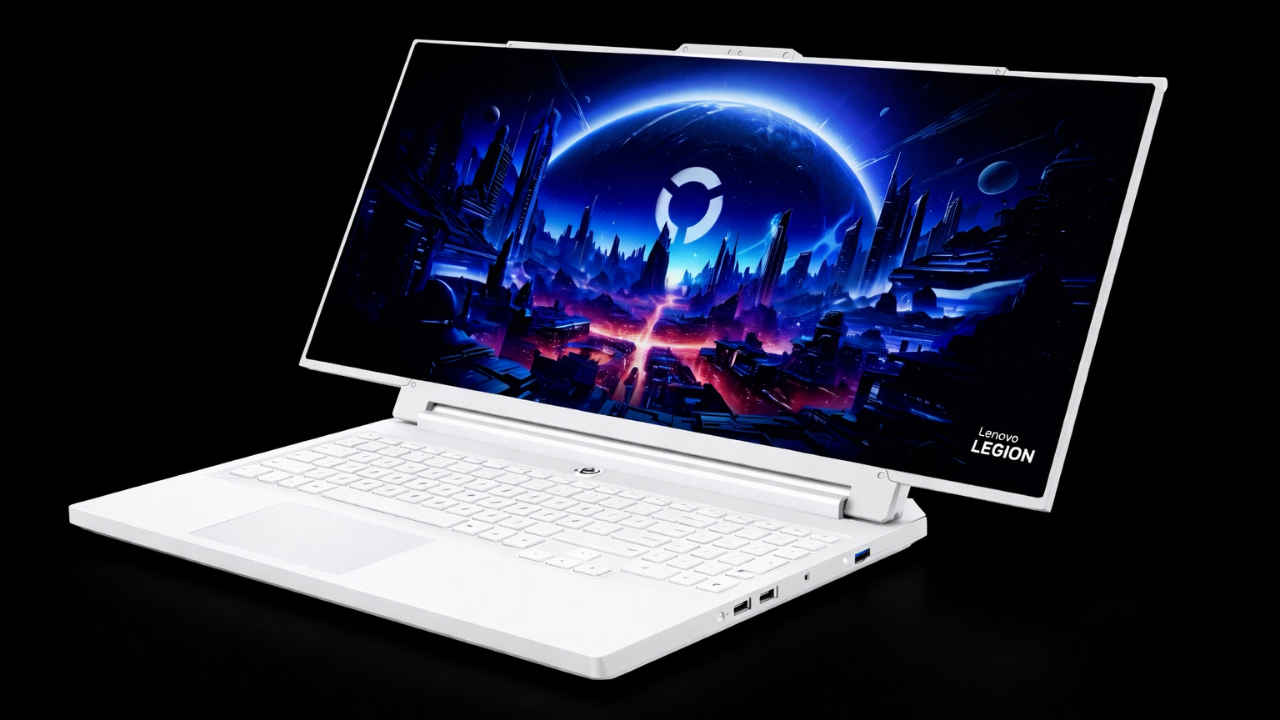

 Survey
CES has always been about possibility. Every year, brands arrive in Las Vegas promising the future, and every year gamers are left wondering about genuine products from flashy prototypes and empty buzzwords. CES 2026, however, felt different. It wasn’t louder or chaotic, but more intentional. This year, gaming announcements were not about chasing gimmicks. They were about removing friction, smoother motion, better interfaces, screens that adapt to players, and hardware that finally understands how games are actually played.
If you missed the noise of the show floor, here are five CES 2026 gaming announcements that genuinely matter and will shape how you play in the months and years ahead.
Also read: You can convert your MacBook to touchscreen with this accessory unveiled at CES 2026
Nvidia DLSS 4.5 quietly becomes the most important gaming upgrade of the year
Nvidia did not unveil a flashy new GPU at CES 2026. Instead, it did something arguably more impactful. It introduced Nvidia DLSS 4.5 and announced its support for over 700 games, turning an already powerful feature into a near-universal gaming upgrade.
DLSS 4.5 is not just about higher frame rates. It is about stability, and games looking clean when the camera moves fast. It also promises to fix some problems that gamers have been dealing with for years. The DLSS 4.5 promises to eliminate ghosting, reduce shimmer, and make motion feel natural instead of jittery. The new transformer-based Super Resolution model also promises improved temporal consistency, which means scenes hold together better during combat, traversal, and chaos.
Then there is 6x multi-frame generation on RTX 50 series GPUs, where AI generates up to five frames for every real one. Finally, the DLSS 4.5 also introduces Dynamic Multi-Frame Generation. Instead of locking you into a fixed frame generation mode, this dynamic system adjusts automatically. You set a target frame rate, such as 240 frames per second. DLSS then dynamically switches between 1x and 6x frame generation modes to maintain that target as closely as possible. This helps keep frame pacing smooth and consistent, which is critical for competitive and fast-paced games.
Lenovo Legion Go 2 comes with SteamOS, finally
Handheld gaming PCs have always suffered from one uncomfortable truth- Windows never seemed designed for joysticks. With the Lenovo Legion Go 2, Lenovo acknowledged that reality and fixed it in the most obvious way possible; by shipping a SteamOS version out of the box.
Nothing about the hardware changes dramatically. You still get AMD’s Ryzen Z2 Extreme chip, generous RAM options, and a large high-resolution display. But the difference can be felt in how the device feels the moment you turn it on. SteamOS brings a console-like flow, instant game access, and an interface that respects controller-first navigation.
This is not about raw performance gains but about friction disappearing. In other words, menus load faster and games feel easier to manage. The Legion Go 2 finally behaves like a handheld console rather than a tiny PC pretending to be one. For anyone who wanted Steam Deck simplicity with more powerful hardware, this is the version that makes sense.
Asus Zephyrus Duo redefines what a gaming laptop can be
Gaming laptops have been playing it safe for years. Faster GPUs, thinner bodies, familiar shapes. The return of the Asus ROG Zephyrus Duo at CES 2026 broke that pattern completely.
Asus has now replaced the narrow secondary panel of older Duo models with two full 16-inch 3K OLED displays, stacked edge to edge. Both run at 120Hz with OLED contrast and serious HDR capability. The result is over 21 inches of usable screen space on a single machine.
The design changes how you play and create. Games on one screen, chat, streaming tools, or guides on the other. Editing timelines stretched across panels. Multitasking that feels natural instead of cramped. Add a detachable magnetic keyboard and multiple usage modes, and the Duo stops being a novelty and starts feeling inevitable.
Under the hood, there is no compromise. Intel Core Ultra processors, up to an RTX 5090 Laptop GPU, redesigned cooling, and enough power to justify the bold form factor. This is not a laptop for everyone, but for those who want something genuinely different, nothing else at CES comes close.
Lenovo imagines a laptop that adapts to players’ needs
Some concepts exist just to look cool and others exist to solve real problems. The Lenovo Legion Pro Rollable belongs in the second category.
Esports professionals train on large monitors but travel with laptops. That mismatch affects performance and comfort. Lenovo’s answer to this problem is a rollable display that expands horizontally from 16 inches to 21.5 inches and then to a full 24 inches, depending on how much screen real estate the player wants.
Under the hood, the laptop is built on the Legion Pro platform with flagship Intel processors and RTX 5090 graphics. Lenovo’s AI Engine+ dynamically adjusts performance based on gameplay scenarios, promising high frame rates when they matter most.
Will this exact device hit store shelves soon? Probably not. But it asks an important question- what if gaming hardware adapted to players instead of forcing players to adapt to hardware?
Acer’s 1,000Hz monitor grabs attention
Just when 360Hz started to feel normal, Acer arrived with a reminder that competitive gaming hardware is nowhere near done evolving.
The Predator XB273U F6 runs at 500Hz in its native QHD resolution, which already places it among the fastest monitors in the world. But with Dynamic Frequency and Resolution enabled, it can hit a staggering 1000Hz at 720p. That number sounds absurd until you remember that esports players chase milliseconds, not pixels.
What makes this announcement special is that it is not a concept. This is a real product. Acer backs the speed with solid colour accuracy, proper ergonomics, and modern connectivity. It is built for players who value clarity and responsiveness above everything else. This is not a monitor for everyone, but for competitive gamers, it represents the next ceiling.
Also read: CES 2026: Zenbook Duo, ProArt PX13 and more, Asus showcases new AI-powered laptops


