
Best Gaming PC under Rs 200,000 in August 2026
 Follow Us

Two lakh rupees used to mean compromise. You picked between a strong CPU and a strong GPU, never both. That math has changed. With AMD’s X3D chips now filtering down in price and AMD’s RDNA4 cards closing the gap on Nvidia at the high end, a sub-2-lakh build in August 2026 can genuinely handle 1440p at high refresh rates and even dabble in 4K without the usual asterisks. This build leans hard into that shift, pairing a still-excellent last-gen CPU with a GPU that punches above its price bracket. Here’s the full breakdown, part by part, and what each one actually buys you.
 Survey
Also read: Best Gaming PC under Rs 80,000 in August 2026
AMD Ryzen 7 7800X3D (Rs 34,000)
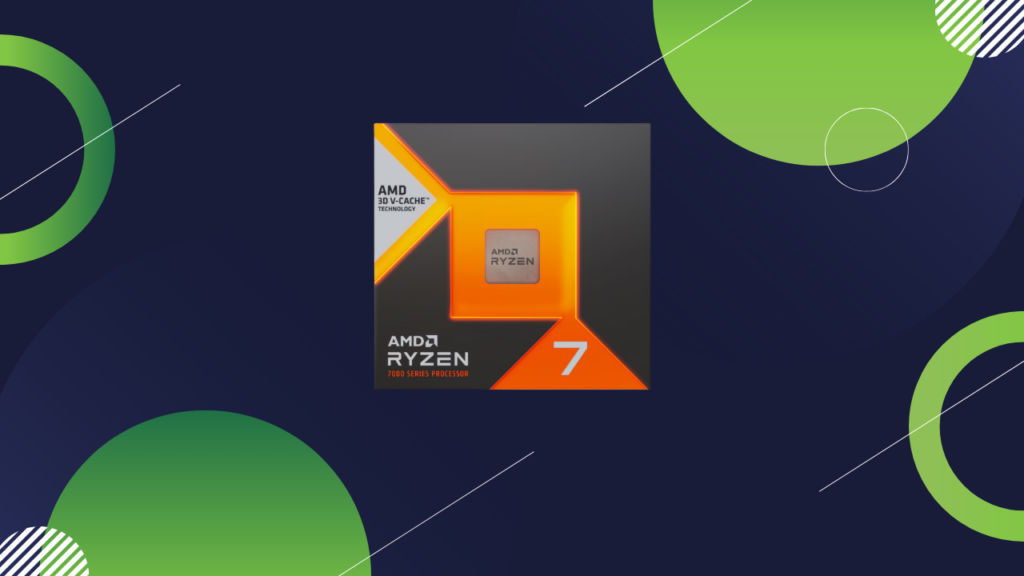
The 7800X3D remains the default answer for gaming-first builds, and at this price it’s arguably the best value chip in the stack. Its 3D V-Cache stack gives it a real advantage in cache-sensitive titles, the kind of games where frame time consistency matters more than raw clock speed. It won’t touch newer chips in multi-threaded productivity work, and if you’re rendering or compiling on the side, that’s worth knowing going in. But for a build whose sole job is pushing frames, the 7800X3D still holds its lane against parts released well after it. Power draw is modest too, which keeps cooling demands sane and total system cost down elsewhere.
ASRock Challenger Radeon RX 9070 XT 16GB GDDR6 (Rs 82,000)
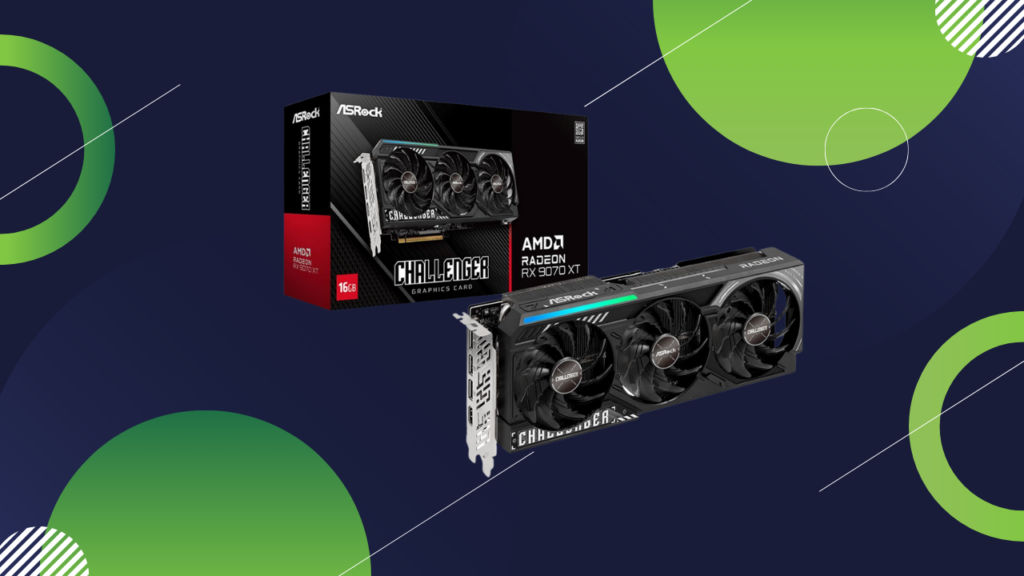
This is the card carrying the build, and at 41 percent of the total budget, it should be. The RX 9070 XT sits in that increasingly competitive RDNA4 tier that trades blows with Nvidia’s mid-high offerings while usually undercutting them on price. 16GB of VRAM means you’re not going to hit a wall in texture-heavy titles for a few years yet, and it’s enough headroom for 4K gaming at reasonable settings, not just 1440p. Worth flagging here as a matter of course: treat AMD’s own performance slides for this card, and any card, as a starting point rather than a verdict. Independent frame-time testing across a spread of titles tells you far more than a vendor’s cherry-picked benchmark run.
Gigabyte B650M Gaming WIFI (Rs 9,500)
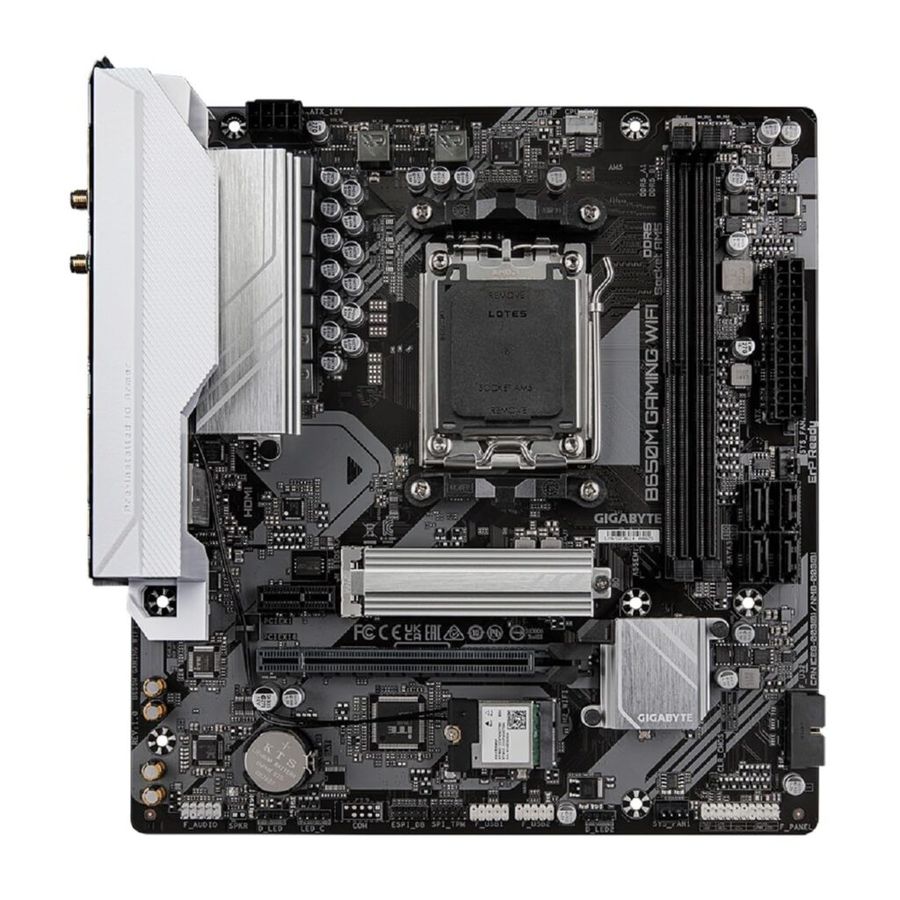
A B650 board is the sensible choice for a 7800X3D build. This is a Micro-ATX board, so don’t expect the expansion slots or VRM headroom of a full ATX offering, but for a single-GPU gaming rig that’s rarely a real limitation. Built-in WiFi saves you a separate card and one more thing to troubleshoot. B650 also means you’re not paying the X670 premium for chipset features most gamers never touch. The one thing to check before buying is BIOS version compatibility for the 7800X3D specifically, since some early B650 boards needed a firmware update before they’d post with newer AM5 chips.
Adata 32GB (16GBx2) 5600MHz CL46 DDR5 (Rs 43,000)
32GB in a dual-channel 16GBx2 kit is the right call for a build at this price point, and 5600MHz with CL46 timings is a reasonable middle ground between speed and cost on AM5 platforms, which are known to be memory-speed sensitive. This isn’t the cheapest RAM you could put in this build, but DDR5 pricing has been volatile through 2026, and 43,000 rupees for 32GB reflects where the market has been sitting rather than a markup specific to this kit. If you’re strictly gaming and not running background workloads, 32GB is arguably more than you need today, but it buys headroom for the next few years of memory-hungry titles.
Crucial E100 1TB Gen4 M.2 NVMe (Rs 15,000)
Also read: Sony unveils limited edition Marvel’s Wolverine PS5: All details
1TB is the practical minimum for a modern gaming library once you account for how large current AAA installs have gotten. Gen4 NVMe speeds are still the sweet spot for most gamers. Gen5 drives exist, but load-time differences in actual games remain marginal enough that paying the Gen5 premium doesn’t make sense unless you’re also doing heavy content creation work. One thing worth noting: 1TB fills up fast with modern titles, several of which now cross 100GB installs on their own, so budget for a second drive sooner rather than later if your library grows past a handful of big games.
Cooler Master G800 80 Plus Gold Non Modular (Rs 8,000)
800W is comfortably enough headroom for this build’s power draw, with room to spare if you upgrade the GPU down the line. 80 Plus Gold certification is the right efficiency tier for a build this size, and Cooler Master’s PSUs have a decent reliability track record. The non-modular design is the one real trade-off here. Cable management will take more effort, and airflow in a compact case can suffer if you don’t route things carefully. For the price saved over a modular unit, it’s a reasonable compromise, but if a tidy build matters to you, budget an upgrade path to modular later.
Cooler Master Hyper 212 Halo ARGB CPU Air Cooler (Rs 3,400)
The Hyper 212 has been a budget cooling staple for over a decade, and the Halo ARGB refresh brings it current on aesthetics without changing what made the original good. It’s sufficient for the 7800X3D’s power draw, which is notably lower than competing high-core-count chips, so you’re not fighting thermal throttling here even with air cooling. Anyone chasing lower noise floors or planning to overclock aggressively should look at an AIO instead, but for a build already this well specced, spending more on cooling would be diminishing returns rather than meaningful gains.
Thermaltake H570 TG ARGB (E-ATX) Mid Tower Cabinet (Rs 5,500)
An E-ATX rated case gives this build room to grow even though the current board is Micro-ATX, useful if a future upgrade moves to a bigger motherboard. Airflow on the H570 is generally solid for the price, with enough fan mounts to keep the RX 9070 XT and 7800X3D running cool under load. Tempered glass and ARGB support tick the aesthetic boxes most buyers at this budget expect now as standard rather than a premium add-on. It’s not a boutique case, but for 5,500 rupees it does the fundamentals well and won’t bottleneck the components inside it.
Full Build Summary
| Component | Model/Specification | Price (Rs) |
| CPU | AMD Ryzen 7 7800X3D | 34,000 |
| GPU | ASRock Challenger Radeon RX 9070 XT 16GB GDDR6 | 82,000 |
| Motherboard | Gigabyte B650M Gaming WIFI | 9,500 |
| RAM | Adata 32GB (16GBx2) 5600MHz CL46 DDR5 | 43,000 |
| Storage | Crucial E100 1TB Gen4 M.2 NVMe | 15,000 |
| PSU | Cooler Master G800 80 Plus Gold Non Modular | 8,000 |
| CPU Cooler | Cooler Master Hyper 212 Halo ARGB | 3,400 |
| Case | Thermaltake H570 TG ARGB (E-ATX) | 5,500 |
| Total | 2,00,400 |
Potential Upgrades and Performance
If you’re willing to stretch the budget, the two most impactful upgrades in order are the GPU and the PSU. Moving to a higher-tier card down the line is trivial given the 800W headroom already built in, so this isn’t a build you’ll need to gut for a GPU refresh. On the cooling side, swapping the Hyper 212 for an AIO only makes sense if you plan to overclock, since stock thermals here are already comfortable.
On raw performance, expect this build to handle 1440p at high refresh rates comfortably across most current titles, with 4K gaming viable at high rather than ultra settings in more demanding games. Ray tracing heavy titles will lean more on upscaling to hit high frame rates, which is standard for this GPU tier rather than a flaw specific to this build. For anyone gaming primarily at 1440p, this is close to a best case build for the money in August 2026; 4K purists may still want to save further for a step up in GPU tier.
Also read: GTA 6 extended look is coming to Netflix: Take-Two CEO explains why


