Apple AirPods Max vs Sony WH-1000XM6 in 2025: Which premium headphones are worth buying?
 Follow Us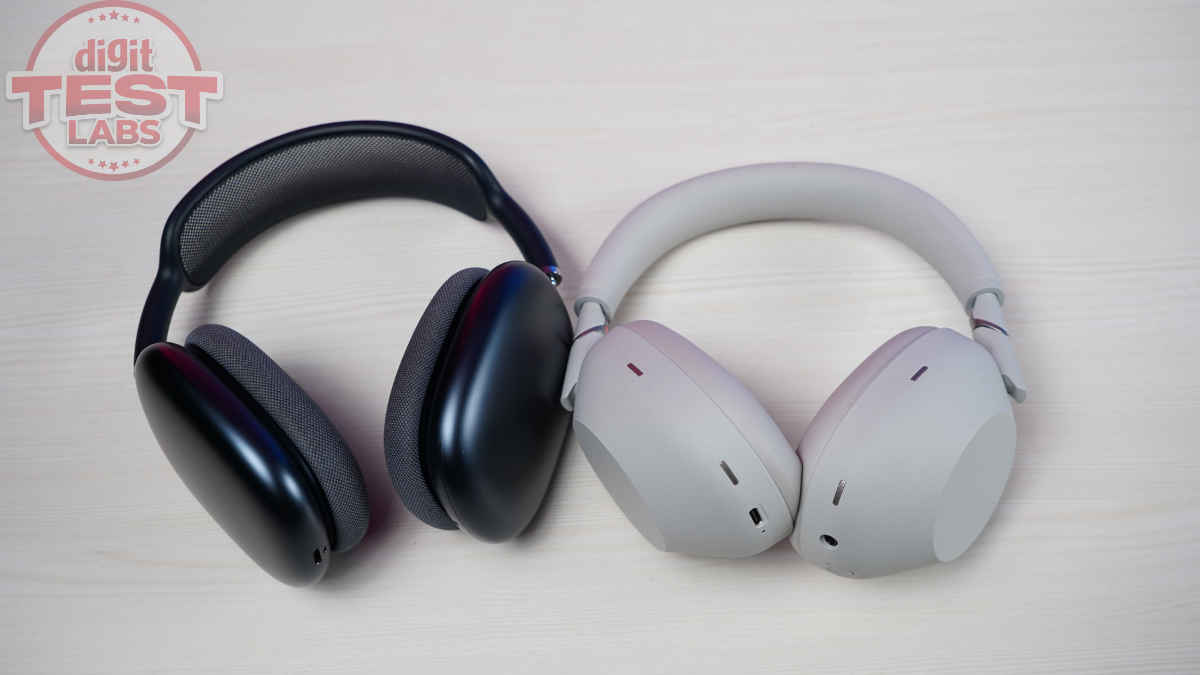

While reviewing the Sony WH-1000XM6, I found myself constantly comparing it to the AirPods Max. Apple’s flagship headphones have been the obvious benchmark for years, and the WH series has always stood right beside them. This year, too, many of you may be wondering which one to pick, especially if you are already invested in the Apple ecosystem. And honestly, that question came up far more often than I expected during my testing, because every time I switched between the two, it became clear just how close the competition has grown in terms of sound, comfort and everyday practicality. The AirPods Max still offer that smooth, seamless integration across iPhone, iPad and Mac, which is a massive advantage, but Sony has refined its own approach so well that the WH-1000XM6 feels like a perfectly valid choice even for long-time Apple users looking for something lighter, more travel-friendly or simply different. Can you still consider Sony’s cans regardless of which platform you are on? Let’s find out.
 Survey
Which is more comfortable to wear?
Comfort plays a huge role in how enjoyable a pair of headphones really is. You can have all the processing power and audio tuning in the world, but if the design feels heavy or restrictive, you wouldn’t want to wear the headphones for long sessions.
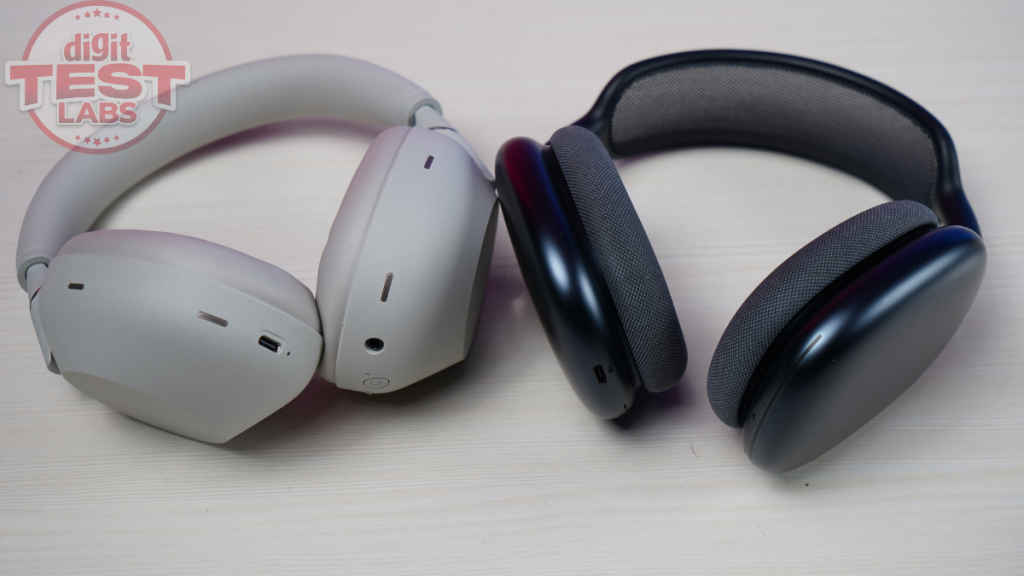
The AirPods Max still feels just as premium as the day it launched. The combination of aluminium ear cups, stainless steel headband, and mesh canopy looks unique and industrial. The magnetically attached ear cushions are plush and easily replaceable. But the metallic body also comes with extra weight. At 385 grams, they are considerably heavier than most headphones, including Sony’s pair. Over long stretches, that weight and clamping pressure can add up. The good thing is that the mesh canopy is light on the head.
Sony takes a very different route. The WH-1000XM6 is built mostly from high-quality plastic, which makes it significantly lighter at 250 grams. The new soft-fit synthetic leather padding feels gentle against the skin. Even though Sony’s construction lacks Apple’s metallic polish, it is far more comfortable for extended use. The headband folds inward, making it easier to carry in the bundled case. Sony’s carrying case has a magnetic latch, which makes it easy to open and shut. This case, plus the folding headphone design, is a real advantage over Apple’s rigid design and awkward case.
In short, Apple offers craftsmanship, while Sony offers comfort. If you spend long hours wearing headphones for work or travel, Sony’s design will serve you better in the long run.
As for durability, neither offers an IP rating for dust or water resistance, and which one lasts longer depends on the use case.
Also Read: OnePlus Nord Buds 3r review: Affordable TWS buds that don’t compromise on quality
Which audio tuning do I prefer more?
Sound is where these two headphones express their brands’ personalities. Apple aims for accuracy and openness, while Sony goes for warmth and energy.
Apple’s AirPods Max produce a neutral, well-balanced sound signature. Instruments are clean, vocals sound crisp, and the imaging remains stable even when you move your head. The soundstage feels spacious, and the detail retrieval is excellent without sounding sharp or fatiguing. Apple’s computational audio ensures consistency, automatically adjusting EQ in real time to match your fit and seal.
Sony’s WH-1000XM6 continues the brand’s slightly bass-forward character but with better control and refinement than before. The sub-bass feels deep without bleeding into the mids. Vocals are clearer and better separated, while the highs are smoother and less sibilant. With LDAC enabled on a compatible Android device, high-resolution tracks carry noticeably more texture and layering.
In practical use, I found both handled different genres well. On ‘Pull Me Under’ by Dream Theater, Sony managed the dense mix with decent layering, though the guitars sometimes overpowered the vocals. The AirPods Max balanced the chaos better, keeping everything more distinct. On ‘Hurt’ by Johnny Cash, Apple’s reproduction of vocals was fuller and more lifelike, while Sony’s tone added a touch of warmth that made the track sound intimate. For bass-heavy music like Billie Eilish’s ‘Bad Guy’, Sony’s low-end thump was more engaging, whereas Apple’s sound felt cleaner but less visceral.
Overall, the AirPods Max sound more refined, but Sony’s pair is easier to tune and enjoy casually. Apple gives you precision. Sony gives you personality.
Which one has better noise handling?
Noise cancellation is where both companies stand neck to neck and succeed in different ways.
With ANC turned off, both the Sony XM6 and AirPods Max allow a bit of ambient sound to pass through. Once ANC is enabled, the XM6 creates an almost silent environment indoors. Human voices can still be faintly heard if you focus. But overall, including outdoors, noise cancellation is slightly stronger than on the AirPods Max.
Apple, however, takes the lead with ambient or transparency mode. The XM6 amplifies external sounds effectively but still feels like you’re listening through a barrier. Apple’s transparency mode sounds much more natural, closely matching how your surroundings would normally sound.
Sony also brings adaptive sound control, which learns your routine, automatically adjusting ANC based on whether you are sitting, walking, or travelling. But this feature can be inconsistent, often activating ambient mode at inappropriate times.
Sony’s Ambient mode, while not as natural as Apple’s, has improved. Sony allows manual control over the level of ambient sound, which is something Apple doesn’t offer. You can fine-tune how much outside noise you want to let in.
Which one to use for calls?
Call quality has quietly become one of the most important benchmarks for premium headphones. Both brands recognise that users often wear these for meetings and calls as much as for music.
The AirPods Max employs beamforming microphones and voice isolation algorithms that focus directly on your speech. Indoors, it captures your voice with impressive clarity and minimal background interference. The person on the other end said that it didn’t seem as if I was wearing headphones during the call. Moreover, AirPods Max still has an edge in seamless device switching during calls due to the ecosystem advantage.
Sony’s WH-1000XM6 has also got some upgrades here. It uses a new AI-based noise reduction algorithm to clean up your voice and suppress environmental sounds. Sony claims XM6 is more adept at capturing voice during calls than the XM5. The call experience was fine here, too.
Which one lasts longer?
This is one of the easiest sections to call: Sony wins comfortably.
In our continuous music playback test, the WH-1000XM6 offers around 42 hours of playback with ANC and LDAC enabled and at 80% volume. Sony claims you can get up to 3 hours of playback from just a three‑minute charge using a compatible USB-PD charger. In our test, the XM6 took 2 hours and 45 minutes to fully top up.
The AirPods Max, by comparison, delivers about 22 hours with ANC, AAC codec, and continuous music playback at 80% volume. The USB-C port supports quick charging, and it takes around 2 hours for a full charge. However, Apple’s decision not to include a true power-off button means the headphones only enter a low-power mode when placed in their case. This leads to some idle drain, especially if you forget to store them properly.
Overall, battery anxiety never entered my brain with Sony. For frequent travellers or long commutes, that alone could be a deciding factor.
Which one has more features or ecosystem benefits?
Apple’s AirPods Max integrates seamlessly across the company’s hardware lineup. Pairing is instant, switching between iPhone, iPad, and Mac is automatic, and spatial audio support in Apple Music and video apps works without fuss. The controls are intuitive: the Digital Crown for volume and playback, and a single button for ANC and transparency. Firmware updates happen silently in the background, and everything feels polished.
But that polish comes at the cost of flexibility. There is no manual EQ. There is no support for high-resolution codecs like LDAC or aptX. Outside the Apple ecosystem, features are limited. Android users, for instance, cannot tweak spatial audio or see battery levels as easily.
Sony takes a more open approach. It works with iOS, macOS, Android, Windows, etc. The Sound Connect app gives granular control over sound, ANC, and ambient levels. Multipoint connectivity works smoothly, letting you stay connected to both a phone and a laptop simultaneously. LDAC streaming offers high-res audio when paired with a capable Android device. You can even use Alexa or Google Assistant directly.
While Apple feels like a perfectly tuned single-system experience, Sony feels like the universal option that respects every platform.
For more spec-by-spec comparison of these headphones, follow this article.
Which one should you buy?
Choosing between these two depends less on raw performance and more on how you plan to use them.
If you live inside Apple’s ecosystem and value instant pairing, clean device switching, and the most natural transparency mode available today, the AirPods Max still makes sense. The sound is balanced and open, the build feels premium, and spatial audio is still one of Apple’s strongest party tricks. Its weight, rigid design, and the need to rely on the case for low-power mode make it less suitable for travel. Battery life is also shorter, and there’s no EQ or support for high-resolution codecs. It works best for users who want polish and reliability across Apple devices.
If you want something lighter, more versatile, and easier to use across phones, tablets, and laptops, the Sony WH-1000XM6 is the safer pick. Comfort is excellent, ANC is slightly stronger, and LDAC streaming gives Android users better quality. The folding design and practical carrying case help with portability. Sony’s app gives full control over sound, ANC, and ambient levels, and battery life is far ahead of Apple’s. Call quality is good as well, and the new AI-based processing helps keep your voice clear.
Put simply, the AirPods Max feels like a luxury product shaped around Apple’s ecosystem. The WH-1000XM6 feels like an all-rounder built for long hours, travel, and mixed-device use.
Both deliver excellent audio, but with different priorities. Apple leans toward precision, imaging, and transparency. Sony focuses on comfort, stronger ANC, and flexible tuning. While the AirPods Max sounds a bit cleaner and looks more refined, the WH-1000XM6 offers more control, more comfort, and more practical value.
If you want a single recommendation for most people, Sony’s flagship wins this round. It matches much of Apple’s sound quality, adds better endurance, folds up neatly, and stays comfortable for extended listening. The AirPods Max still sets a high bar for craftsmanship and tonal accuracy, but Sony’s day-to-day usability gives it the edge.
Also Read: Sonos Arc Ultra & Sub 4 Review: A soundbar that wants to be your theatre


